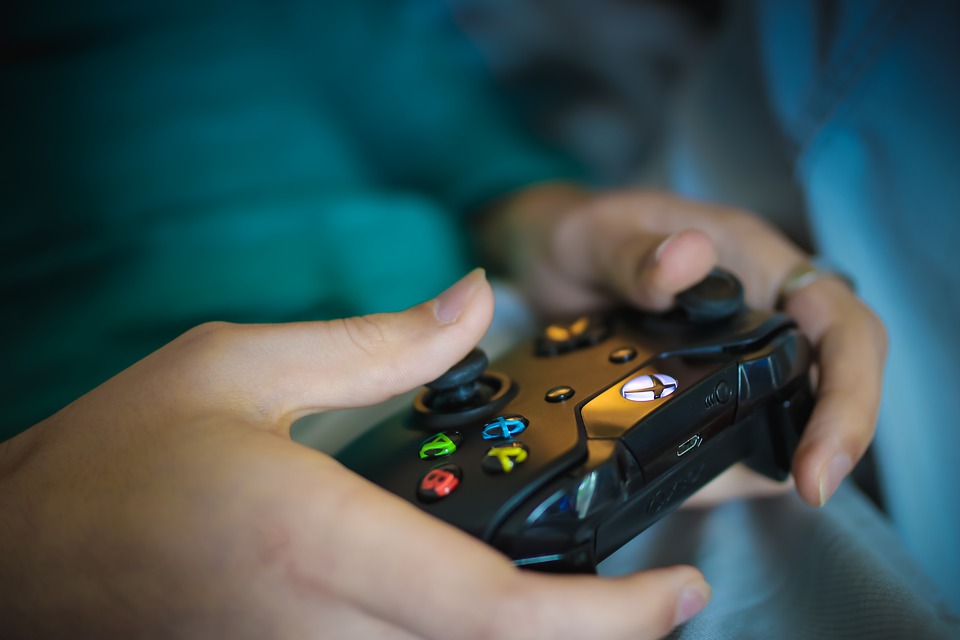
Far from rotting our brains, video games may improve our cognition. But how we play them matters when it comes to the benefits they provide.
By playing video games, "people are practicing complex skills in simulated environments,” said Aaron Seitz, a professor of psychology and the director of the Brain Game Center for Mental Fitness and Well-being at Northeastern University, unlike traditional "brain games,” which tend to be as "simple as possible.”
Studies have shown that, in some circumstances, playing video games can help slow brain aging.
Other research has found that playing action video games in particular may prove beneficial for a wide range of skills, such as our attention for visual information and our ability to learn, said C. Shawn Green, a professor of psychology at the University of Wisconsin at Madison. Most brain training games or tasks help improve only a narrower range of skills directly related to what was practiced.
But experts caution to not overdo it.
"I cannot say that playing video games for hours and hours and hours is going to be good for your brain health,” Carlos Coronel, a research fellow at Trinity College Dublin and Adolfo Ibañez University in Santiago, Chile. "You need to find a balance.”
Playing new games may help your brain
Cognitive engagement - including through education, crosswords, brain training and socializing - is good for brain health.
And evidence suggests you might be able to add video games to that list.
In a 2024 study published in the journal NeuroImage, researchers scanned the brain connectivity of 31 people who play a lot of "StarCraft II,” a strategy game that requires players to manage resources and maneuver large armies in real time.
When compared with 31 non-players, "StarCraft II” players’ brains appeared "more efficient in processing information,” with more connectivity in brain areas that are essential for visual attention and executive function, said Coronel, the lead author of the study.
In a 2025 study published in Nature Communications, Coronel and his colleagues found that, like other creative activities such as music and art, more expertise in playing video games was associated with slower brain aging. The brains of experienced gamers looked an estimated four years younger.
Creative hobbies, including video games, may help protect neural connections that are vulnerable to aging and improve the brain’s ability to transmit and process information, Coronel said.
But even playing relatively little had benefits. When Coronel and his colleagues had 24 non-gamers spend just 30 hours playing "StarCraft II” over three to four weeks, their brain age slowed compared to players who learned a slower and more rule-based game, "Hearthstone.”
The more you practice, the more you will benefit, Coronel said. "But also you can get benefits without being an expert,” he added.
Action video games speed up learning
To improve our cognitive skills, we need to challenge them, or put them under a cognitive load. However, what counts as a cognitive load varies from person to person, Green said.
Many brain-training games and other stimulating activities fall victim to what researchers have dubbed the "curse of specificity” - they teach specialized skills that don’t transfer more generally to other cognitive domains.
In one classic study, researchers found that experienced chess players could remember up to four times as many chess pieces as a beginner if they were arranged as in a real game. But if those pieces were placed randomly, the memory advantage of experienced players was erased, and they performed as poorly as the beginner.
A certain genre of video games may be an intriguing exception, though the research is far from settled.
Action video games, primarily first- and third-person shooter games, require players to make split-second decisions in often-chaotic visual environments.
Research has found that this training seems to pay off: Studies have reported that action video game players have better vision, performed better in spatial tasks and had better control of their visual attention.
That better attention may also help us learn to learn, Green and his colleagues wrote in a review.
In one study in the journal Communications Biology, 52 non-gaming adult participants either played an action video game or a slower simulation game for 45 hours over three months. On two cognitive tests for visual perception and working memory - which are not related to the games participants trained on - those who played action video games learned more quickly and improved faster.
"Because you’re attending in the right place at the right time, you’re suppressing the right information, you’re pulling more information out on every trial,” Green said. "And so you’re learning that much faster.”
However, other experts are cautious in interpreting these findings. For one, some of the psychological measures require participants to respond to rapid visual stimulus - often for fractions of a second at a time.
"It might not generalize to some other skills that people employ in the world for stimulus types that aren’t that quick,” Seitz said. (Green argues time constraints apply to tasks in the real world. "Almost all the tasks that we use have some kind of constraints that are in space or in time,” he said.)
The field still lacks the "appropriate data to make strong conclusions” about what game interventions work best for different people with different needs, said Seitz.
How to use video games to improve cognition
For video games, the type of game matters. "If you came and said, ‘My kid’s eating a lot of food,’ I’d want to know what type, right?” Green said.
Don’t overdo it.
Look for passionate engagement as opposed to pathological play, Green said. Gaming disorder is recognized by the World Health Organization, so as with any behavioral addiction, the difference "comes down to damage. Are you damaging your life somehow?” he said.
"Try things in moderation” because most of the studies looked at action video games that were short 30-minute or one-hour sessions, Seitz said
Try new games.
Green said he tries to get his parents, who are in their 70s, to play new games online.
"They get annoyed because they’re like, ‘I was just getting good at that,’” Green said. But "once you start getting good, it’s not useful anymore. You got to do the annoying and difficult. I think that seems to generally keep cognitive systems in a strong place,” he said.
Some popular action games include the "Call of Duty” series, the "Halo” series and "Quake.” But for options that aren’t as gory and violent, there are games such as "Fortnite,” "Overwatch” and the "Splatoon” series, which involves squids shooting one another with ink.
For more inspiration, check out The Washington Post’s review of the best games of 2025.
Measure what works.
Try a few different things and see whether your function improves, Seitz said.
Have realistic expectations - "we don’t really know which things work for whom, but there are multiple things that have a shot,” Seitz said. Trying a mixture of things is worth doing, he said.
Balance it with other aspects of life.
No one trick or behavior will be a magic bullet for improving cognition (or any other aspect of health).
You need to "have multiple layers in your life. One layer could be creative activities,” but also physical activity, sleep and socializing, Coronel said. "A healthy brain should include all of them.”