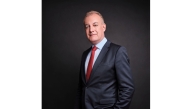
Mark Billington (left), ICAEW Managing Director, International; ICAEW Economic Advisor and Chief Economist and Managing Director at Oxford Economics Scott Livermore.
Doha: The latest economic insight report for the Middle East, commissioned by ICAEW and compiled by Oxford Economics, reveals Qatar’s economy is booming. Concerns about the deteriorating global outlook are yet to overshadow the boost from the World Cup tournament, which concluded on December 18. The travel and tourism sector will spur 7.6 percent growth in Qatar’s non-oil economy this year, the fastest pace since 2015. Overall, Qatar’s economy is expected to expand 5.2 percent this year, followed by a slowdown to 2.7 percent in 2023.
According to the Q4 report, Qatar’s robust outlook is underpinned by a pick-up led by non-oil sectors, which expanded by 9.7 percent y/y in Q2, supported by preparations for the FIFA World Cup, particularly in construction, transportation, wholesale and retail trade, and real estate. Qatar’s mining output also posted a 1.2 percent y/y rise. Overall, GDP grew by 6.3 percent in Q2, up from 2.3 percent in Q1.
The FIFA World Cup is expected to attract over one million visitors, which ICAEW estimates will lift the 2022 total visitors above 2019 levels. These tourism statistics point to a 19 percent increase in visitor numbers in Qatar in H1 compared to 2021 overall, thanks to a surge in arrivals from other GCC countries, but also India, the US, and the UK. Although there is clearly going to be slowdown in inbound travel to Qatar next year, the numbers should recover thereafter, supported by a rise in regional arrivals.
The FIFA World Cup has played a pivotal part in Qatar’s journey to diversify its economy away from the energy sector. By the end of this year, the share of the non-oil sectors in GDP looks poised to reach close to 63%, up from 50 percent a decade ago.
Meanwhile, recent liquefied natural gas (LNG) deals awarded for the North Field gas expansion projects will positively impact the oil and gas sector in the medium term, facilitating an increase in LNG capacity by almost 65% to 126mtpa by 2027, up from 77mtpa now. This will leave Qatar well-placed to strengthen its position in the Asian and European gas markets.
Mark Billington, ICAEW Managing Director, International said: “The World Cup provides an opportunity for Qatari authorities to showcase the upgraded infrastructure and build connections, elevating Qatar’s investment appeal and laying the foundations for further diversification. But the event should not be seen in isolation. Qatar has balanced World Cup-related work with important structural reforms to boost its attractiveness to foreign workers and investment. These reforms and new regulations will help fulfil the diversification goals charted in its National Vision 2030.”
Scott Livermore, ICAEW Economic Advisor, and Chief Economist and Managing Director, Oxford Economics Middle East, said: “Qatar’s diversification that is complementing the World Cup is expected to drive annual non-oil growth of about 3% in the years ahead. The Qatari authorities have also eased rules regulating employment, ending the sponsorship system and introducing a minimum wage in the private sector, as well as allowing 100% foreign ownership of companies listed on the local stock exchange. These ongoing reforms, as well as the comparatively strong outlook for public finances, including budget surpluses, projected to average 9% of GDP this year and next, place Qatar in an extremely strong position in the coming years.”
The FIFA World Cup has driven Qatar’s inflation higher, with the 2022 projection at 4.5%, versus the 3.5% average across the GCC. Upward price pressures from housing are also much stronger than elsewhere in the region as the population has continued to grow. There has been a significant contribution from the recreation and culture component of the consumer price index basket, a reversal in this category after the World Cup ends will help bring inflation down to 2.5% next year.