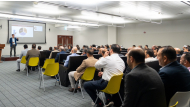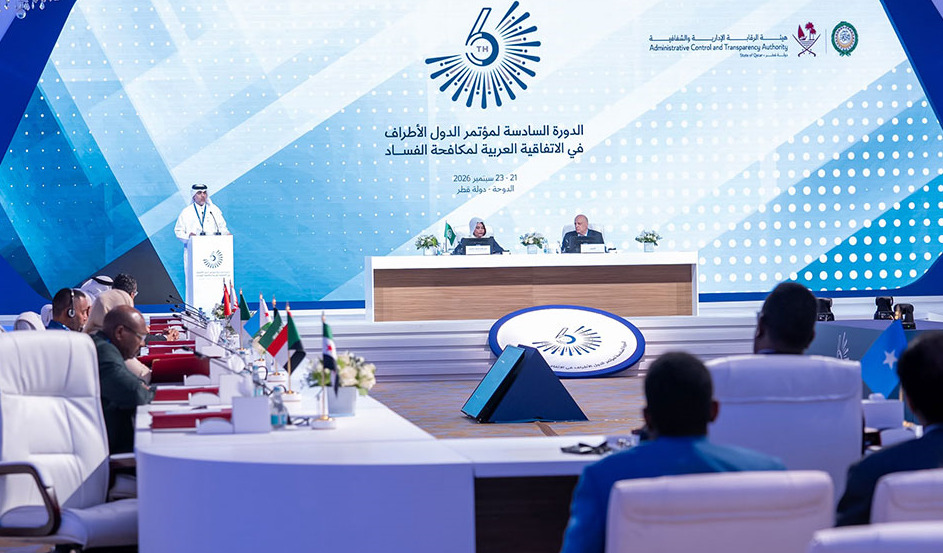
Doha: The sixth session of the Conference of the States Parties to the Arab Anti-Corruption Convention kicked off on Monday under Chairmanship of President of the Administrative Control and Transparency Authority (ACTA), HE Hamad bin Nasser Al Misnad. The conference will run for three days.
In his opening remarks, Advisor to the Head of the Palestinian Anti-Corruption Commission and Chair of the conference's fifth session,Saeed Shehadeh, expressed his gratitude to the State of Qatar for its generous hospitality and warm welcome. He also commended Qatar's efforts during Palestine's presidency of the fifth session, including providing technical and logistical support and organizing and hosting various activities and events during that period.
Shehadeh said the State of Palestine had fully discharged its responsibilities during its presidency despite the severe measures imposed on the Commission by the Israeli occupation, as well as the ongoing developments and repercussions of the war. He noted that these circumstances presented multiple challenges to the work of the
Palestinian presidency during the fifth session.
He also thanked the Arab states that supported Palestine in successfully carrying out its responsibilities and completing the work of the fifth session by hosting activities and facilitating meetings. Such arrangements were necessary because the prevailing circumstances made it impossible to hold these sessions and events in Palestine. He expressed hope that the sixth session would see further joint Arab action and cooperation.
For her part, Acting Head of Legal Affairs Sector and Director of the Legal Affairs Department - General Secretariat and Head of the Conference Secretariat, HE Dr. Maha Bakheet, said the sixth session was convened pursuant to Resolution No. 7 adopted during the conference's fifth session, held from May 5 to 7, 2024, at the headquarters of the General Secretariat in Cairo.
She explained that the resolution established a mechanism for submitting draft resolutions to the Conference of the States Parties to the Convention. She noted that the General Secretariat, represented by the Legal Affairs Sector, the Legal Affairs Department, and the Conference Secretariat, had informed States Parties of the opportunity to submit items or draft resolutions for inclusion in the provisional agenda of the sixth session.
She said several consultative meetings on the draft resolutions were held via video conference in coordination with the Anti-Corruption Commission of the State of Palestine, Chair of the fifth session, and the Administrative Control and Transparency Authority of the State of Qatar, Chair of the sixth session. She added that the draft resolutions on the agenda for adoption during the sixth session address several important issues that contribute to the effective implementation of the Arab Convention against Corruption.
Dr. Bakheet commended the significant efforts made by the conference participants to fulfill its mandate. She noted that these efforts contribute to strengthening joint Arab action to combat corruption, addressing the challenges and responsibilities facing the Arab region in this area, and bringing legal and legislative systems in line with the standards sought by Arab peoples.
The conference's first and second sessions focused on the items on the provisional agenda for the sixth session.
The Conference of the States Parties to the Arab Convention against Corruption serves as an Arab institutional framework for monitoring the implementation of the Convention's provisions, promoting coordination and cooperation among States Parties, and facilitating the exchange of expertise and successful practices in preventing and combating corruption.
The sixth session addresses several key issues, including strengthening the mechanism for reviewing the implementation of the Arab Convention against Corruption, helping to track progress, identify challenges facing Arab states, and work to address them. It also focuses on enhancing preventive measures, developing financial investigation mechanisms, expediting mutual legal assistance procedures, and promoting transparency regarding beneficial ownership and the disclosure of ultimate beneficiaries.
The inaugural session of the Conference was held in Cairo in 2015. As of May 2024, 15 Arab states had ratified the Convention.