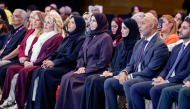
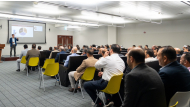
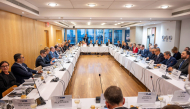
Doha, Qatar: Qatar Red Crescent Society (QRCS) and the University of Geneva’s Geneva Centre of Humanitarian Studies launched today morning a workshop titled “Health Humanitarian Diplomacy: Reconstructing health systems after war in the Arab World”.
The five-day event serves as a platform for a select group of academics, practitioners, and international experts to exchange experiences regarding the role of humanitarian diplomacy in rebuilding health systems in conflict-affected countries, as well as the challenges associated with public health reconstruction and access to humanitarian aid in the region.
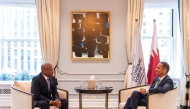
The workshop was opened by Abdullah Sultan Al-Qattan, Acting Secretary-General of QRCS, and Dr. Karl Blanchet, Director of the Geneva Centre of Humanitarian Studies.
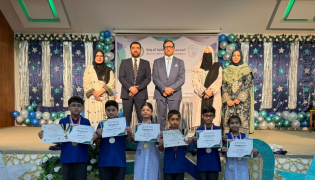
The opening ceremony was attended by Dr. Sultan Barakat, Academic Fellow at the Geneva Centre of Humanitarian Studies; Mohamed Ahmed Al-Beshri, Assistant Secretary-General for Communication and Resource Development at QRCS; Hussein Aman Al-Ali, Assistant Secretary-General for Volunteering and Local Development at QRCS; and Dr. Aiham Ismail Al-Sukhni, Head of International Relations and International Humanitarian Law (IHL) at QRCS.
In his opening remarks, Mr. Al-Qattan stated, “This workshop brings us together around one important goal: helping war-affected communities rebuild their health systems. It is an opportunity to share experiences, learn from one another, and explore how dialogue and cooperation can support recovery and enhance access to health care”.
“This goal is closely connected to our humanitarian mission at QRCS,” added Mr. Al-Qattan. “We value insightful discussions that combine academic knowledge with practical expertise to better serve those in need. We hope our time together will strengthen our partnership and lead to further cooperation in humanitarian health-related efforts”.
Dr. Blanchet commended the collaboration between Qatar and Switzerland on humanitarian diplomacy, highlighting the importance of thinking about how to redesign the human system.
“We cannot continue as it is now,” he commented. “We need to find new ways of thinking. That is why the participants have been selected for this workshop for their diverse experiences and disciplines. I would like to greatly thank QRCS for hosting and making this event a success”.