Doha, Qatar: Before the first ball was kicked in World Cup 2026, much of the conversation revolved around the next generation. By the time the tournament ended, however, it was impossible to ignore another story unfolding quietly in the background. Across stadiums in the United States, Canada and Mexico, football may have been witnessing the final World Cup appearances of a generation that shaped the modern game.
For more than a decade, these players were not just stars. They defined eras, inspired millions, and gave supporters moments that will live forever. They won Ballons d’Or, Champions Leagues, league titles and continental trophies. They broke records that once seemed untouchable. Above all, they gave football personalities that transcended clubs and countries.
As the curtain fell on the 2026 FIFA World Cup, it also feels like the closing chapter of one of the sport’s greatest generations.
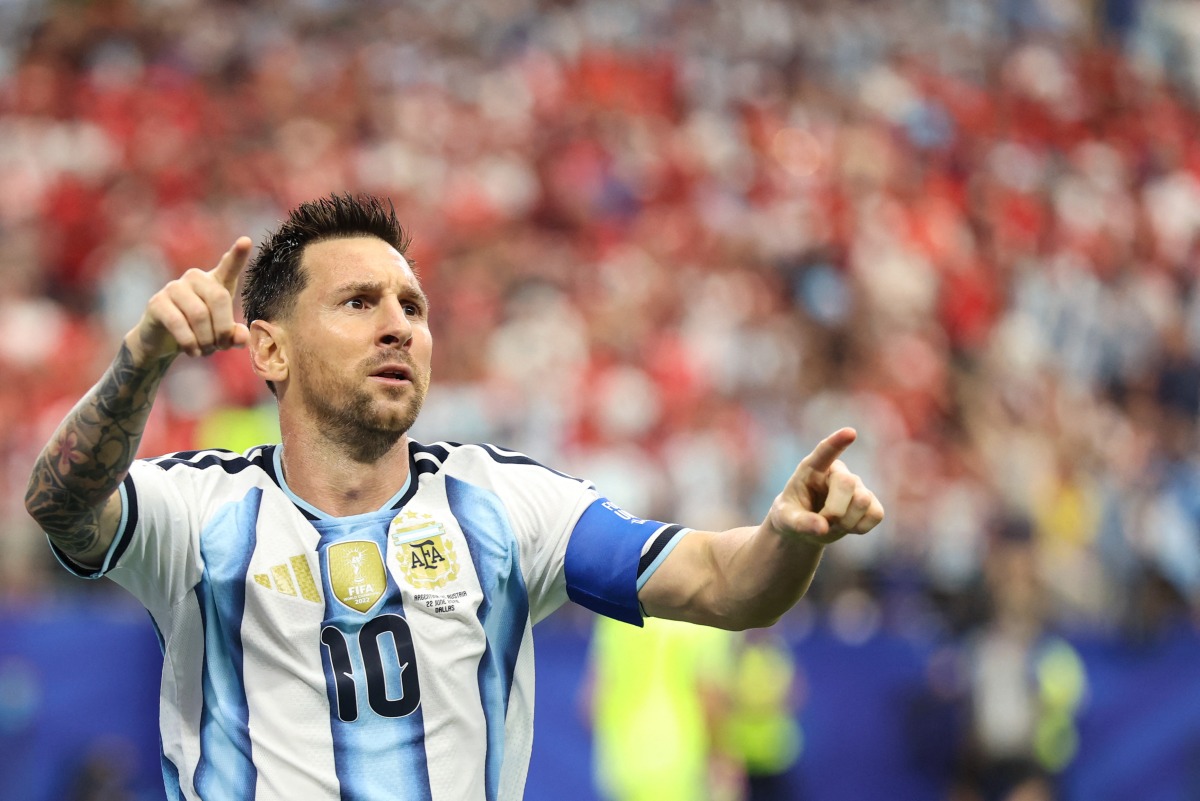
No player embodies that feeling more than Lionel Messi.
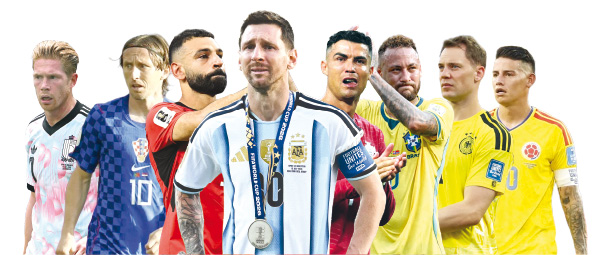 FROM LEFT: Kevin De Bruyne, Luka Modrić, Mohamed Salah, Lionel Messi, Cristiano Ronaldo, Neymar, Manuel Neuer and James Rodriguez (AFP)
From his teenage brilliance in Germany in 2006 to finally lifting the World Cup in Qatar in 2022, Messi’s international journey has been one of football’s greatest stories. Four years after achieving the one trophy that had long eluded him, he returned once more, carrying the hopes of Argentina and reminding the world why he remains one of the finest players the game has ever seen. Whether or not he wears the national shirt again his World Cup story feels complete.
Standing alongside him is Cristiano Ronaldo, whose World Cup journey stretched across two decades. Since making his tournament debut in 2006, Ronaldo has represented consistency, ambition and longevity unlike almost any player before him. Even in the latter stages of his career, his hunger to compete never disappeared. Few footballers have maintained elite standards for so long, and fewer still have inspired generations to dream as he has.
If Messi and Ronaldo defined football’s greatest rivalry, Kevin De Bruyne redefined what it meant to control a midfield. At his best, the Belgian could see passes before anyone else on the pitch even imagined them. Injuries interrupted parts of his later career, but his vision, intelligence and ability to dictate matches made him one of the finest playmakers of his generation.
For goalkeepers, excellence often lasts longer, yet time eventually catches everyone. Manuel Neuer transformed the position, turning the goalkeeper into an extra outfield player years before it became common practice. His performances for Germany, particularly during their 2014 World Cup triumph, changed how coaches viewed the modern goalkeeper. The “sweeper-keeper” is now part of football’s vocabulary largely because Neuer showed the world how effective it could be.
Few midfielders have mastered the game quite like Luka Modrić. The Croatian captain inspired one of the greatest stories in World Cup history by leading his nation to the 2018 final before another remarkable run in 2022. Even as younger legs surrounded him in 2026, his intelligence, composure and ability to control the tempo remained unmistakable.
Then there is Neymar, one of the most gifted entertainers of his generation. Every touch carried unpredictability and every dribble had the potential to change a match. Injuries often interrupted his career at crucial moments, but they never diminished his extraordinary talent. Brazil’s all-time leading goalscorer inspired a generation to play with freedom, flair and confidence, leaving a legacy that extends far beyond the trophies he won.
Not every football icon lifted the World Cup, but that never diminished their greatness. Mohamed Salah transformed Egyptian football and became one of Africa’s greatest ambassadors for the game.
His achievements at club level inspired a generation across the continent, while his humility and professionalism earned admiration far beyond Liverpool or Egypt. Likewise, James Rodríguez will forever be remembered for illuminating Brazil 2014, where his six goals and unforgettable volley against Uruguay captured the Golden Boot and announced him as one of football’s brightest stars.
The 2026 World Cup belonged to a new generation determined to write its own history. But as new heroes emerged, another group quietly walked away from the biggest stage, perhaps for the final time.
One day, fans will speak about watching Kylian Mbappé, Erling Haaland, Jude Bellingham, Lamine Yamal and others with the same nostalgia. But for those who grew up over the past 15 years, this World Cup felt different. It was not simply the end of another tournament.
It may well have been the end of an era.