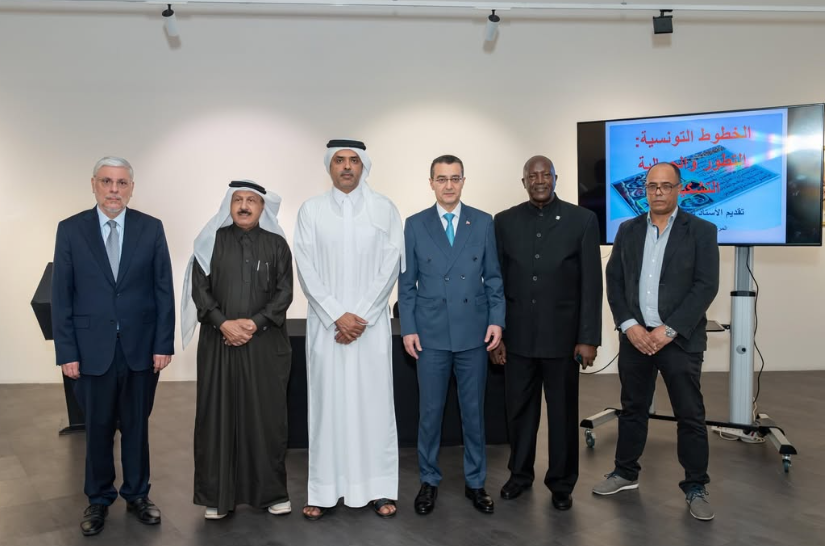
Doha, Qatar: The Katara Cultural Village on Wednesday opened the event on Arabic Calligraphy in Tunisia at its premises.
The opening ceremony was attended by Katara Deputy General Manager Saif Saad Al Dosari, HE Ambassador of the Republic of Tunisia to the State of Qatar Farhad Khalif, a host of Excellencies, ambassadors accredited to the nation, alongside a contingent of intellectuals, artists, and those interested in Arabic calligraphy.
The two-day event is organized in collaboration with the Embassy of the Republic of Tunisia to Qatar and runs until Jan. 22, as part of promoting cultural exchange and paying tribute to the beauty of this calligraphy.
To mark this occasion, HE Farhad Khalif affirmed that organizing this event is part of the commitment to strengthening the Tunisian cultural presence in the State of Qatar. He pointed out that this calligraphy is not merely an artwork, but rather the language of the soul, a vessel of identity, and a bridge that connects the past with the present.
The Tunisian school of Arabic calligraphy represents a unique model that combines historical depth with openness to innovation, thereby reflecting the rich Tunisian civilizational experience, Farhad Khalif underlined.
He further noted the Tunisian and global efforts marshaled to pay tribute to this calligraphy, spotlighting its deep roots and close connection with Arab and Islamic identities.
The Ambassador lauded the productive collaboration with Katara, considering this cultural partnership as the epitome of the long-standing fraternal relationship between Tunisia and Qatar.
He stressed that this relationship underscores the shared belief in the importance of culture and arts in strengthening dialogue and people-to-people connections.
The event featured an art exhibition showcasing 18 calligraphic works that highlight the mastery of the Tunisian calligrapher Tawfiq Al Aisawi and the rich aesthetics of Arabic script in its varied forms.
Visitors were invited to experience pieces that combine technical precision with aesthetic and spiritual depth, reflecting the profound artistic heritage of Tunisia in this field.
As part of the program, Al Aisawi delivered an artist talk on Tunisian Calligraphy: Evolution and Artistic Aesthetics, offering an artistic and scholarly analysis of the origins and historical development of Arabic calligraphy in Tunisia.
He highlighted the key Tunisian scripts, their artistic characteristics, and their role in preserving cultural identity while fostering contemporary creativity.
The exhibition and lecture provided attendees with a unique opportunity to explore both the historical evolution and ongoing innovation in Arabic calligraphy, demonstrating its continued relevance in both heritage preservation and modern artistic expression.
On Thursday, the event will feature an interactive workshop to familiarize participants with the key Tunisian calligraphy scripts.
Attendees will have the opportunity to explore calligraphy tools and techniques, as well as inscribe their names in artistic scripts, in a live cultural experience that combines learning, direct participation, and creative engagement.