DOHA: As the world marks the International Day of Education on January 24, 2026, the role of young people in shaping a more sustainable and resilient future is taking centre stage across the Middle East and North Africa.
Observed globally under the theme “The Power of Youth in Co-Creating Education,” the United Nations-designated day, led by UNESCO, highlights how education is not only a pathway to knowledge, but a driver of peace, sustainable development and social progress.
Against this backdrop, the Education Above All (EAA) Foundation is advancing its youth-focused initiative, Green Visions and Thriving Futures: Empowering Youth for Sustainable Impact, implemented in partnership with UNICEF’s Generation Unlimited programme. The project supports young people in Egypt, Jordan and Lebanon to respond to climate change while strengthening access to employment, entrepreneurship and opportunities within the green economy.
The initiative aims to reach more than half a million young people through a comprehensive pathway that begins with volunteering and climate education, advances to youth-led community environmental action, and culminates in skills development and links to employment and freelance opportunities.
In Jordan, EAA Foundation has established several youth stories that reflect the initiative’s impact on the ground.
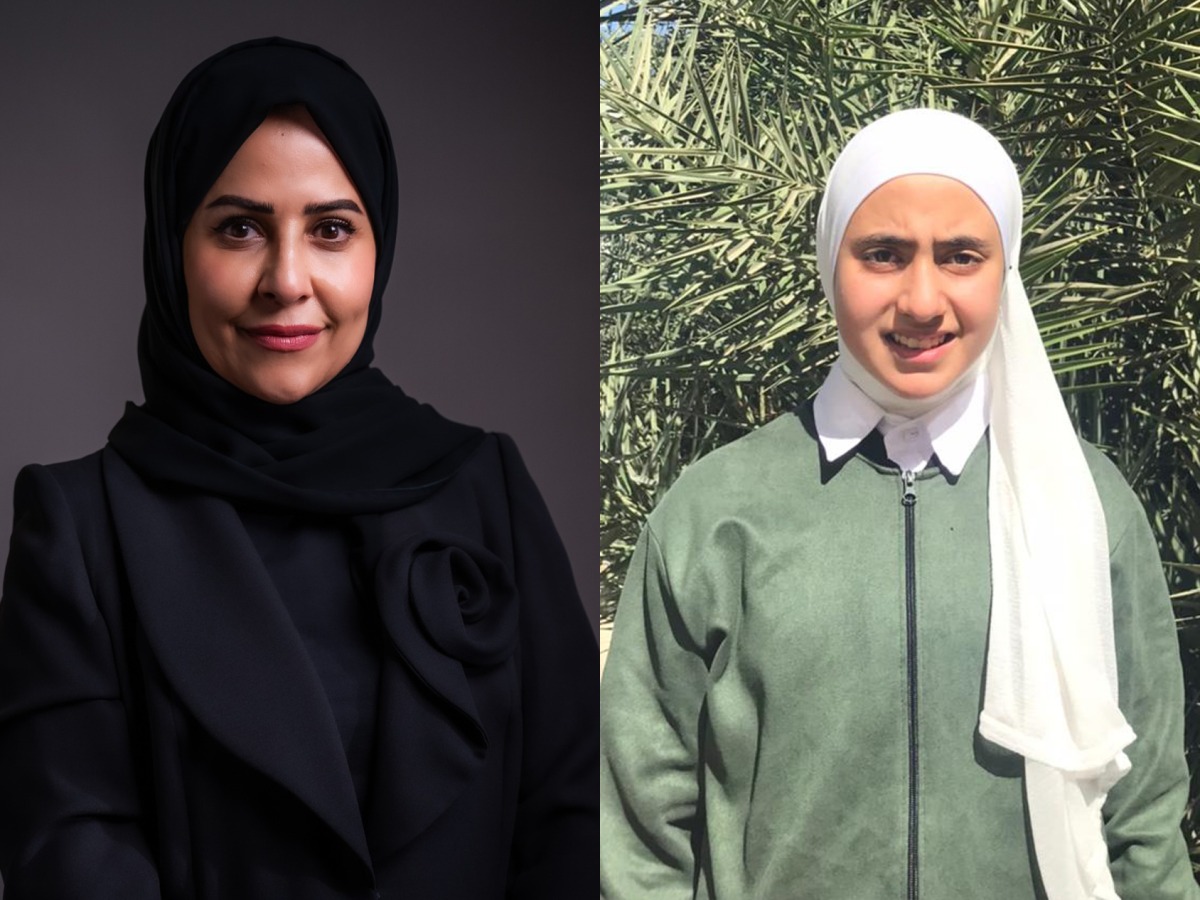
Arwa Musa’ed (left) and Retaj Mortada
Executive Director of the Reach Out To All Programme at the EAA Foundation, Arwa Musa’ed in a statement to The Peninsula said, “These stories reflect the power of investing in young people in Jordan, Egypt, and Lebanon, not merely as beneficiaries, but as leaders of change. Through the Education Above All Foundation, in partnership with UNICEF’s Generation Unlimited initiative, and through the ‘Green Visions and Thriving Futures’ project, we are empowering youth to translate environmental awareness into tangible action that strengthens community resilience and contributes to building sustainable pathways for economic empowerment.”
“When young people are equipped with the right skills, opportunities, and support, they become active partners in addressing climate challenges and shaping a more sustainable future,” she added.
In Tafileh Governorate in Jordan, Malek Sawalqah stands out as a model young leader who has chosen to make environmental action a life's work and a national responsibility. A youth activist and the founder and leader of the Kawn initiative and team for environmental, climate, and tourism action, Malek began his journey driven by a firm belief that change begins with the individual, and that every person bears responsibility for leaving a positive impact on their community and country.

Malek Sawalqah
Malek believes that environmental action is not a luxury, but a collective duty, and that positive influence through community-based initiatives contributes to building a more aware and cohesive society. Motivated by this belief, he joined the
programme after learning about it through social media platforms, where he was drawn to its practical approach and supportive policies that offered a genuine space for turning ideas into reality through sustained support and follow-up.
Through his participation, Malek received a range of specialised training, opportunities for building professional relationships, and access to practical resources and tools that helped strengthen his self-confidence and develop his skills in planning, implementation, and teamwork. This experience enabled him to move from ideas to action, and from individual effort to structured, institutional work.
Over the past year and a half, Malek and his team led a wide range of environmental activities across Tafileh Governorate, leaving a clear and lasting impact on both the environment and the local community. Approximately 3,000 trees were planted across different areas of the governorate, contributing to the enhancement of vegetation cover and efforts to mitigate climate change impacts. In parallel, awareness-raising and training sessions reached nearly 800 participants from different age groups and governorates, focusing on environmental awareness, correcting misconceptions, and promoting positive environmental behaviours.
In addition, Malek and his team established more than 10 eco-tourism trails, engaging over 600 participants in initiatives that combine environmental protection with the promotion of sustainable eco-tourism. Malek notes that witnessing participants embrace the idea, engage actively, and change their behaviours was among the most inspiring aspects of the journey, providing powerful motivation to continue despite challenges.
The path was not without obstacles. In the early stages, Malek and his team faced challenges related to social norms, limited environmental awareness, skepticism toward environmental action, and ongoing resource constraints that continue to limit the implementation of some ideas. However, Malek considers these challenges an integral part of the experience, one that helped refine his character, strengthen his leadership abilities, and foster innovative solutions within available means.
Malek affirms that the experience transformed his outlook on life, making him more conscious, responsible, and committed to ensuring that every action he undertakes delivers real and sustainable impact. Looking ahead, he aspires to continue this path with integrity and dedication, further develop himself in the service of his community, and contribute to building a deeply rooted environmental culture based on shared responsibility.
In the country’s Karak Governorate, the story of Retaj Mortada Al Soub illustrates how small, local opportunities can evolve into impactful pathways for change. A member of Al-Ghuwayr Youth and Girls Centre and a participant in the Climate Change Ambassadors initiative, Retaj began her journey with a simple interest in home gardening at the centre, before expanding her experience to include hydroponic farming, a turning point in her personal and community engagement.
Retaj’s participation came through the Maharati programme, which enabled her to connect with project partners and engage in its activities. Over time, she received comprehensive support, including training, financial skills development, financial assistance, materials and tools, and technical guidance from specialists in agriculture and climate change. This support empowered her and her peers to successfully cultivate a range of crops, including lettuce, peppers, and flowers, harvest them, and continue developing the hydroponic system within the centre.
Alongside hydroponic farming, Retaj participated in environmental cleanup campaigns at the governorate level, helping embed a culture of teamwork and environmental stewardship. She emphasises that collective commitment and teamwork were central to the success and sustainability of these initiatives.
Retaj notes that challenges were inevitable, particularly in securing some of the materials required for hydroponic farming. However, cooperation with the management and personal support enabled the team to overcome these constraints and sustain the initiative despite limited resources.
The experience had a profound impact on Retaj’s life. She became recognised within her community as a Climate Change Ambassador and a confident leader capable of speaking publicly about environmental issues and adaptation strategies. With strong support from her family, trainers, and supervisors, her confidence grew, reinforcing her determination to continue on this path.
Looking to the future, Retaj aspires to specialise in agriculture, recycling, and climate change, contribute to addressing negative climate phenomena, and represent Jordan at local and international forums. She also aims to transform Al-Ghuwayr Youth and Girls Centre into an environmentally friendly centre, leveraging available agricultural spaces and continuing partnerships to enhance impact and sustainability.
In the same Governorate, Yaman Al Dmour joined the project through Al-Ghuwayr Youth and Girls Centre, where his involvement in hydroponic farming, cleanup campaigns, and recycling initiatives significantly developed his leadership skills and strengthened his sense of responsibility to his community and environment.

Yaman Al Dmour
Yaman participated in planting seedlings and selling them to support the continuity of the project, using the proceeds to secure essential resources for hydroponic farming. This approach provided a practical model that integrates environmental and economic sustainability. He also took part in governorate-wide cleanup campaigns and contributed to recycling available resources, generating a tangible positive impact on the local environment and raising community awareness about resource conservation.
Yaman highlights that challenges, particularly resource shortages, became a catalyst for innovation and teamwork. Through technical supervision, collaboration with specialists, and the maximisation of available resources, these challenges were effectively addressed. The experience strengthened his commitment to volunteerism and deepened his appreciation of both hydroponic and traditional agriculture.
Looking ahead, Yaman aims to pursue academic specialisation in agriculture, expand his participation in environmental initiatives at local, national, and international levels, and support the transformation of Al-Ghuwayr Youth and Girls Centre into a model of environmental sustainability.
The stories of Malek, Retaj, and Yaman present strong examples of Jordanian youth who, supported by Education Above All Foundation and Generation Unlimited (UNICEF), have transformed environmental awareness into action and initiatives into sustainable impact. These experiences reaffirm that investing in youth is an investment in a more sustainable future, where young people emerge as genuine partners in environmental protection and in building resilient, informed communities capable of addressing climate change.
Through Green Visions and Thriving Futures, Education Above All Foundation continues its commitment to empowering youth and strengthening their role in achieving sustainable development, guided by the belief that real solutions begin with people and flourish when vision and action come together.