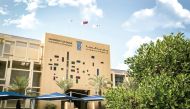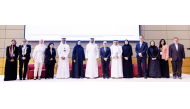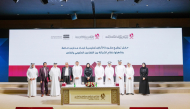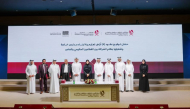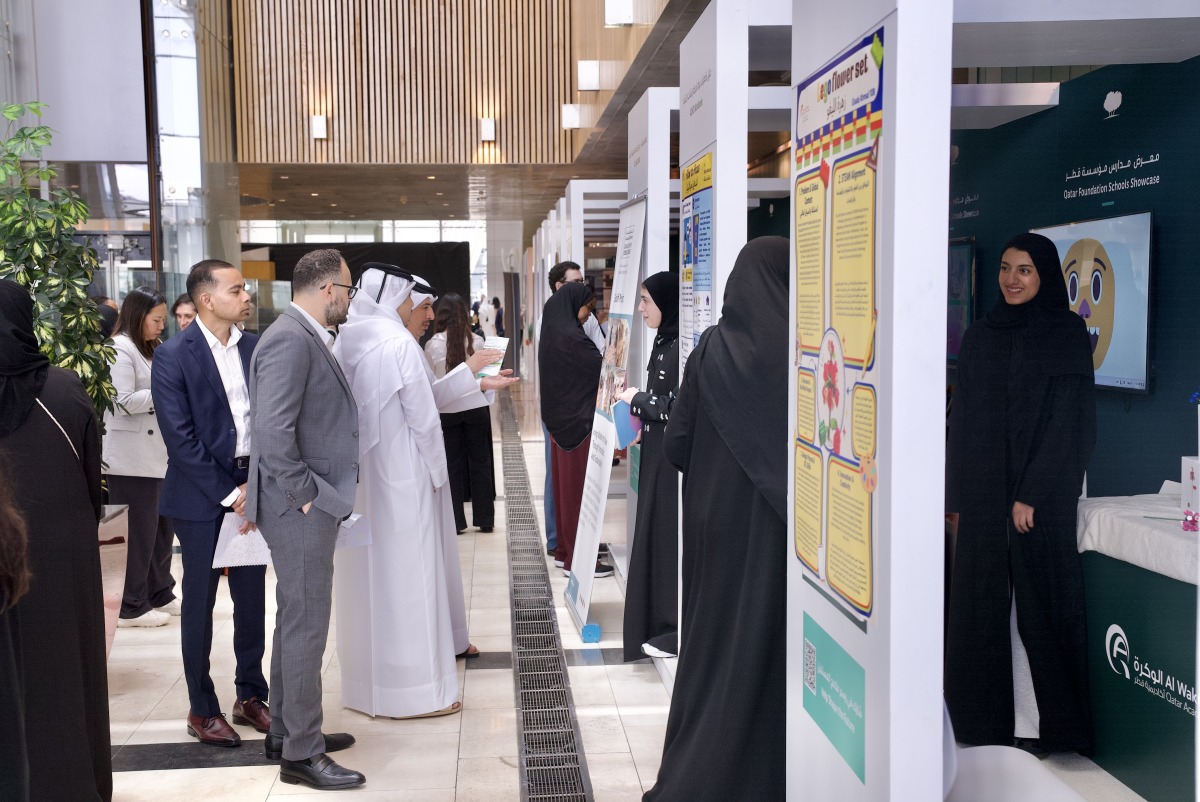
Around 50 student projects in artificial intelligence, sustainability, science, health, and culture highlighted the role of education in preparing an innovative and future-ready generation. Photos by Ahmed Barakat / The Peninsula.
Doha, Qatar: Chairperson of Qatar Foundation, H H Sheikha Moza bint Nasser, attended the ‘Qatar Foundation Schools Showcase’ at Qatar Science & Technology Park yesterday, where around 50 student projects in artificial intelligence, sustainability, science, health, and culture highlighted the role of education in preparing an innovative and future-ready generation.
Vice Chairperson of Qatar Foundation, H E Sheikha Hind bint Hamad Al Thani, also attended the first edition of the showcase organised by QF’s Pre-University Education, which brought together students, experts, researchers, and industry partners to advance applied learning and future-focused skills.
During the showcase, Sheikha Moza and Sheikha Hind interacted with students, discussing their projects, ideas, and aspirations and innovative solutions they had developed.
President of QF’s Pre-University Education, Abeer Al Khalifa, said the showcase reflected how talent development begins long before university or the workplace.
“Showcases such as this demonstrate that talent development does not begin at university or in the workplace, it starts much earlier, in our schools,” she said. “When young people are given opportunities to apply their learning, engage with authentic challenges, and communicate their ideas with confidence, they begin to see themselves as contributors to Qatar’s future from an early age.”
She added that creating such platforms helps position K–12 education as a vital part of Qatar’s long-term talent development journey.
The showcase also brought together representatives from Hamad Bin Khalifa University, QSTP, Qatar Research, Development and Innovation Council, Qatar National Library, public and private sector partners, and QF alumni, giving students the opportunity to see how their ideas connect with Qatar’s future priorities.
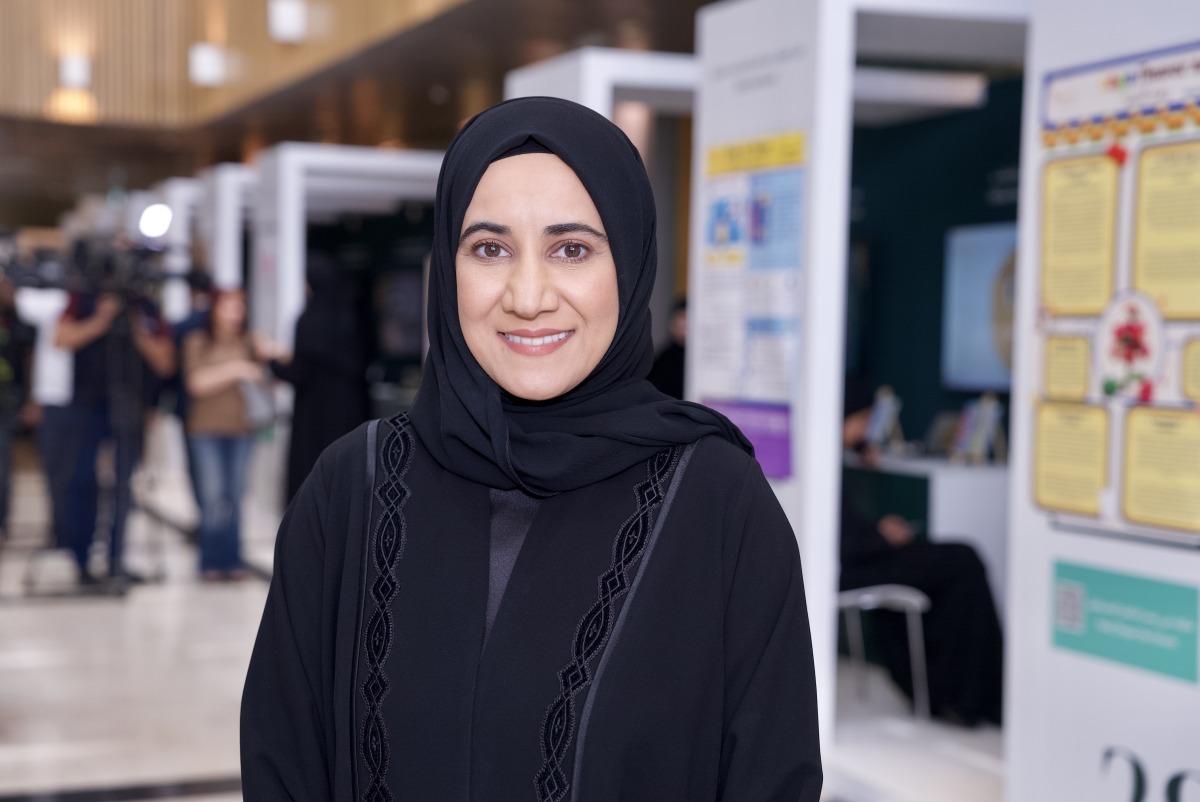 Programme Director at QSTP Hayfa Al Abdulla
Programme Director at QSTP, Hayfa Al Abdulla, told The Peninsula that nurturing young innovators is central to QF’s vision.
“At Qatar Foundation, we believe talent is at the core of what we do. At QSTP, we aspire to see innovations and technologies developed in Qatar reach the world, and that starts with a spark,” she said. She explained that many of the projects showcased students using technology and analytical thinking to tackle pressing global and local challenges.
“We are seeing students working on solutions related to climate monitoring, filtration, sustainability, and healthcare. These are exactly the kinds of ideas that can feed into Qatar’s innovation ecosystem,” she said. “Many of these projects are still at the idea or concept stage, and what we encourage is for students to continue refining, testing, and developing them further with the support of professors, researchers, and technical experts,” she said.
She added that the long-term goal is to help transform ideas into impactful startups and solutions that can benefit wider communities.
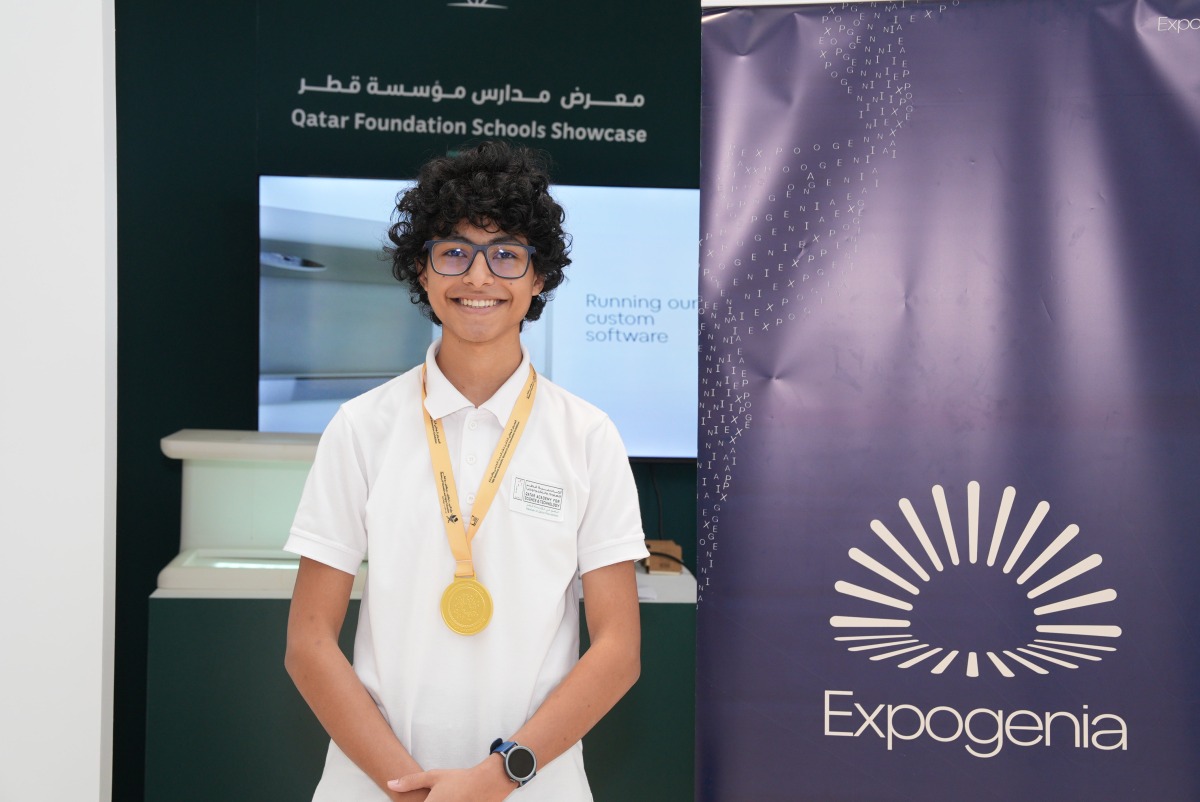 Malik Youssef
“This is where the future begins, not waiting for opportunities, but creating them. These students are learning to become proactive, solve real challenges, and potentially create their own jobs and companies in the future,” she said. Among the standout projects was ‘Expogenia,’ developed by Malik Youssef and a team from Qatar Academy for Science and Technology. The project focuses on diagnosing diseases through chest X-rays using hierarchical machine learning.
“Our project mainly focuses on diagnosing pathologies within chest X-rays,” Malik said.
“We developed our own machine learning model targeting 10 disease classes. It first checks whether a scan is normal or abnormal, and then classifies the disease if the scan is abnormal. Through this technique, we are able to provide higher-quality results than many existing studies.”
Speaking about the future of the project, he said the team hopes to improve the system further through collaboration with researchers from Weill Cornell Medicine-Qatar (WCM-Q). “In the future we aim to partner with hospitals and pharmacies not just in Qatar but internationally.”
Malik added that the showcase created valuable networking opportunities for students. Malik and the team recently won first place at the National Scientific Research Innovation Exhibition organised by the Ministry of Education and Higher Education and Qatar Research, Development and Innovation Council. Another student project drawing attention was the ‘3D Printing of Organs’ initiative by Nasser Saleh Mansouri from Qatar Academy Doha, which explored the use of 3D-printed human organs for education and medical applications.
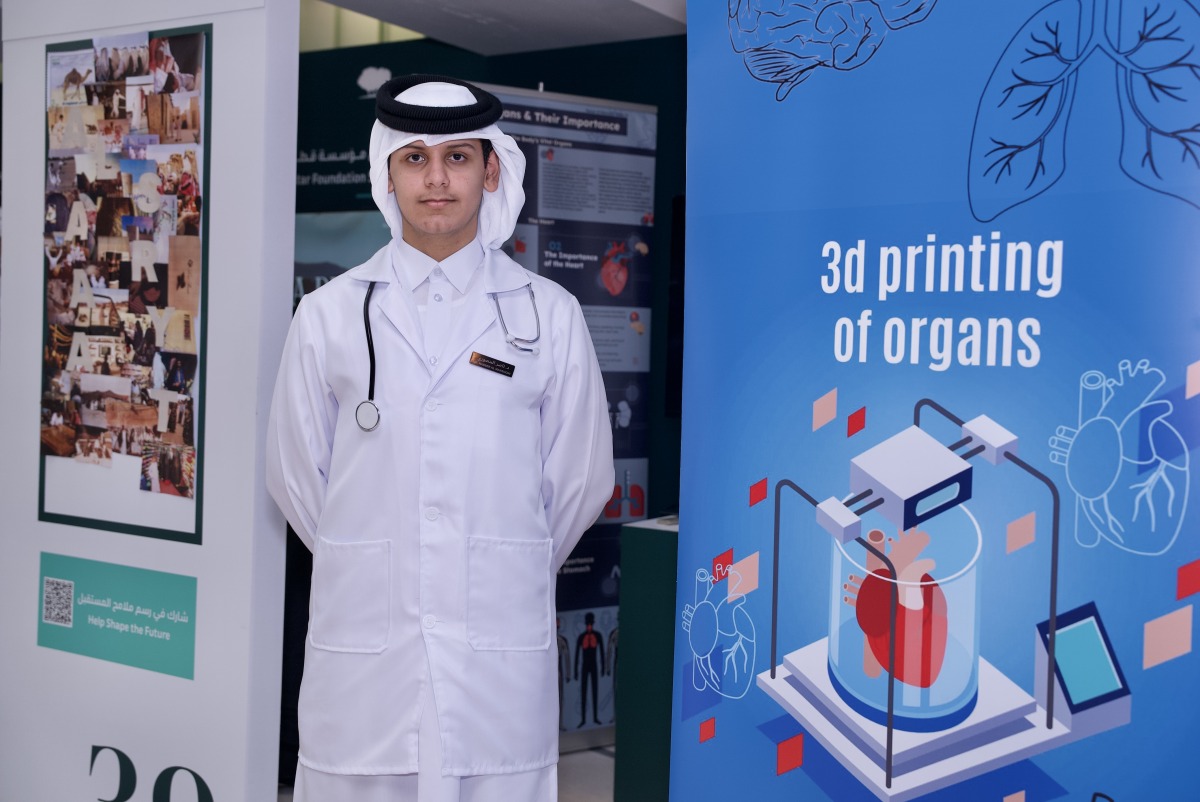 Nasser Saleh Mansouri
“My project is about 3D modelling and printing of organs because it has a lot of potential in the medical industry,” he said. “It could be used for surgery practice, organ transplants, treatment planning, and educating students about the human body.”
He said he hopes such technology could eventually be produced locally in Qatar.
“Maybe in the future we can locally produce biomedical printers to print organs for surgery practice and education,” he said. “It could help schools and also contribute to the development of the medical sector in Qatar.”
Nasser added that events such as the showcase help students gain exposure and inspire greater interest in medicine and innovation among young people in Qatar.
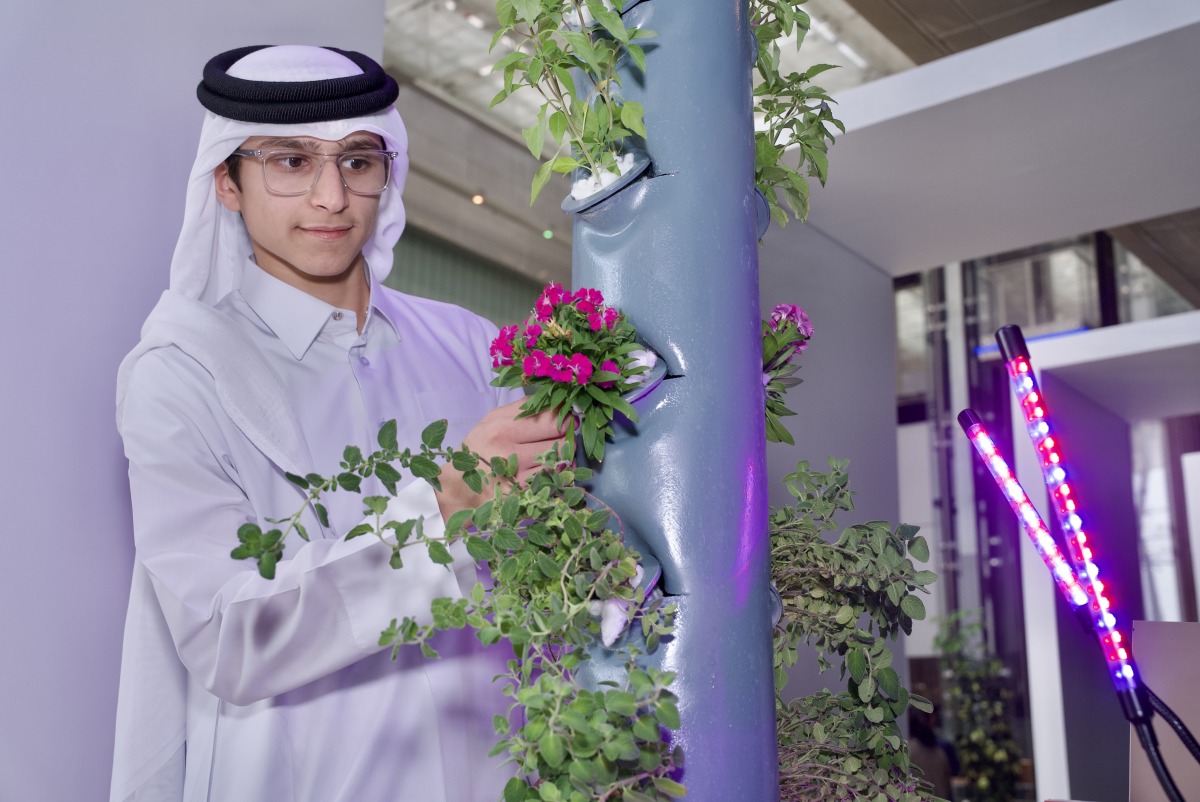 Yousef Mohamed Al Tamimi
Sustainability and food security were also key themes at the showcase. Yousef Mohamed Al Tamimi from Qatar Academy Al Khor presented a “Vertical Aeroponic Herb Farm,” which grows herbs using nutrient-rich mist instead of soil.
“What inspired me was growing plants with my dad,” he said. “When summer came, the Qatar sun destroyed the plants, and I realised traditional farming isn’t suitable for our region. That made me think about alternative solutions.”
The project successfully grew multiple herbs and plants within a single aeroponic system and can be operated indoors using UV, red, and blue lighting.
Looking ahead, Yousef hopes to make the project even more sustainable.
“I want to introduce solar panels so the system becomes more self-sufficient and depends less on electricity,” he said. “This supports Qatar Vision 2030 goals related to food security and environmental sustainability.”
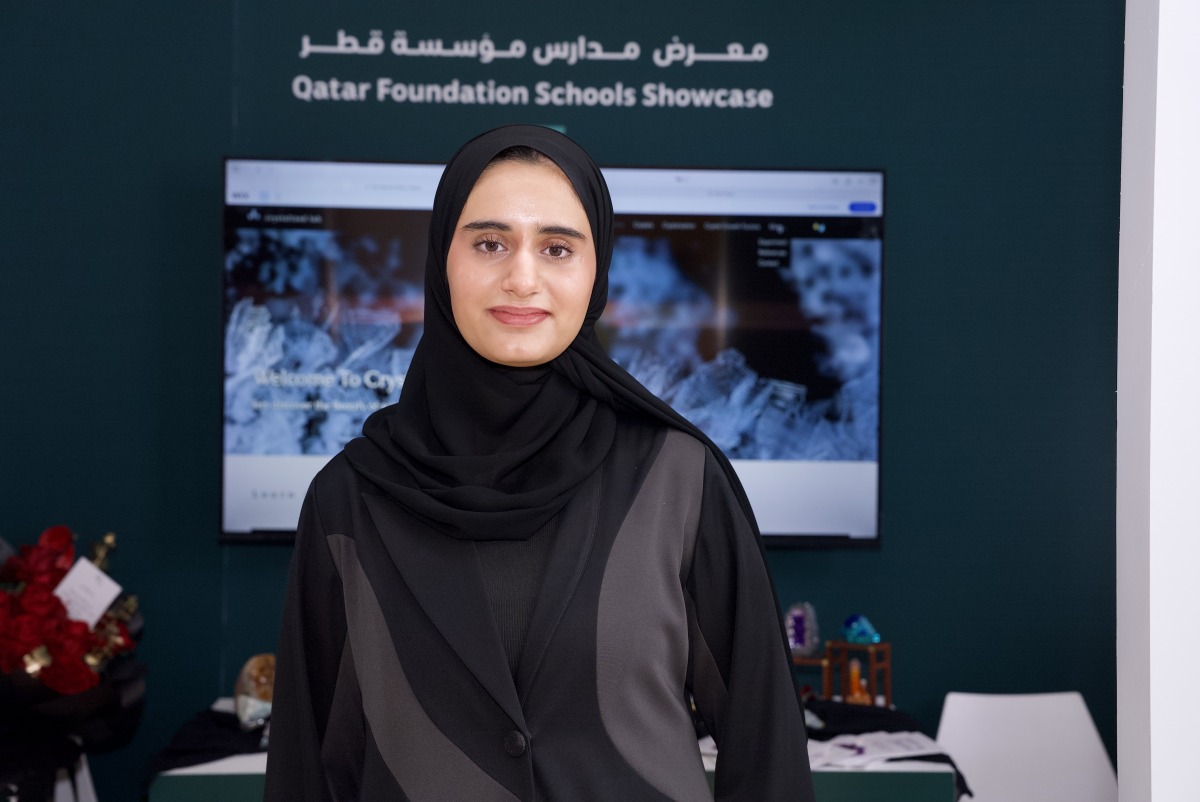 Reem Ahmad
He also revealed that researchers from Hamad Bin Khalifa University had shown interest in the idea during the showcase. Creativity and science also came together through the work of Reem Ahmad from Qatar Academy Al Wakra, who developed an educational website exploring crystals and the science of crystallisation. “My project explains what crystals are, how they form in nature, and how factors such as temperature and concentration affect their formation,” she said. “I also included experiments that help students safely grow crystals at home in an easy and visually engaging way.” Reem said the project was designed to make science more accessible and creative for students and curious learners alike.