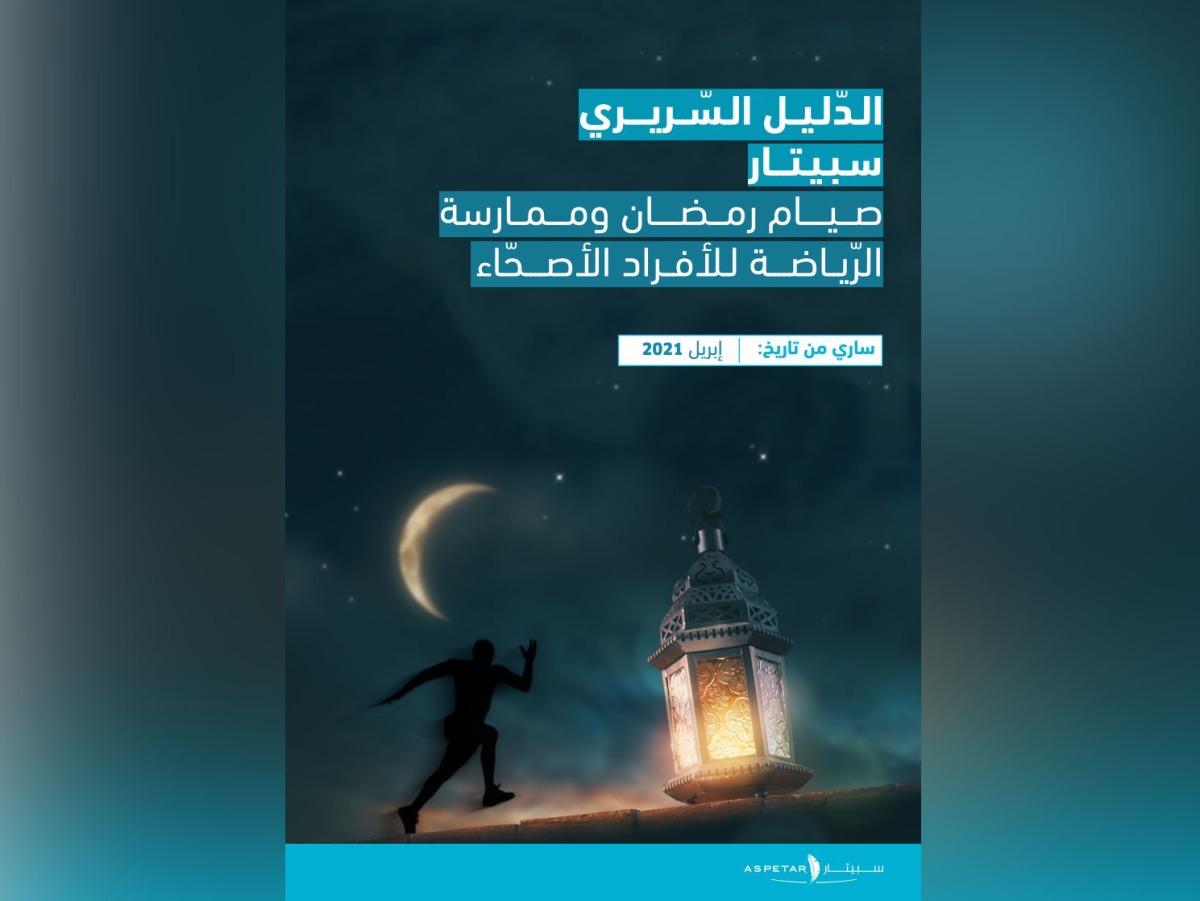
Doha: Aspetar, an Orthopaedic and Sports Medicine Hospital, has issued the first of its kind clinical guideline to address Ramadan fasting and exercise for healthy individuals.
The guideline was developed according to international best practice, and is the result of extensive collaboration among specialists in Qatar and international experts representing scientific and educational institutions in Tunisia, Malaysia, Singapore, Morocco, Italy, Canada, and New Zealand.
It will be reviewed and updated regularly to integrate current best evidence and expert opinions from all relevant specialists and athletes involved with training and competing during Ramadan.
The 21-page guideline discusses topics related to exercise and health practices in healthy individuals and professional athletes during the month of Ramadan. It also talks about the right time to train before and/or after Iftar, the guideline also addresses the principle of repetition, intensity of the exercise, time, and type for optimal training. In addition, other important aspects are also discussed including nutrition, hydration, and cooling strategies, without neglecting the psychological and spiritual effects, and social and cognitive aspects of exercising during the holy month.
Stressing the importance of this guideline, the authors emphasised that fasting during Ramadan not only affects the athlete’s ability to train and compete, but also hinders the general community from exercising while fasting. Some athletes’ daily training and competition performance are also impacted by fasting.
Professor Karim Chamari, Guideline Development Group (GDG) lead and Aspetar Scientific Researcher said, “The main purpose of this guide is to define the appropriate management of healthy, adolescent, and adult athletes who are exercising during the month of Ramadan. The second purpose is to provide meaningful advice for healthy members of the general community as a helpful reference for doctors, physiotherapists, nursing staff, and health education officials to enable them to provide appropriate advice to athletes, trainers, and members of the community at large.”
According to the guide, fasting during Ramadan has an impact on several variables, most notably nutrition, hydration, and sleep patterns.
The researchers noted that these recommendations should not be ‘one size fits all’ but should consider the disparity between athletes and individuals and their special needs (biological, psychological, cognitive behaviour), as well as their social and cultural environment.
Fasting athletes and the rest of society at large may have to face particularly difficult situations when training, competing, and exercising during the month of Ramadan, regardless of whether they reside in a Muslim-majority country or in a non-Muslim majority country. Coaches and athletes should also be aware of the different strategies needed according to the geographical location and time of the year due to the length of the daylight fast.
Aspetar is a world-leading sports medicine and science institution. It is committed to helping athletes achieve their full potential, Aspetar’s excellence in delivering the highest standard clinical, education, and research services are well recognized.
Aspetar experts publish well over a hundred scientific articles in peer-reviewed journals and delivers accredited education to more than 10,000 healthcare practitioners every year. One such event, relevant to fasting in Ramadan, was a global conference in November 2011 in collaboration with FIFA where the effects of fasting on footballers was spotlighted.