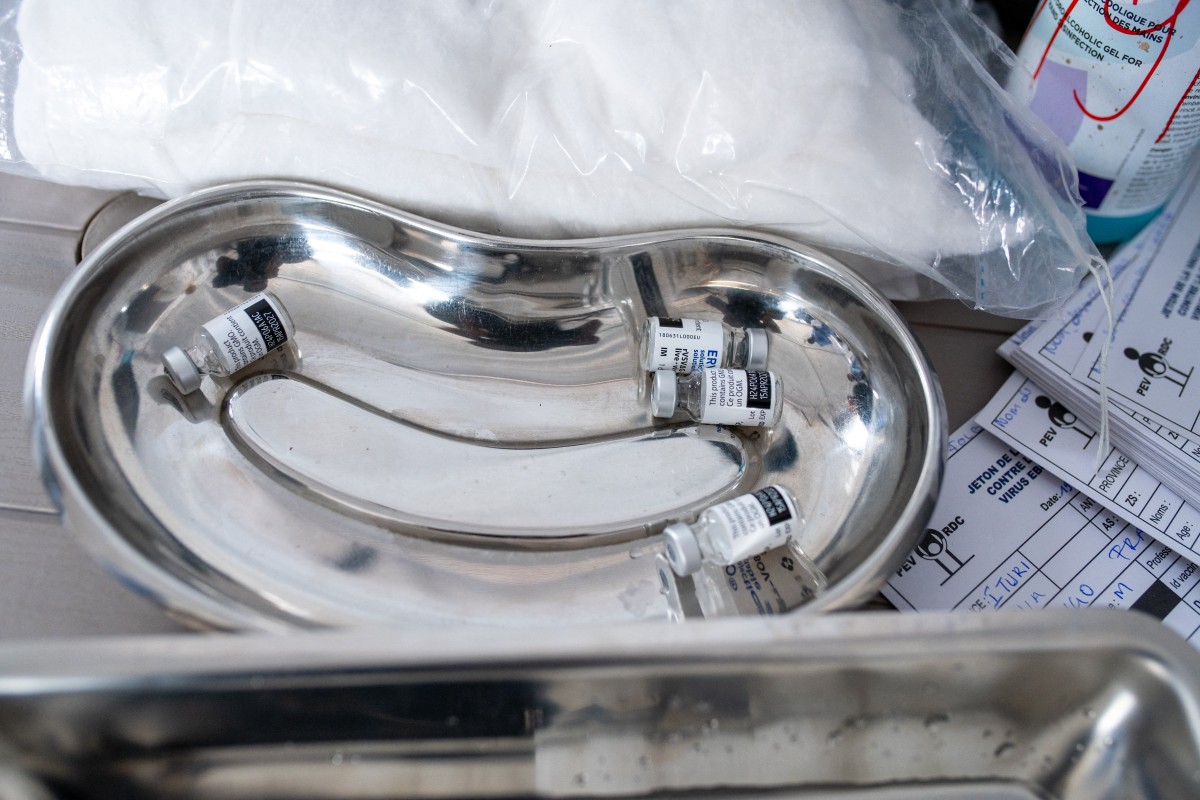
A general view of the vaccine developed for a strain of the Ebola virus at the Provincial Laboratory of Ituri in the northeastern province of the Democratic Republic of the Congo, on September 19, 2026. File photo for representation.
Addis Ababa: The Africa Centers for Disease Control and Prevention (Africa CDC) has reaffirmed its commitment to supporting Kenya’s public health response following four newly confirmed Ebola infections, which brought the national caseload to seven.
Kenya's Ministry of Health on Saturday confirmed that all four new cases were detected among individuals already under quarantine following exposure to the initial case, as efforts to prevent community transmission of the hemorrhagic fever gather momentum.
In a statement issued late Saturday, the Africa CDC said that Kenya's early identification demonstrates the critical role of contact tracing, surveillance, and timely isolation in interrupting transmission and protecting communities.
The African Union's specialized continental public health agency also commended the Kenyan authorities for their "leadership, swift public health measures and transparent communication throughout the response."
"Africa CDC stands firmly alongside the government and people of Kenya, healthcare workers and all those affected by this outbreak," it said. "Protecting lives requires sustained vigilance, public trust, community engagement and coordinated action."
Noting that the evolving Ebola outbreak in the Democratic Republic of the Congo reinforces the urgency of strong regional preparedness, the Africa CDC called on countries and partners to strengthen cross-border surveillance, information sharing, early detection and coordinated public health action across the continent.
The agency further encouraged communities to remain vigilant, follow guidance from national health authorities, and report symptoms promptly.
Ebola spreads through direct contact with the blood or bodily fluids of an infected person, or through contaminated materials. Early detection and access to appropriate care improve the chances of survival and help prevent further transmission, it said.