KHARTOUM: Bank of Khartoum, Sudan’s biggest privately-owned bank, plans to add 12 more retail branches and launch financing for livestock exports to Gulf countries, its head said in an interview.
Undeterred by insurgencies, poverty, a scarcity of dollars and spiralling inflation, the bank — which was founded 100 years ago during British colonial rule — has been steadily expanding its business in the African country.
Its main shareholders, Dubai Islamic Bank, Sharjah Islamic Bank and Abu Dhabi Islamic Bank, are currently more than tripling the capital to 1bn Sudanese pounds (around $225m based on the official rate).
The bank will add 12 new retail branches and cash points, mainly in eastern and central Sudan, bringing the total number to 75 by next year, General Manager Fadi Faqih said on Tuesday.
“The retail business is the promising side of the business,” he said. The consumer loan book was growing, helping the retail business to contribute to more than the current 30 percent to overall net profits, he said, without being more specific.
In a second expansion step, the bank will launch several dedicated funds for private firms to finance the export of livestock and agricultural products such as sesame seeds to Gulf Arab countries, Jordan and Egypt.
“There is strong demand for livestock from Sudan,” he said. Several such finance funds, each worth up to ¤50m ($67m), were in the works with one of them about to be started, he said, without giving details.
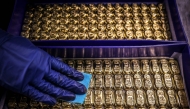
Faced with the loss of most oil reserves to South Sudan when it seceded in 2011, Sudan is trying to boost exports of gold and farming exports such as cotton, cash crops or gum arabic from its vast farmlands.
The expansion of the retail business and the new export finance unit would offset slower growth of the corporate business, helping to propel 2013 net profit to slightly above last year’s 200 million Sudanese pounds, he said.
The bank had taken the decision not to expand its corporate loan book or stop arranging new Islamic bonds, or sukuk, for the time being due to Sudan’s economic crisis. “It’s not worth to do any kind of government or corporate sukuk at this stage,” he said.
The loss of oil revenues, which used to be the main source for state revenues and dollars needed to pay for food imports, has thrown the economy into turmoil. The Sudanese pound has more than halved in value since the secession, while inflation has risen, driven by the need to import wheat and other food items.
Reuters