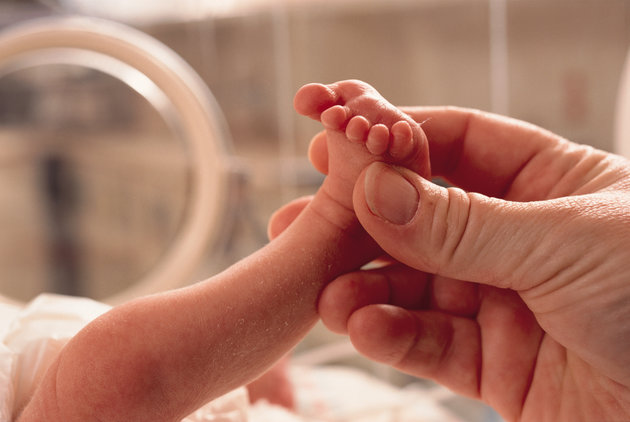
File photo
Beijing, China: China's birth rate plunged last year to its lowest level on record, official data showed on Monday, as its population shrank for a fourth straight year despite efforts to curb the decline.
It is now threatened with a demographic crisis after its birth rate halved over the past decade, despite the end of the restrictive "one-child" policy.
There were just 7.92 million births recorded last year, Chinese officials said on Monday, a rate of 5.63 births per thousand people.
It was the lowest birth rate since National Bureau of Statistics (NBS) records began in 1949.
The United Nations has predicted that China's population could fall from around 1.4 billion today to 800 million by 2100, even though it has taken measures to boost fertility rates.
Births fell by 1.62 million in 2025, a drop of 17 percent year-on-year, NBS data showed.
China's population also fell by 3.39 million people last year compared to 2024, extending the annual decline that began in 2022.
The government has scrambled to boost marriage and fertility rates, offering childcare subsidies and taxing contraceptives as it grapples with a rapidly ageing population.
China also recorded 11.31 million deaths in 2025, a mortality rate of 8.04 per thousand -- leading to a population decline of 2.41 per thousand, NBS data showed.
High costs
Marriage rates are also at record low, with many young Chinese couples put off from having babies by high child-rearing costs and career concerns.
Many couples born during China's family planning period -- each only children -- are now grappling with the responsibility of raising children while caring for two sets of ageing parents.
Authorities have attempted to address the flagging birth rate with a raft of measures intended to promote having children.
A nationwide childcare subsidy policy, which took effect on January 1, offers parents the equivalent of around $500 annually per child under the age of three.
Authorities also waived fees for public kindergartens beginning last fall.
And consumers must now pay a 13 percent value-added tax for contraception after Beijing removed exemptions from January 1.
Despite government efforts to reverse the trend, China ranked among the top 10 countries with the lowest birth rates in 2023, according to World Bank data, just after Japan.
Young Chinese have largely shrugged off these measures, saying they are not enough to address the problem.