Layan Alqaiseyah. Pictures: Walieldin Mohamed / The Peninsula
Doha, Qatar: The University of Doha for Science and Technology (UDST) hosted a collaborative initiative, ‘Zero Waste Campus 2026 ’, that engaged students, industry professionals, and sustainability advocates in discussions on innovative waste management solutions, resource recovery strategies, and promoting environmental stewardship.
In partnership with SLB, Dolphin Energy, and the British Embassy in Doha, the event organised by the University’s College of Engineering and Technology highlighted students’ creativity while strengthening academia-industry partnerships to tackle environmental challenges.
President of UDST, Dr. Salem Al-Naemi stated, “At UDST, we believe that meaningful progress towards sustainability requires more than awareness. It requires innovation, collaboration, and tangible action. Zero Waste Campus 2026 reflected our commitment to empowering students to become active contributors to solving real-world environmental challenges.”
By advancing student-led initiatives and embedding sustainable practices, the University continues to champion applied research, environmental responsibility and innovation in Qatar.
“This initiative represented an important step in advancing our sustainability ambitions and contributing to Qatar National Vision 2030,” Al-Naemi said.
Speaking to The Peninsula, UDST students highlighted how their innovative projects are translating sustainability concepts into practical solutions, from reducing single-use plastics and improving recycling practices to converting food waste into valuable resources.
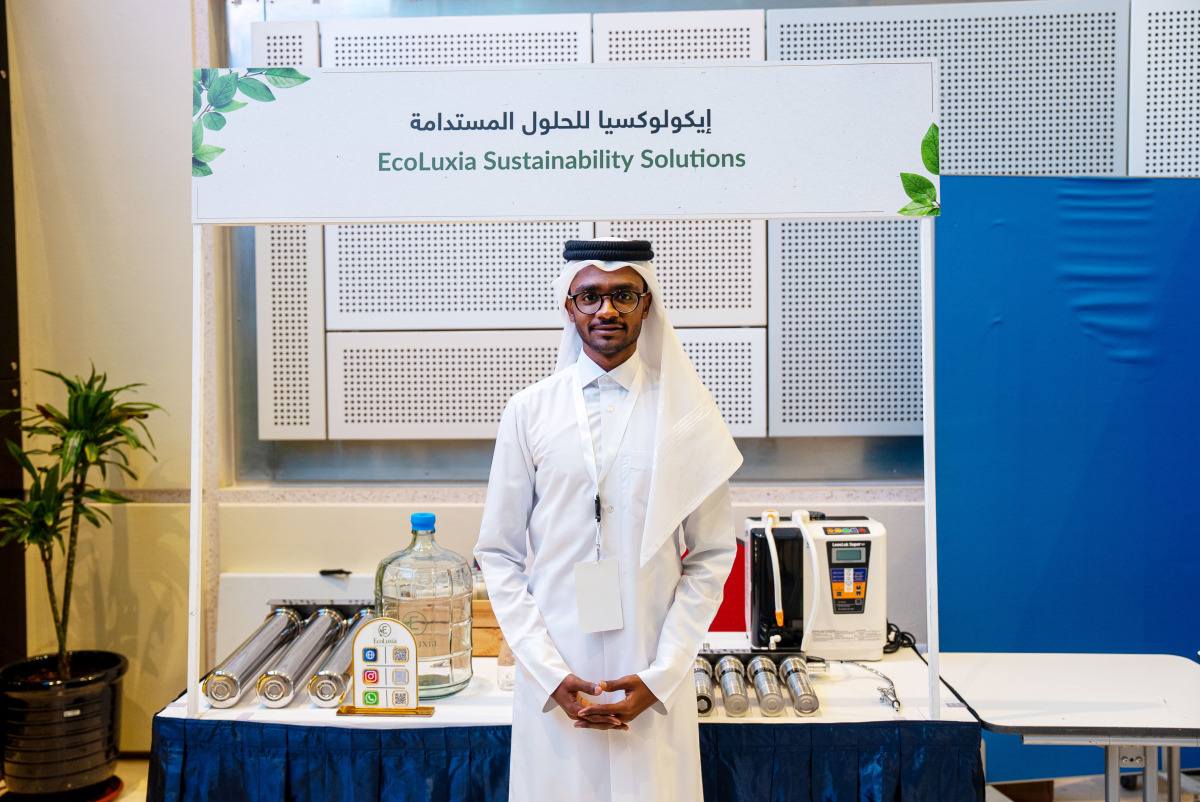 Ahmed Eltayeb
, a Qatari student and co-founder of EcoLuxia Sustainable Solutions, said the company aims to make sustainable hydration more accessible to households, businesses and organisations.
“EcoLuxia is a Qatari-owned company offering smart, sustainable hydration solutions that help reduce reliance on single-use plastic bottles,” he said. “We aim to make environmentally responsible choices convenient and affordable, demonstrating that sustainability can easily become part of everyday life.”
Another initiative, titled ‘Plastic to 3D Printing Filament: Towards a Plastic-Free Campus’, by students at the University’s Department of Chemical Engineering and Technology, Layan Alqaiseyah and Jed Abraham Macalindong, explored transforming discarded plastic bottles into reusable material for 3D printing.
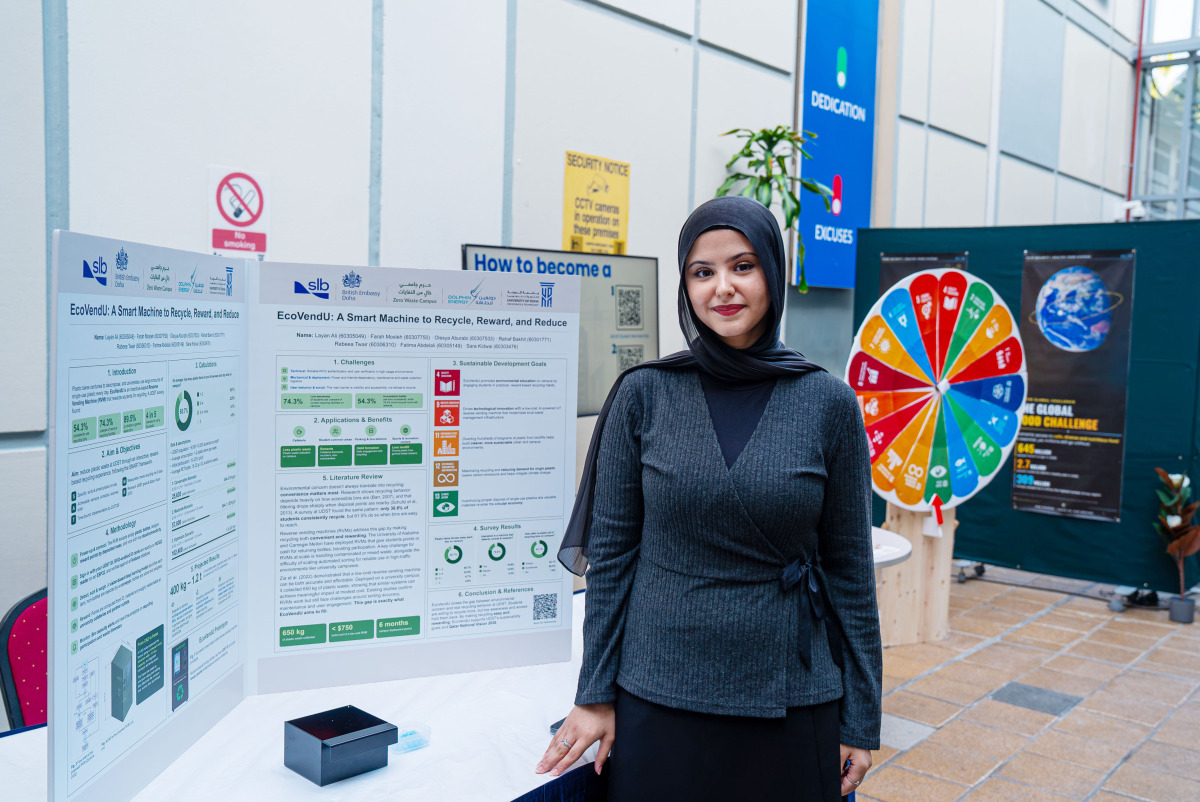
Layan Alqaiseyah, spoke about EcoVendU, a smart reverse vending machine that identified and processed plastic bottles while rewarding students with points through their university IDs, encouraging greater participation in campus recycling.
“Our project uses artificial intelligence to identify and weigh plastic waste, rewarding users with points that can be redeemed for vouchers at university cafeterias and partner outlets,” she said. “We want to make recycling more engaging and encourage students to dispose of plastic responsibly.”
Meanwhile, the project ‘Food Waste to Compost: Waste Free Campus’, led by students Dana Al Muhanadi and Naeema Chowdhury, demonstrated how the Bokashi fermentation method can convert food waste into nutrient-rich fertiliser, helping minimise waste and emissions while supporting local agriculture.
Naeema Chowdhury, a student from Bangladesh, presented a project focused on “black soldier fly farming”, which uses larvae to transform food waste into compost and animal feed.
“My project explores how black soldier fly larvae can convert food waste into compost for campus plants, while the larvae themselves can serve as a protein source for animals,” she told The Peninsula.
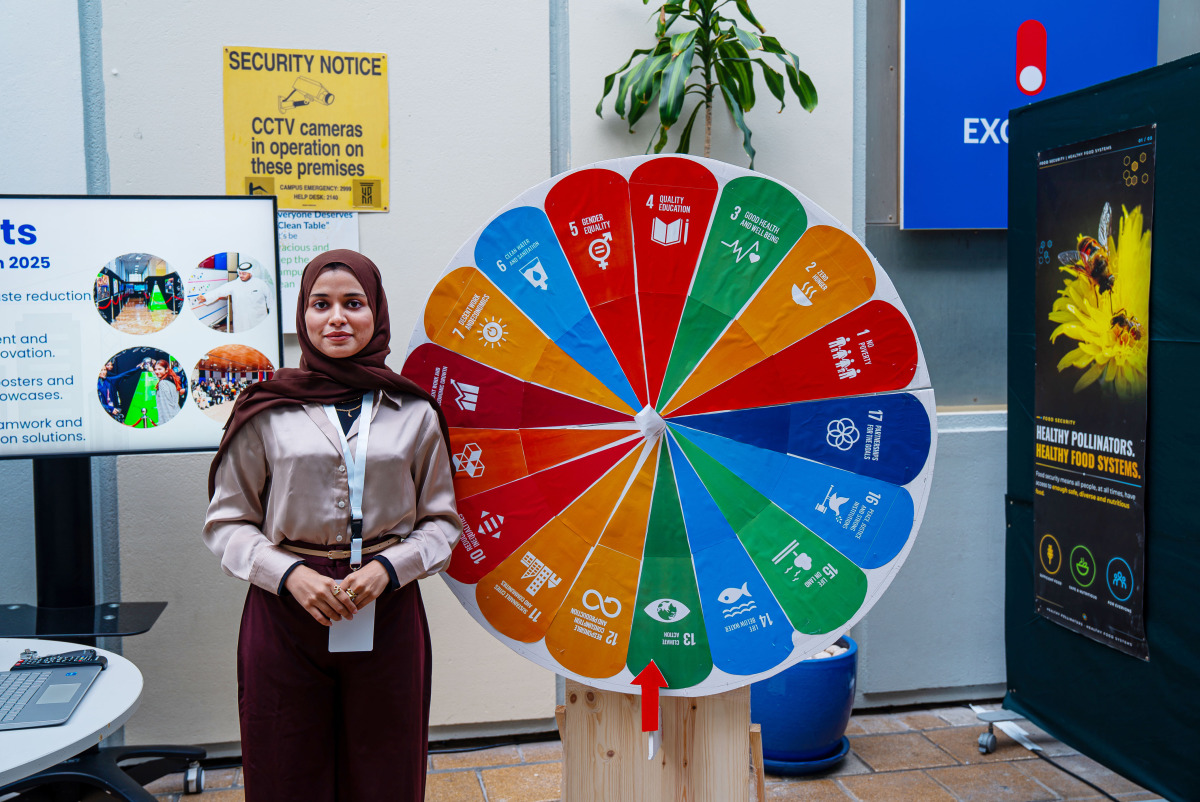 Naeema Chowdhury
Chowdhury added, “This creates a circular system in which waste is transformed into useful resources rather than discarded.” Following the final presentations, six teams were recognised for their innovative sustainability proposals, with three representing UDST and three from local schools. The winning university projects included ‘A Hybrid Coastal Renewable Energy Platform for Qatar‘, ‘ Floating Solar Spheres’, and Solar-Powered Horticulture Robot’.
High school winners represented Belgravia High School, Al-Manar International School and Sherborne School. Selected for their innovation, practicality, and potential environmental benefits, the teams will receive funding and institutional support to test their solutions on campus, contributing to UDST’s zero-waste ambitions.