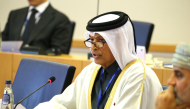
Doha, Qatar: A discussion hosted by the World Innovation Summit for Education (WISE) in Doha has highlighted growing challenges surrounding the integration of artificial intelligence into education, as experts warned that technological adoption is outpacing policy development and teacher preparedness.
The session, organized by WISE - a global initiative of Qatar Foundation - brought together representatives from WISE, Qatar's Ministry of Education and Higher Education, as well as academics, researchers, teachers and education specialists.
Opening the event, Selma Talha Jebril, Director of Research at WISE, said generative artificial intelligence technologies were rapidly becoming embedded in educational systems faster than regulations and policies could keep pace.
She noted that while many teachers were enthusiastic about AI tools, they often lacked sufficient support and training, describing the issue as a gap in systems and policies rather than a lack of ambition among educators.
Jebril said WISE had conducted two studies in partnership with the Ministry of Education and international academic institutions, surveying around 550 teachers in Qatar and 3,000 teachers worldwide to examine how AI is being integrated into pre-university education.
According to the findings, 60 percent of teachers surveyed said AI had helped personalize learning to better meet students' needs.
However, only 30 percent of teachers in Qatar reported having a strong understanding of how AI technologies function, despite the country's advanced digital infrastructure.
The studies also identified technical and cultural challenges linked to the limited integration of Arabic-language AI tools and their compatibility with local curricula.
Officials said the findings had been documented in a WISE policy brief on teacher readiness for AI, intended to guide policymakers and school leaders.
Aisha Al Emadi, Head of Quality and Planning at the Ministry of Education's Department of E-Learning and Digital Solutions, said Qatar had a supportive institutional environment for adopting AI in education, citing strong digital infrastructure and continued investment in innovation.
She stressed that teacher readiness depended not only on access to technology but also on institutional support, professional development and clear educational policies.
Al Emadi added that the next phase would require stronger regulatory and educational frameworks to ensure the safe and effective use of AI, alongside ethical standards and long-term investment in teachers' capabilities.
Meanwhile, Mehdi Benchaabane, Vice-President of Pre-University Education at Qatar Foundation, said the organization's schools had been developing an AI integration framework since 2022.
He explained that the strategy focused both on training students to use AI tools responsibly and raising awareness of the potential risks associated with uncritical use of the technology.
Benchaabane said Qatar Academy Doha had adopted the initiative as a strategic project by designing specialized programs, hiring experts and training teachers to incorporate AI into classrooms.
He added that schools had deliberately avoided rushing to adopt AI applications before evaluating their educational impact, particularly in student assessment.
The event also featured a panel discussion on implementing AI standards in schools, with participants discussing practical approaches to balancing technological innovation with critical thinking and human-centered learning.