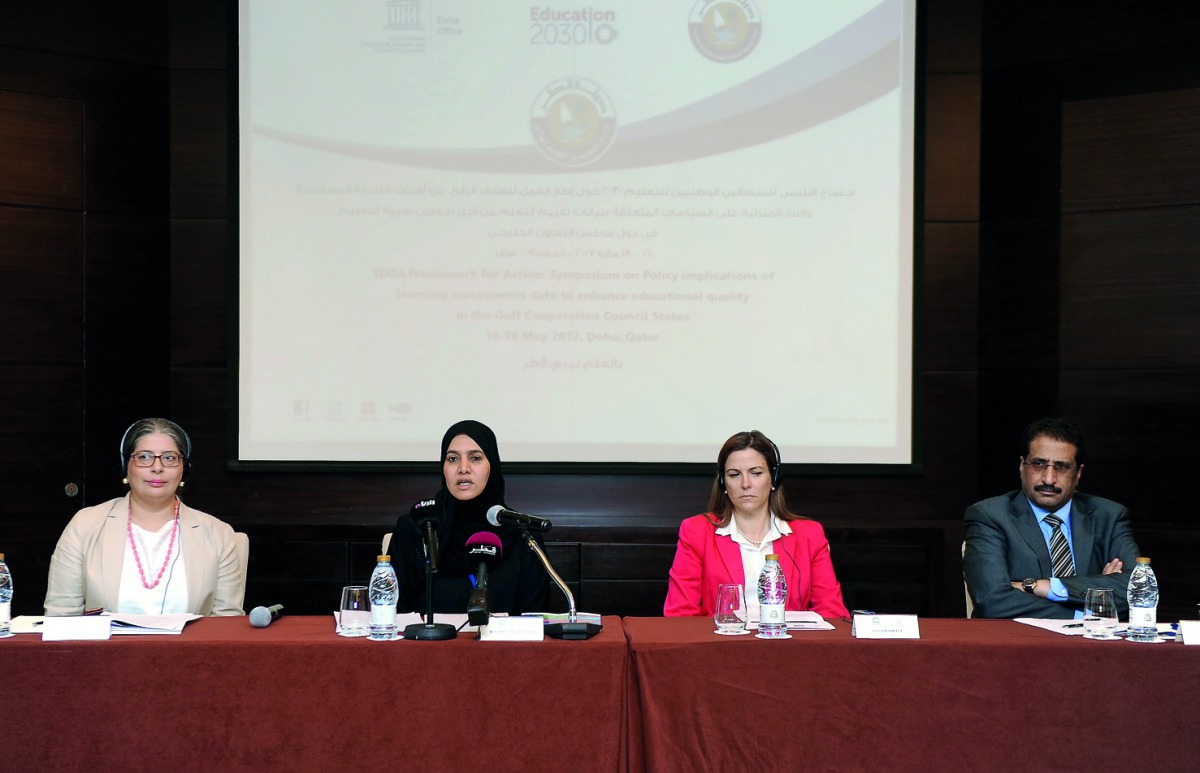
FROM LEFT: Faryal Khan from Unesco Doha; Dr Hamda Al Sulaiti, Secretary-General of Qatar National Committee for Education, Culture and Science; Anna Paolini, Director of Unesco, Doha; and Dr Abdelsalam Al Joufi from ABEGS, during the symposium on Sustaina
The Ministry of Education and Higher Education, represented by the Qatar National Committee for Education, Culture and Science, in cooperation with Unesco Office, Doha, yesterday launched a regional symposium on Sustainable Development Goal 4 (SDG-4) 2030 in collaboration with Arab Bureau of Education for the Gulf States.
The aim of the three-day activity titled "SDG4 Framework for Action: Symposium on Policy Implications of Learning Assessments to Enhance Educational Quality in the GCC" is to highlight existing data on learning achievement in the GCC countries as a starting point.
During the symposium, delegations of the six GCC countries will present an overview of the current situation of the learning environment and existing data on national and international assessments along with initiatives of their countries which focus on educational quality and existing learning assessment data at national and across-national learning assessment levels.
The seminar comes in the context of the comprehensive development of education in the GCC States and goals these countries seek to achieve in line with the SDG4, said Dr. Hamda Al-Sulaiti, Secretary General of Qatar National Committee for Education, Culture and Science in her opening speech.
The State of Qatar is firmly moving towards achieving its commitment to realize the goals of "Education for All" and Qatar has materialised many achievements in terms of education development and quality of education, she stressed.
Since the adoption of Goal of "Education for All", Qatar has launched many initiatives to ensure educational opportunities for children in many parts of the world, Al Sulaiti outlined, adding that these initiatives includes “Education above all”, Educate a child”, "Al Fakhoora program”, and others supporting UNESCO’s projects and developing countries.
"The implementation of the SDG4 requires concerted efforts and determination and establishment of partnership with all concerned and interested entities," she added.
For her part Dr. Anna Paolini, Director of UNESCO office in Doha said that the global development context had significantly changed, spurring fresh challenges and opportunities that were calling for reviewing "the way we conceptualize education".
The UNESCO office in Doha organizes a number of events at regional and national levels to support member states seeking to add SDGs to their educational plans and achieve the goals, Paolini added.
She said that the UNESCO office Doha had conducted an important research on education outcomes in the GCC States which had provided an in-depth information and assessments related to the quality of education in these countries.
"The most important thing is the fact that GCC states are showing strong commitment and determination to achieve the sustainable development goals and enhancing education quality," said Paolini while talking to The Peninsula on the sidelines of the event.
Dr. Faryal Khan, Program Specialist at Unesco Office in Doha presented the outcomes of the research study conducted by the Doha Office about the GCC states, examining learning and learning outcomes in public schools.
Sustainable Development Goal 4 reaffirms the focus on effective and relevant learning outcomes at all levels of education and skills development.
Most of the countries in the Gulf States demonstrated a commitment to improve learning outcomes by incorporating national and international assessments including TIMMS, PISA & EGRA. The programme of the symposium also includes school visits that will focus on exploring the policy implications to improve learning.