
Rio de Janeiro: Brazilian police fired tear gas and stun grenades to keep at bay angry protesters rallying late Thursday against President Dilma Rousseff who faces calls to quit in a political crisis.
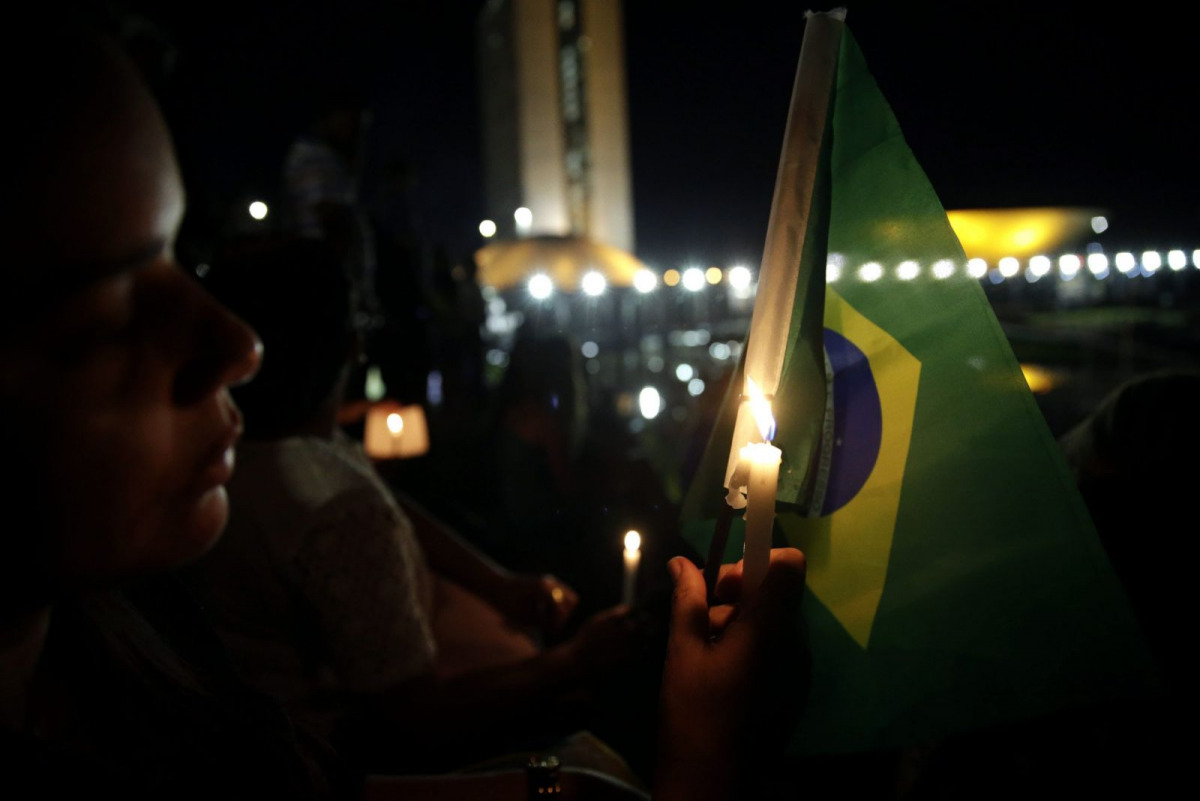
In the capital Brasilia, thousands of protesters rallied in front of the presidential headquarters and the congress in anger at corruption scandals implicating Rousseff and her Workers Party (PT).
Police fired tear gas and stun grenades to stop protesters approaching the official buildings.
In the country's economic capital Sao Paulo, an opposition stronghold, thousands of protesters rallied on the major Paulista avenue.
"PT out! Resign!" they yelled. A group of about 60 prepared to camp out for the night in tents near the headquarters of the anti-Rousseff FIESP industry federation.
"We are going to protest like they did in Ukraine. There will be more of us tomorrow," said one protester, Cristiane Galvao, 44.
"We will not leave until Dilma leaves."
The rallies followed a day of political drama.
Lawmakers relaunched impeachment proceedings against Rousseff and a judge blocked her bid to bring her powerful predecessor Luiz Inacio Lula da Silva into the cabinet.
The PT and other groups supporting Rousseff called counter-demonstrations for Friday in more than 30 cities.
Brazil grabbed world headlines in 2013 when it was gripped by mass riots against corruption and increased transport costs.
AFP