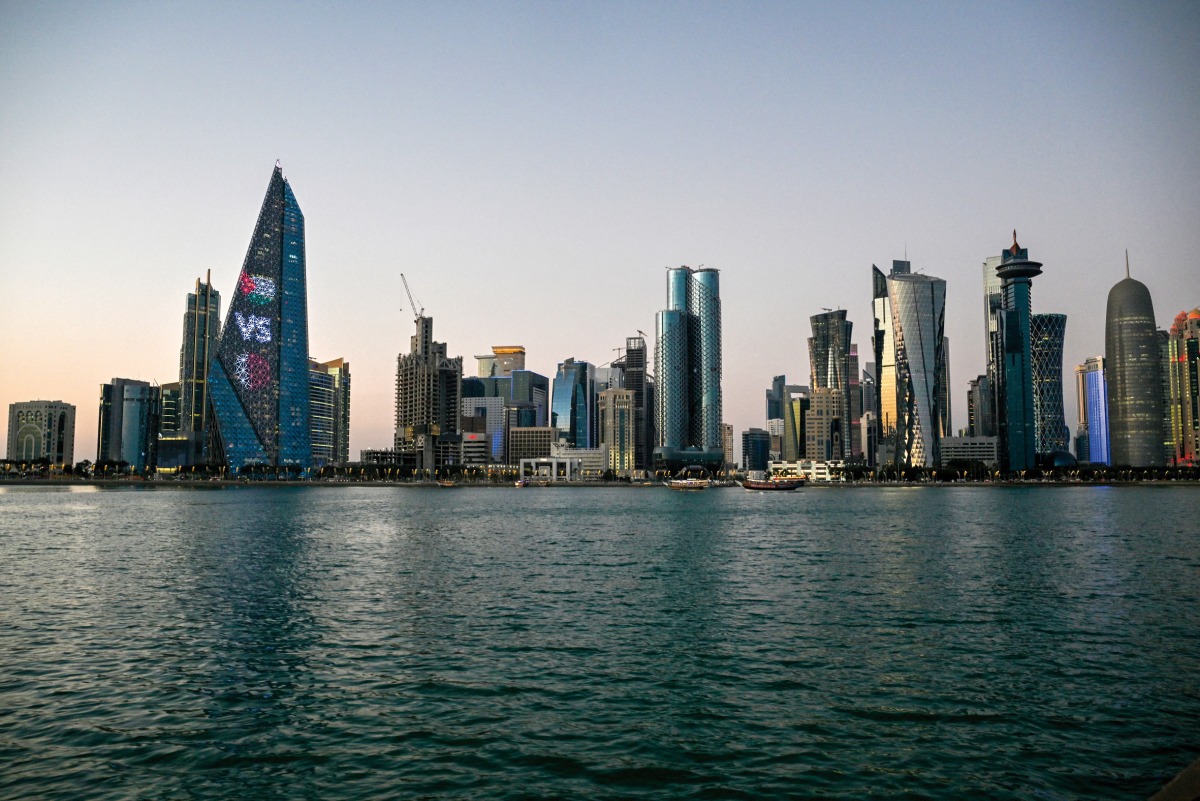
File photo
Doha, Qatar: Qatar’s construction sector is poised for sustained expansion, underpinned by infrastructure spending, energy investments, and economic diversification efforts, according to Mordor Intelligence.
The Qatar construction market is valued at QR198.44bn this year, up from QR190.54bn in 2025, and is projected to grow to QR242.96bn by 2031, representing a compound annual growth rate (CAGR) of 4.14 percent during the 2026–2031 forecast period, the market intelligence firm said.
The research entity attributed the growth to Qatar National Vision 2030, continued public investment in transport and energy infrastructure, and a strong pipeline of liquefied natural gas (LNG) projects led by QatarEnergy, particularly the North Field expansion.
“The construction outlook in Qatar remains structurally strong, driven by energy-led capital expenditure and the government’s commitment to long-term economic diversification,” Saif Rahman, an industry analyst, said. “LNG expansion projects alone are creating multi-year visibility for contractors across engineering, civil works, and industrial construction.”
The report said the commercial construction segment accounted for 34.89 percent of market revenue last year, while infrastructure is expected to be the fastest-growing segment, advancing at a 4.87 percent CAGR through 2031.
New construction dominated activity with a 74.25 percent market share, although renovation work, particularly linked to post-World-Cup assets, is forecast to grow at a faster 6.08 percent CAGR.
Traditional on-site construction methods still accounted for nearly 86 percent of activity in 2025, but modular construction is gaining traction as developers seek faster delivery and cost efficiency.
“Modular and off-site construction are increasingly attractive in Qatar as developers balance scale, sustainability, and tighter project timelines,” the expert added.
Public funding continued to underpin the market, representing almost 78 percent of total activity, though private-sector participation is rising following reforms to the public-private partnership framework. Analysts also noted that geographically, Doha remained dominant, accounting for 63.05 percent of spending, while secondary cities such as Al Wakrah are expected to grow more rapidly.
Mordor Intelligence said competitive pressure is intensifying as global EPC firms partner with local players to secure large contracts tied to LNG, metro expansion, and smart-city developments such as Lusail, reshaping capabilities across the construction value chain.
The data further added, “Public expenditure accounted for 77.95 percent of total outlays in 2025, anchored by sovereign-funded expressways and energy infrastructure.”