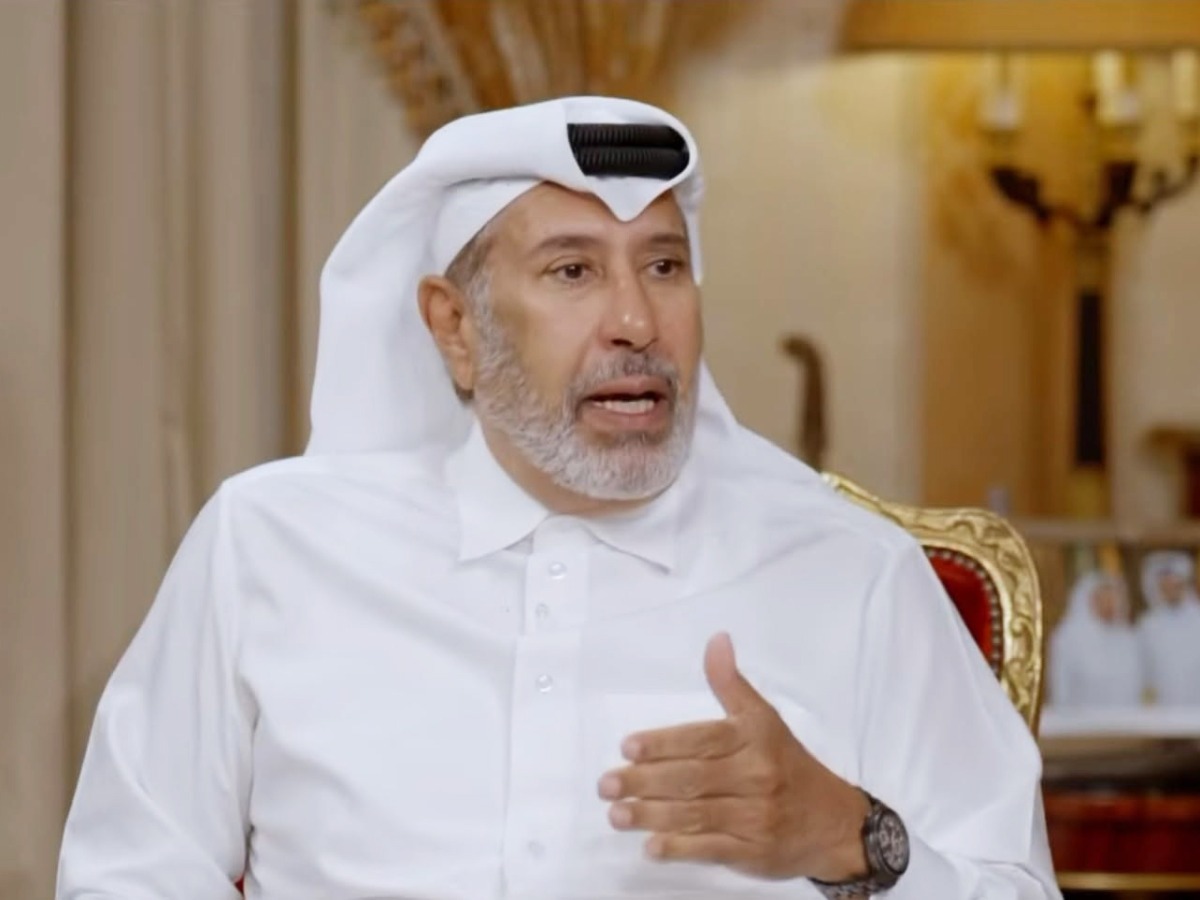
Former Prime Minister and Minister of Foreign Affairs H E Sheikh Hamad bin Jassim bin Jaber Al Thani speaking during an interview.
Doha, Qatar: The remarkable transformation of Qatar under the late Father Amir H H Sheikh Hamad bin Khalifa Al-Thani will be remembered as one of the most extraordinary development stories of the modern era, former Prime Minister H E Sheikh Hamad bin Jassim bin Jaber Al-Thani has said.
In an interview yesterday with Qatar Television following the passing of the Father Amir, Sheikh Hamad reflected on decades of working alongside the late leader, describing him as a visionary statesman, strategic planner, compassionate humanitarian and nation-builder whose leadership reshaped every aspect of Qatar’s political, economic, social, educational and cultural landscape.
“The renaissance that Qatar witnessed during the past decades, which the late Father Amir founded, will be recorded in history,” Sheikh Hamad said, adding that few nations have achieved such rapid and comprehensive transformation within a single generation.
Offering his condolences, Sheikh Hamad said the loss extends far beyond the ruling family and is shared by the entire nation. “I offer my condolences to his great family, Qatar, because he always considered Qatar to be his family. That was one of the defining principles of his life,” he said.
Sheikh Hamad described the Father Amir as a rare leader who combined decisiveness with compassion. “He was a leader whenever leadership was required, standing firm during difficult moments. At the same time, whenever there were humanitarian or social responsibilities, he was always at the forefront. He devoted his entire life to serving this country,” he said.
Reflecting on the Father Amir’s leadership philosophy, Sheikh Hamad said one of his greatest qualities was his ability to think beyond his own tenure. According to him, the late leader planned not for personal legacy but for the future of the nation.
“When he assumed power, he sought to launch a comprehensive renaissance politically, economically, socially, culturally, educationally and in healthcare. Later, when he believed the next generation was fully prepared, he voluntarily transferred authority. That demonstrated exceptional strategic thinking.”
Sheikh Hamad revealed that the Father Amir had spoken about stepping down from the very beginning of his reign. He recalled that the late leader repeatedly said he would relinquish power while still strong, once he was convinced the Crown Prince was fully capable of leading the country.
He disclosed that the decision to transfer power had actually been made more than two years before it took place in 2013, although regional developments during the Arab Spring led to a slight delay.
According to Sheikh Hamad, during the final years before the transition, the Father Amir gradually entrusted most major responsibilities to the then Crown Prince, H H Sheikh Tamim bin Hamad Al Thani. “When he stepped down, he did so with complete confidence and pride. After handing over power, he completely withdrew from the political scene and became an observer, watching Qatar continue its journey successfully.”
Recalling Qatar’s early development years, Sheikh Hamad said many of the Father Amir’s ambitions initially appeared impossible. “He always dreamed big. Sometimes we tried to reduce those dreams because we believed they were unrealistic,” he said.
He cited the development of Qatar’s liquefied natural gas industry as one of the clearest examples of the Father Amir’s strategic vision. At a time when Qatar faced financial constraints, heavy debt, and difficulty securing loans, officials believed that an annual LNG production target of six million tonnes would be ambitious. The Father Amir, however, insisted that Qatar should eventually exceed 30 million tonnes.
“We asked him how we could achieve that when we didn’t even have the financial resources,” Sheikh Hamad recalled. “He simply replied, ‘We will find the money.’”
According to Sheikh Hamad, the Father Amir made a calculated strategic decision based on long-term national interests rather than short-term financial considerations. His objective was not merely to increase gas production but to improve the lives of Qataris by generating the resources needed to provide better education, healthcare, infrastructure and living standards.
“He wanted every Qatari citizen to enjoy a higher quality of life. He wanted better education, better healthcare, higher incomes and greater opportunities. That required enormous investments, but he was prepared to make them,” Sheikh Hamad said.
He explained that the Father Amir often spoke about accelerating development by compressing decades of development into just a few years instead of following conventional timelines. That philosophy, Sheikh Hamad said, became the driving force behind Qatar’s unprecedented modernisation.
The Father Amir launched major projects simultaneously across virtually every sector, including the expansion of the gas industry, Hamad International Airport, Hamad Port, modern highways, railway networks, Education City, advanced healthcare facilities, power generation projects and extensive infrastructure developments. Those initiatives fundamentally transformed Qatar’s economy while significantly improving living standards.
Sheikh Hamad noted that many of these landmark projects reached completion during the reign of Amir H H Sheikh Tamim bin Hamad Al Thani, demonstrating continuity in national planning rather than a change in direction.
“The foundations were laid by the Father Amir, while the current Amir completed and expanded them. The development journey remained one continuous path,” he said.
He also highlighted the dramatic growth of Qatar’s energy sector. Initial ambitions of six million tonnes of LNG production eventually expanded. “This demonstrates the strength of the foundations that were established. The vision was always larger than what many of us thought possible,” Sheikh Hamad said.
Beyond energy, Sheikh Hamad pointed to the establishment of sovereign wealth investments, stronger financial reserves and long-term economic institutions. Qatar’s overseas investments grew from only a few hundred million dollars in the early years to approximately $280bn by the time the Father Amir left office, while foreign reserves increased dramatically from around $500m to tens of billions of dollars.
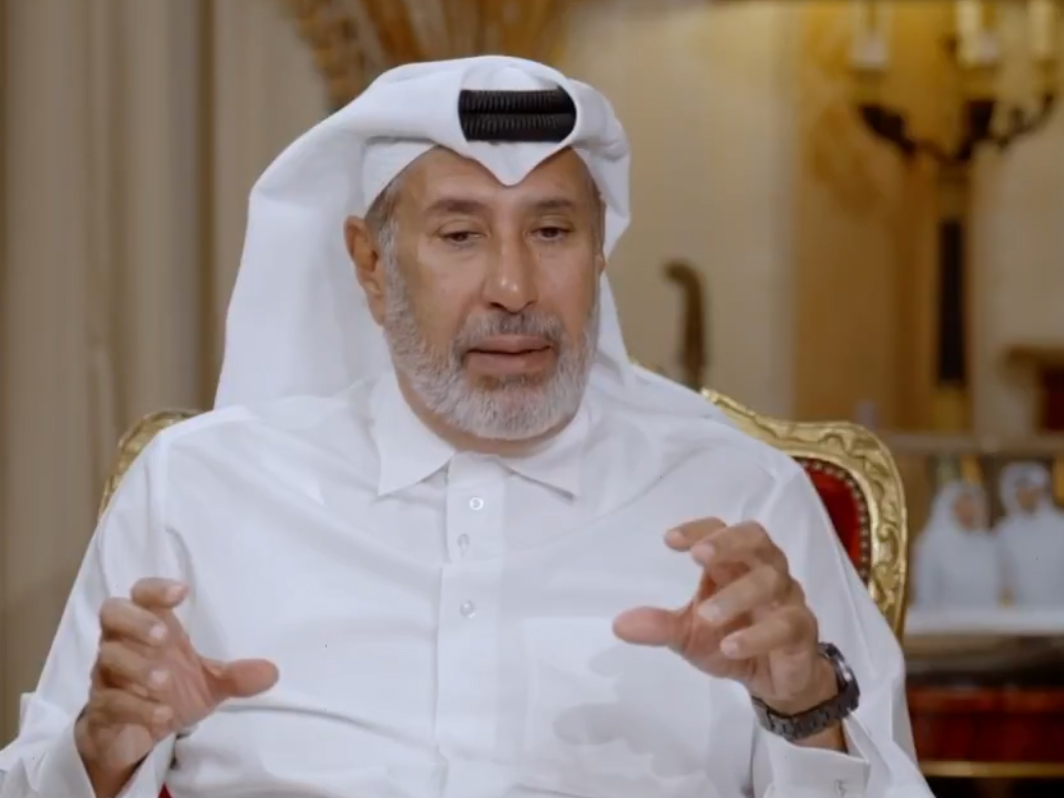
Sheikh Hamad stressed that the Father Amir’s vision extended beyond economics. One of his greatest priorities, he said, was preserving Qatar’s national identity while embracing modernisation.
“He constantly asked how to protect Qatari traditions, heritage, national dress and customs. He believed development should never come at the expense of identity,” Sheikh Hamad said, adding that the late leader personally encouraged efforts to preserve the country’s cultural heritage alongside rapid modernisation.
Describing the Father Amir’s leadership style, Sheikh Hamad said he trusted those working with him and delegated responsibilities, but never blamed others when mistakes occurred.
“He always accepted responsibility himself. He never looked for someone to sacrifice. What hurt him most was not mistakes, but betrayal of trust,” he said.
He also praised the Father Amir’s confidence in reviewing decisions. Whenever new information became available, the late leader had no hesitation in changing course if necessary.
“He was confident enough to adjust his decisions because he believed that serving the country was more important than protecting his own opinion,” Sheikh Hamad said.
Despite his demanding schedule, the Father Amir remained remarkably close to ordinary citizens. Sheikh Hamad said he frequently reminded officials that true leadership meant serving people with humility.
“He used to tell us that a strong person humbles himself before people, while a confident person serves people. He always urged officials to understand citizens’ concerns, even when those concerns appeared small.”
Sheikh Hamad recalled numerous examples of the Father Amir’s compassion. He remembered how the late leader noticed the absence of a man who traditionally greeted him during Eid celebrations every year. Upon learning that the man was ill, the Father Amir immediately decided to visit him personally, saying, “He has come to see me all these years; now I should go to him.”
He also regularly visited patients, helped resolve family disputes and remembered personal details about citizens he had met years earlier. “He truly regarded himself as a father to everyone, without distinction,” Sheikh Hamad said.
Reflecting on the Father Amir’s extraordinary work ethic, Sheikh Hamad said his achievements came at considerable personal sacrifice. The late leader slept only a few hours each night, filled long flights with meetings instead of rest, personally inspected projects across the country and constantly sought to accelerate implementation.
“He worked tirelessly because he believed time was precious. Even during official travel, he wanted every hour to be productive. He always pushed everyone around him to achieve more.”
Concluding the interview, Sheikh Hamad said history would ultimately give the Father Amir the recognition he deserved for transforming Qatar into one of the world’s most prosperous, influential and respected nations.
“I believe history will fully recognise Sheikh Hamad bin Khalifa’s achievements,” he said. “When he passed away, the people mourned him as though they had lost a father. That affection reflects the deep bond he built with his people throughout his life.”
He concluded by describing the Father Amir as “a unique model of strategic leadership whose vision transformed Qatar and whose legacy will continue to inspire future generations.”