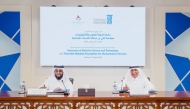
Doha: The Regional Dialogue Forum on “Human Rights: Promoting Equality and Combating Discrimination in the Context of Migration” concluded yesterday.
The event was organised by the National Human Rights Committee (NHRC) in collaboration with the Arab Network for National Human Rights Institutions (ANNHRI) and the United Nations (UN) Office of the High Commissioner for Human Rights (OHCHR).
At the conclusion of the two-day forum, the participants underscored the importance of constantly working to promote the awareness levels of human rights and the notions related to enhancing equality and repudiating all forms of racial discrimination. They advocated for leveraging education and culture to communicate with youth pertaining to the elimination of racial discrimination and promoting the concepts of tolerance and coexistence.
The recommendations read out by Secretary-General of the Arab Network for National Human Rights Institutions (ANNHRI) H E Sultan bin Hassan Al Jamali, emphasised the imperative of constantly monitoring the reality of human rights concerning expatriate workers, identifying the challenges and presenting the suggestions on addressing them.
The recommendations also urged civil society organisations and media outlets to foster tolerance, coexistence and promote awareness of the danger of racial discrimination.
The participants called for unifying the efforts of combating racism in sports, through crafting policies, plans, and stepping up awareness campaigns, and other initiatives in this regard, underlining the importance of capacity-building programmes and providing opportunities to enhance skills, mechanisms, and methodologies through training and education. They also called for strengthening and promoting the principles and values of Islamic Sharia, which advocate for equality and reject discrimination.
The second day of the forum featured the presentation of an array of working papers, including a paper presented by NHRC that shed the light on the Qatari experience on ways to address the issue of racial discrimination.
The paper discussed NHRC’s role as an independent body which is tasked with promoting and protecting human rights in Qatar, in addition to exploring ways to address the issue of racial discrimination.
The working paper noted that the Committee’s jurisdiction and competencies are defined in accordance with the Paris Principles, which regulate the work of national human rights institutions since 1993.
The paper also addressed the NHRC-backed efforts in promoting a culture of equality, non-discrimination, and combating racism, in addition to protecting the human rights of expatriates. It highlighted the annual reports issued by NHRC through which it monitors the state’s performance in upholding human rights in all their aspects, including economic, social, and cultural rights, such as the right to work and related rights for migrant workers in the workplace.
The working paper addressed the committee's contribution to the preparation of periodic national reports on the States implementation of the provisions of the Convention against Racial Discrimination and the International Covenant on Economic and Social Rights, including what relates to the right to work.
The paper commended NHRC’s participation in the preparatory work for national strategies and reports related to national development, including those related to the expatriate workforce, whether in the government or private sector, and the right of non-citizens to development as participants in its making and recipients of its fruits.
The committee confirmed that it did not monitor in its annual reports any institutional or social phenomena or cases that reveal racism or xenophobia, as indicated by what was monitored in part of these reports related to the right to security regarding the country’s obtaining advanced ranks in the Global Peace Index among the countries of North Africa and the Middle East, as well as Arab countries for more than a decade, as the index includes several criteria, including crime rates and racial and social tensions.
The working paper pointed out the committee’s terms of reference cover its basic advisory, legal, supervisory and awareness-raising work directions, and those related to capacity building and support for civil society organisations, in addition to establishing local, regional and international partnerships in the fields of human rights, noting that due to the accumulation of experiences, achievements and best practices of the committee within the framework of implementing its mandate has spanned more than two decades and, due to its commitment to the Paris Principles, it has obtained first-class accreditation by the Global Alliance of National Human Rights Institutions for the years 2010, 2015 and 2021.
The paper also reviewed the NHRC’s legal nature, noting that its tasks are of an advisory nature and are not concerned with exercising powers or making decisions as much as they constitute a support factor towards improving and developing national performance in the field of human rights.
The paper highlighted the NHRC’s role in the supervisory and awareness aspects, including its role over many years in issuing a pocket book for workers in approximately 11 languages and distributing it among workers circles, as it includes basic information related to the rights of the migrant worker, starting from the stage that precedes his arrival into the country and continuing onward, detailing his rights and duties under the Labor Code and other relevant legislative instruments, including concluding contracts, working hours, vacations, accommodation, changing jobs, and access to justice, among others.