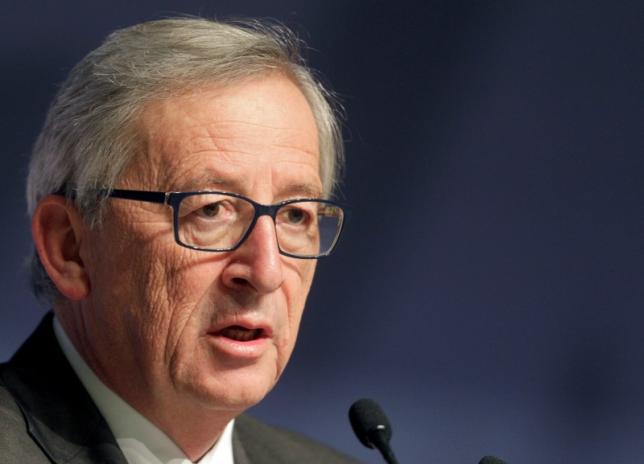

Brussels: European Commission chief Jean-Claude Juncker insisted Tuesday that Britain leaving the EU is not an option, saying the bloc has no Plan B, as Prime Minister David Cameron sought support in Brussels for his contentious reform proposals.
Cameron came to Brussels for talks with Juncker, European Parliament head Martin Schulz and top MEPs aiming to win them over to the changes he says Britain must get to avoid a feared 'Brexit'.
Schulz, a veteran and fervent supporter of the whole European Union project, pledged that parliament would be an "honest partner" for Britain but it also had "concerns to raise."
"The European Parliament will move very quickly on the proposals ... but I cannot make any guarantees on the outcome," Schulz said.
Cameron's Downing Street office said parliamentary group leaders had "made clear their support for the proposals on the table and said they were ready to take any necessary EU legislation through the European Parliament swiftly."
The European Parliament will have an important say on any agreement, but Cameron must first strike a deal at a summit of all 28 EU leaders in Brussels on Thursday and Friday.
If Cameron gets what he wants there, he will take the deal into a proposed referendum, most likely in June. If Britons vote to remain in the EU, then the deal returns to Brussels to be put in legal form.
Parliament will be closely involved in that process alongside the Commission, the EU's executive arm, and the bloc's 28 leaders.
A source in the European People's Party, the biggest group in parliament, dismissed accusations by British eurosceptics that MEPs would unravel the deal after the referendum.
"If we have a 'yes' from the British voters, then we will deliver," he said.
- 'Extra mile' -
The discussions in Brussels are part of a frenetic merry-go-round of diplomacy ahead of this week's summit.
Juncker, speaking before meeting Cameron, said he refused to even entertain the idea of Britain leaving the bloc.
"If I would say now that we have a plan B, this would indicate a kind of willingness of the Commission to envisage seriously that Britain could leave the European Union," Juncker said.
"So I am not entering into the details of a plan B, because we don't have a plan B, we have a plan A. Britain will stay in the European Union as a constructive and active member of the Union."
Cameron made no public comment during his four-hour visit to Brussels.
EU chief Donald Tusk in Prague warned that the sides still had an "extra mile to walk" and nothing could be taken for granted.
Tusk said the proposals he had drawn up in response to Cameron's demands were "balanced," meeting London's concerns "without compromising on our common freedoms and values."
- Welfare curbs most controversial -
Cameron's most controversial proposal is to restrict welfare payments for four years for EU citizens working in Britain.
Many of the EU's eastern member states such as Poland, which has hundreds of thousands of its workers in Britain, say such a measure would discriminate against them and undercut the core bloc principle of freedom of movement.
Initially, Cameron's demand that non-euro countries such as Britain have safeguards against closer integration of the single currency area was expected to be relatively straightforward but it has now run into serious opposition, especially from France which says London must not have a veto over the eurozone.
An opt-out from the EU's mission of "ever closer union" and strengthened national sovereignty are also facing unexpectedly strong opposition.
The prime minister agreed to hold the referendum largely to head off gains by the anti-EU UK Independence Party which was exploiting sharp differences over Europe within his own Conservative Party.
AFP