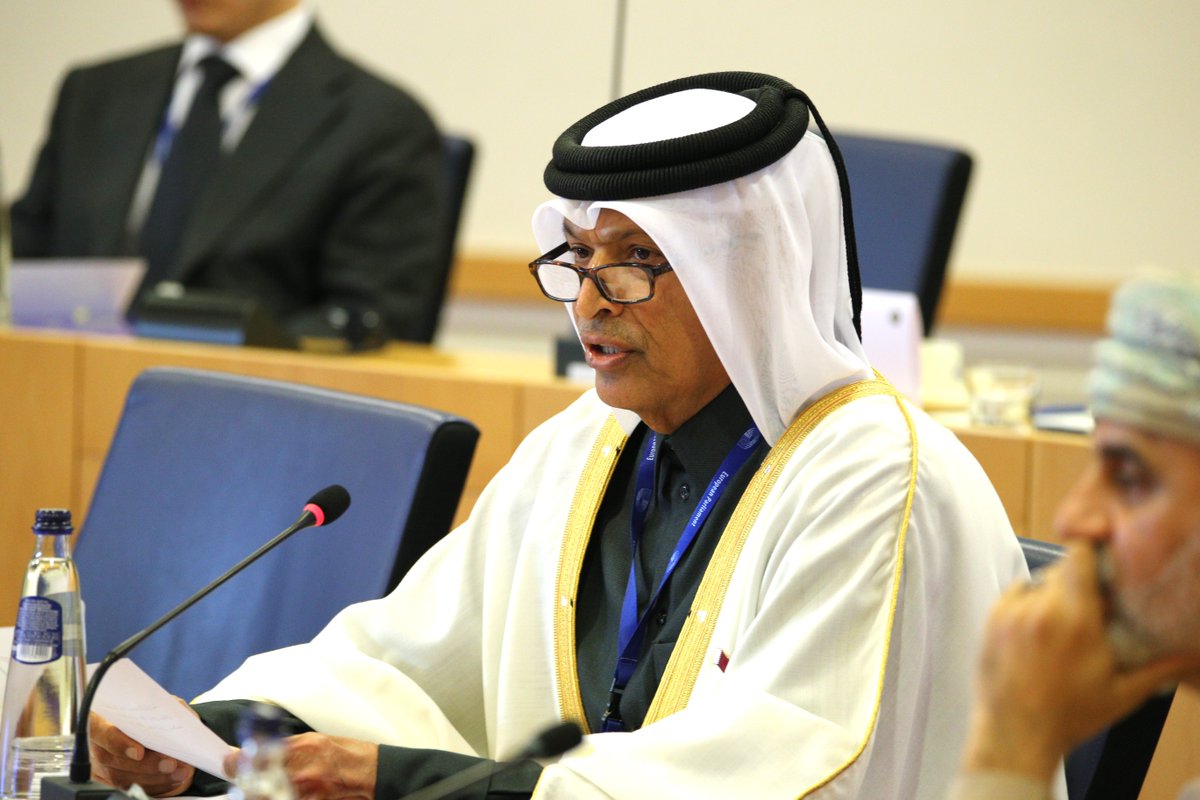
Brussels: The State of Qatar, under leadership of HH the Amir Sheikh Tamim bin Hamad Al-Thani, has attached great importance to its strategic relationship with the EU and continued to pursue diplomatic initiatives to support peace and stability, HE Shura Council Speaker Hassan bin Abdullah Al Ghanim has said.
HE Al Ghanim made the remarks during the second meeting of Gulf Cooperation Council (GCC) parliamentary speakers with HE European Parliament President Roberta Metsola in Brussels on Friday.
Al Ghanim said that Doha reaffirmed the importance of dialogue, mediation and parliamentary diplomacy in reducing regional tensions and promoting international security.
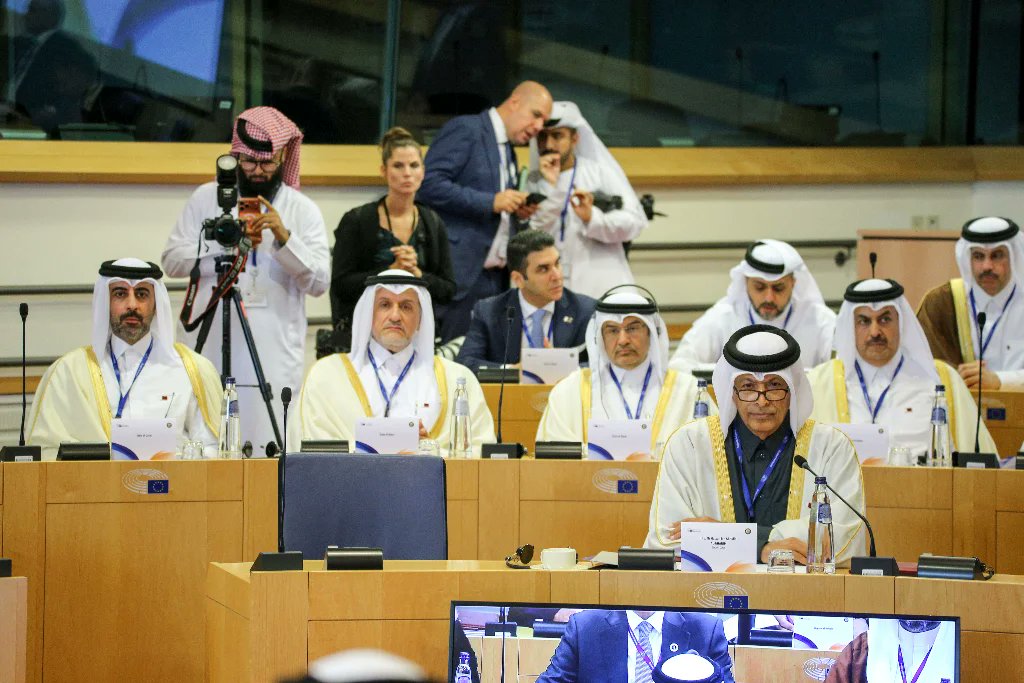
He cited Qatar's diplomatic efforts concerning Afghanistan, Iran and the Gaza Strip, stressing that parliamentary diplomacy could help reinforce these initiatives and strengthen regional and international security.
HE Al Ghanim reiterated the Shura Council's support for negotiations on a strategic partnership agreement between Qatar and the EU, announced in December last year.
He expressed hope that the second GCC-EU summit, scheduled to take place in Saudi Arabia, would deepen cooperation between the two sides, with parliamentary engagement helping to advance its outcomes.
The Brussels meeting builds on the first gathering, held in Abu Dhabi last year, and reflects a shared commitment to expanding parliamentary cooperation in line with growing strategic ties between the Gulf states and the EU.
Areas of potential cooperation include trade, investment, economic affairs, security, human and labor rights, counterterrorism, climate change and technological developments.
Al Ghanim said the GCC and the EU were influential economic and political actors whose complementary resources and capabilities could help address global challenges.
He stressed that relations between Gulf legislative councils and the European Parliament should be based on equality, mutual respect, shared interests and respect for each side's sovereignty and national choices.
The Shura Council speaker said cooperation between the two parliamentary bodies should extend beyond bilateral relations to support international peace and security.
He called for more effective parliamentary diplomacy to promote dialogue, encourage peaceful conflict resolution and support reform of the United Nations system and its working mechanisms.
Such efforts, he said, could strengthen the international community's ability to respond to crises and help establish a more just and balanced international order based on respect for international law.
Addressing regional security developments, HE Al Ghanim strongly condemned Iranian attacks targeting GCC countries, describing them as violations of national sovereignty, international law and the principles of good neighborliness.
He warned that the attacks threatened regional stability and had wider implications for international peace, global trade and energy supplies.
He stressed that GCC states stood united against any aggression targeting their members, emphasizing that the security of the Gulf states was indivisible.
Al Ghanim also condemned Houthi attacks against Saudi Arabia and reaffirmed Qatar's solidarity with the kingdom and its legitimate right to defend its security, sovereignty and territorial integrity.
He further reiterated the Shura Council's support for freedom of navigation through international waterways, particularly the Strait of Hormuz and the Red Sea, warning against actions that could jeopardize maritime security and disrupt the regional and global economy.
Moving to the Palestinian question, HE Al Ghanim highlighted the destruction, displacement and hunger affecting the occupied Palestinian territories, describing the suffering in Gaza as a test of the international community's ability to stop violations and secure justice for Palestinians.
He urged parliaments, as representatives of their peoples, to play a more effective role in influencing international organizations and promoting decisive and fair positions in support of Palestinian rights.
Al Ghanim reiterated Qatar's support for the establishment of an independent Palestinian state on the borders of June 4, 1967, with East Jerusalem as its capital.
On the global level, His Excellency called for supporting diplomatic efforts to settle the Russia-Ukraine crisis in line with the UN Charter and international law, while safeguarding states' sovereignty and territorial integrity.
Al Ghanim concluded his remarks by calling for further GCC-EU parliamentary cooperation to produce joint initiatives that support international peace and help achieve the aspirations of the peoples of the two regions.
A joint statement following the meeting emphasized the need to deepen the strategic partnership between the two regions, strengthen parliamentary cooperation and expand economic, trade and investment ties. It also called for the resumption of negotiations on a comprehensive free trade agreement between the GCC and the EU.
The two sides stressed the importance of improving connectivity through maritime, land and air transport routes, as well as digital networks.
On Palestine, the statement called for the protection of civilians, respect for international humanitarian law and the safe, sustained and unhindered delivery of humanitarian aid.
Participants also backed political and diplomatic efforts to achieve a just, comprehensive and lasting peace based on the two-state solution, in accordance with international law and relevant UN resolutions.
Regarding the regional developments, the statement strongly condemned continued Iranian missile and drone attacks against GCC countries, whether carried out directly or through proxies.
It expressed full solidarity with the Gulf states and affirmed their legitimate right to self-defense and to protect their sovereignty, security and territorial integrity in accordance with the UN Charter.
The participants called for an immediate halt to the attacks and stressed the importance of freedom of navigation through the Strait of Hormuz and the Bab Al Mandeb Strait.
They also called for stronger cooperation in maritime security, cybersecurity and the protection of critical infrastructure.
The GCC and EU representatives highlighted the importance of reliable and sustainable energy supplies and the diversification of energy sources amid disruptions in global energy markets.
They called for joint solutions, investment in energy infrastructure and greater interconnection between energy networks to strengthen long-term energy security.
The statement also underscored the need to expand economic and industrial cooperation and address the wider effects of energy market volatility on economies and households.
They commended Gulf countries' humanitarian and mediation initiatives, including efforts to facilitate prisoner exchanges and the return of Ukrainian children.
The statement called on the EU and GCC to intensify efforts to reduce tensions, advance diplomatic solutions and promote security and stability in Europe and the Gulf region.
The two sides agreed to hold regular parliamentary meetings alternately in Europe and the GCC countries.
They also pledged to deepen dialogue through official visits, meetings between parliamentary leaders, joint forums and exchanges of expertise between parliamentary administrations.
Further cooperation will include opportunities for young people, academics, civil society organizations and cultural communities, with the aim of strengthening ties between the peoples of both regions.
The statement also highlighted cultural, educational and tourism exchanges and called for progress towards mutually beneficial and secure visa-free travel arrangements.