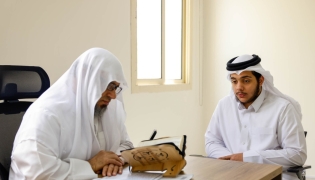
Doha, Qatar: Qatar University (QU), represented by its College of Pharmacy, announced that a group of fourth-year pharmacy (P4) students successfully completed international experiential training rotations in Malaysia, Scotland, and New Zealand.
The initiative reflects QU’s commitment to preparing globally competent, practice-ready graduates and strengthening experiential education through international partnerships that enhance professional competencies and global exposure.
As part of the Structured Pharmacy Experiential Education Program (SPEP), the international placements aim to expose students to diverse pharmacy practice models, strengthen clinical and professional competencies, and bridge academic learning with real-world healthcare practice.
Commenting on the initiative, Dr. Ziad Nasr, SPEP Program Coordinator, stated, “International experiential education enables our students to expand their clinical, professional, and cultural competencies while representing the College of Pharmacy and Qatar University on an international platform. These placements foster adaptability, leadership, and a more profound understanding of pharmacy’s evolving global role in improving patient outcomes and healthcare systems.”
During their industrial pharmacy rotation at IKOP Pharma in Kuantan, Malaysia, students gained hands-on exposure to pharmaceutical manufacturing in a Good Manufacturing Practice (GMP)–compliant environment.
They observed the production of semi-solid dosage forms and engaged with Quality Assurance (QA), Quality Control (QC), production, regulatory affairs, and sales and marketing teams. The experience strengthened their understanding of quality systems, validation processes, stability studies, and regulatory compliance under NPRA guidelines. It also enhanced competencies in quality assurance, risk awareness, traceability, structured problem-solving, teamwork, and interprofessional communication while reinforcing the importance of patient safety and continuous improvement in pharmaceutical practice.
Reflecting on the experience, students Osama Mohamed, Ahmed Tehemar, Khaled Teleb, and Mohamed Gasimelseed noted, “This experience strengthened our professional discipline and broadened our perspective on global industry standards, motivating us to contribute to advancing pharmacy practice in Qatar.”
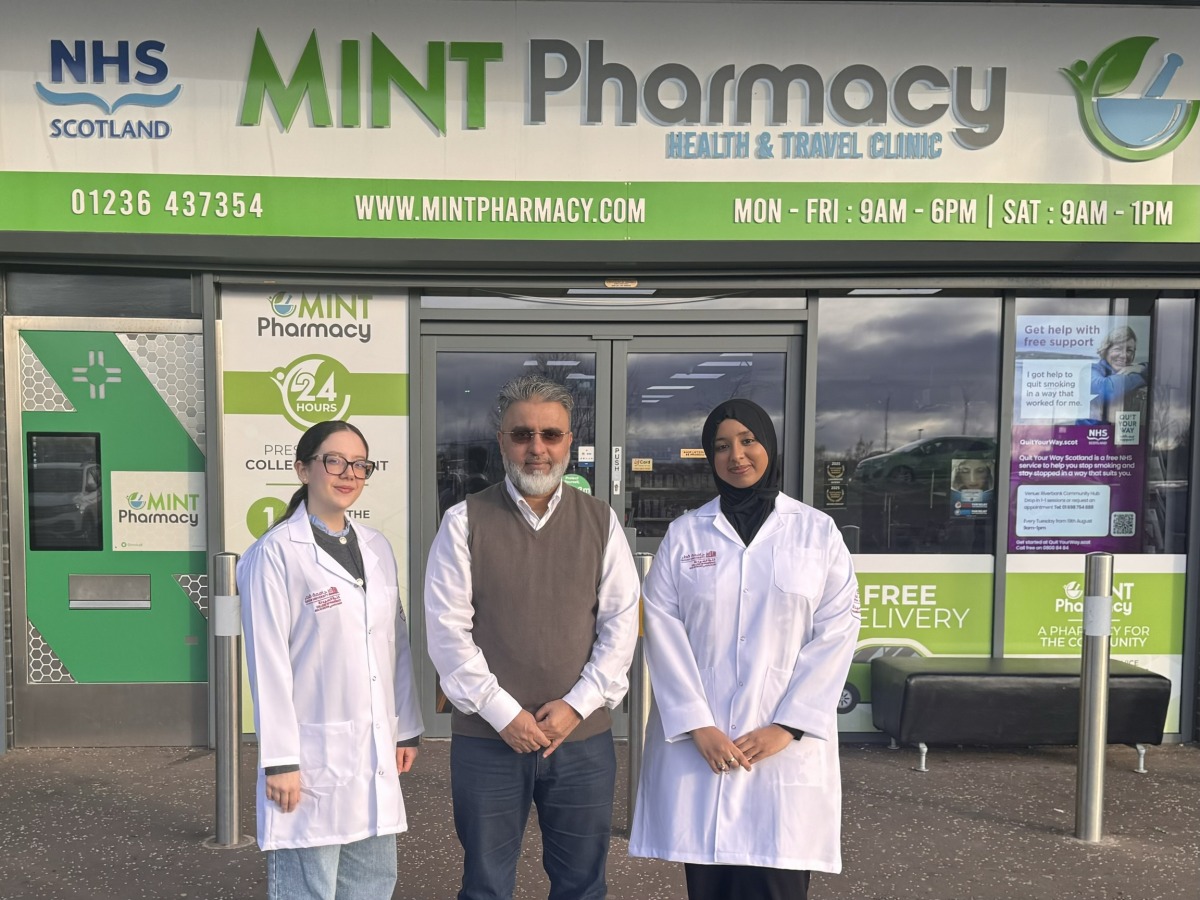
Students completing their community pharmacy rotation at Mint Pharmacy in Scotland described the experience as enriching and transformative. Through active participation in patient counseling, clinical observations, and dispensing workflows, they strengthened their competencies in patient assessment, communication, and medication safety.
Exposure to pharmacist-led services such as travel health consultations and adherence support programs further enhanced their clinical confidence and reinforced a patient-centered approach to care.
Students Shahd Jadalla and Mariem Cheikh Rouhou stated, “This experience expanded our global perspective on pharmacy practice and inspired us to apply these insights to enhance pharmaceutical care within our future professional settings.”
Similarly, students undertaking their rotation in New Zealand experienced community pharmacy practice within a highly collaborative healthcare environment.