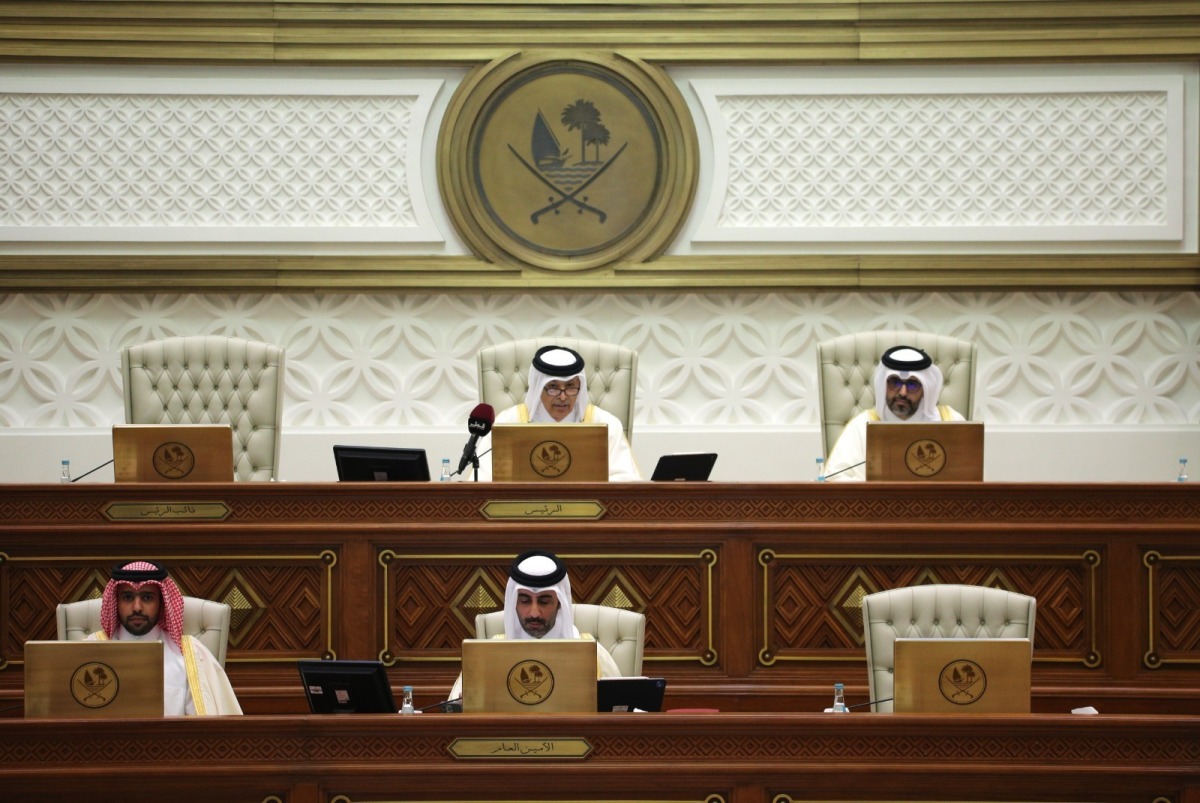
Doha: The Shura Council has extended its warmest congratulations to the Amir HH Sheikh Tamim bin Hamad Al-Thani, the Father Amir HH Sheikh Hamad bin Khalifa Al-Thani, the Deputy Amir HH Sheikh Abdullah bin Hamad Al-Thani, and the Qatari people and residents, on the occasion of Qatar National Day, observed annually on December 18.
At the outset of its weekly session, held Monday in Tamim bin Hamad Hall at the Council's headquarters, under the chairmanship of HE the Speaker Hassan bin Abdullah Al Ghanim, the Council affirmed that this year’s National Day slogan, "With You It Rises, and From You It Awaits," embodies the national vision that places human beings at the heart of development and reflects the pivotal role of youth in continuing the journey of building and progress. The Council wished the nation continued growth and prosperity, under the wise leadership of HH the Amir.
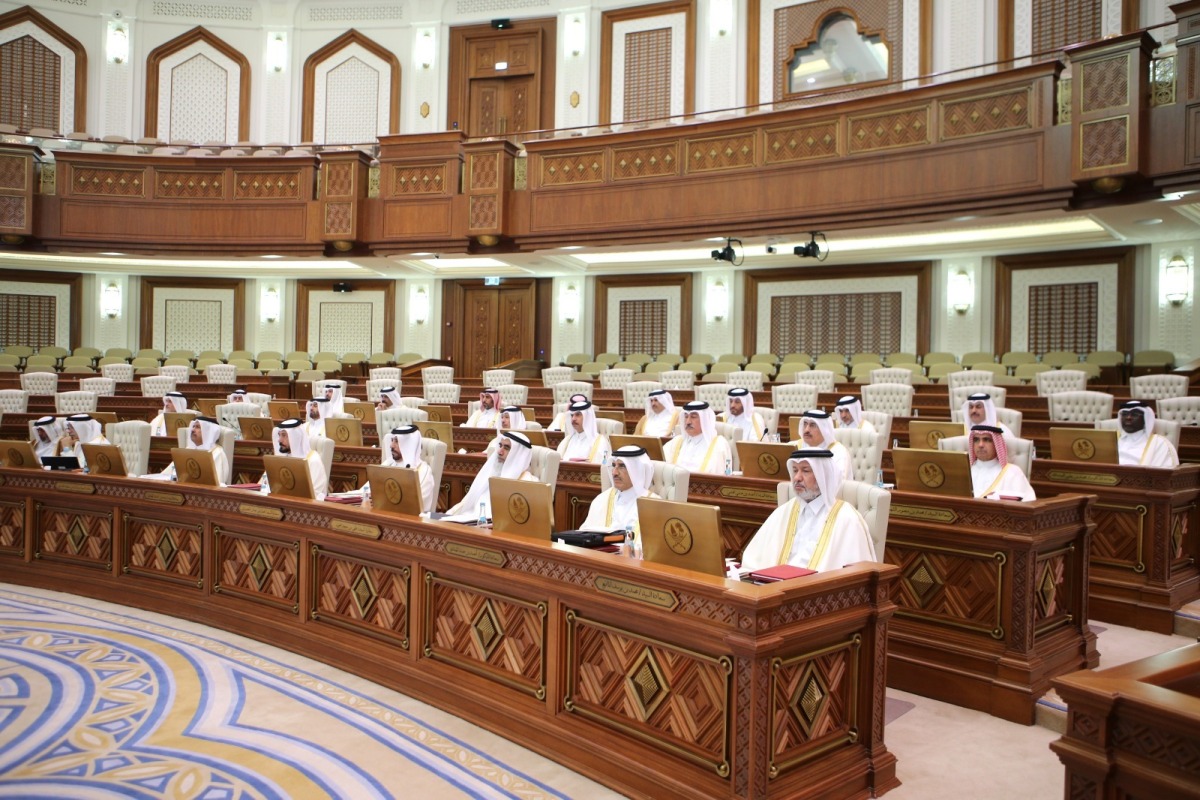
On another note, the Council commended the outcomes of the eighth meeting of the Qatari-Saudi Coordination Council, co-chaired by HH the Amir Sheikh Tamim bin Hamad Al-Thani, and HRH Crown Prince and Prime Minister of the Kingdom of Saudi Arabia Prince Mohammed bin Salman bin Abdulaziz Al Saud, last Monday in Riyadh.
The Council affirmed that the meeting's conclusions reflect a shared commitment to developing mechanisms for bilateral coordination and expanding areas of joint work in the political, security, defense, economic, investment, energy, technology, and development sectors.
It noted that the high-speed electric rail link between the two countries is one of the key strategic initiatives to emerge from the meeting, given its role in facilitating the movement of people and goods, enhancing tourism and trade, and supporting economic integration, emphasizing that this project, along with the signed agreements, constitutes a significant step in consolidating the strategic partnership between Qatar and the Saudi Arabia, fulfilling the aspirations of the two brotherly nations and supporting security, peace, and prosperity in the region.
Following this, Secretary-General of the Shura Council HE Nayef bin Mohammed Al Mahmoud read out the agenda and the Council approved the minutes of its previous session.
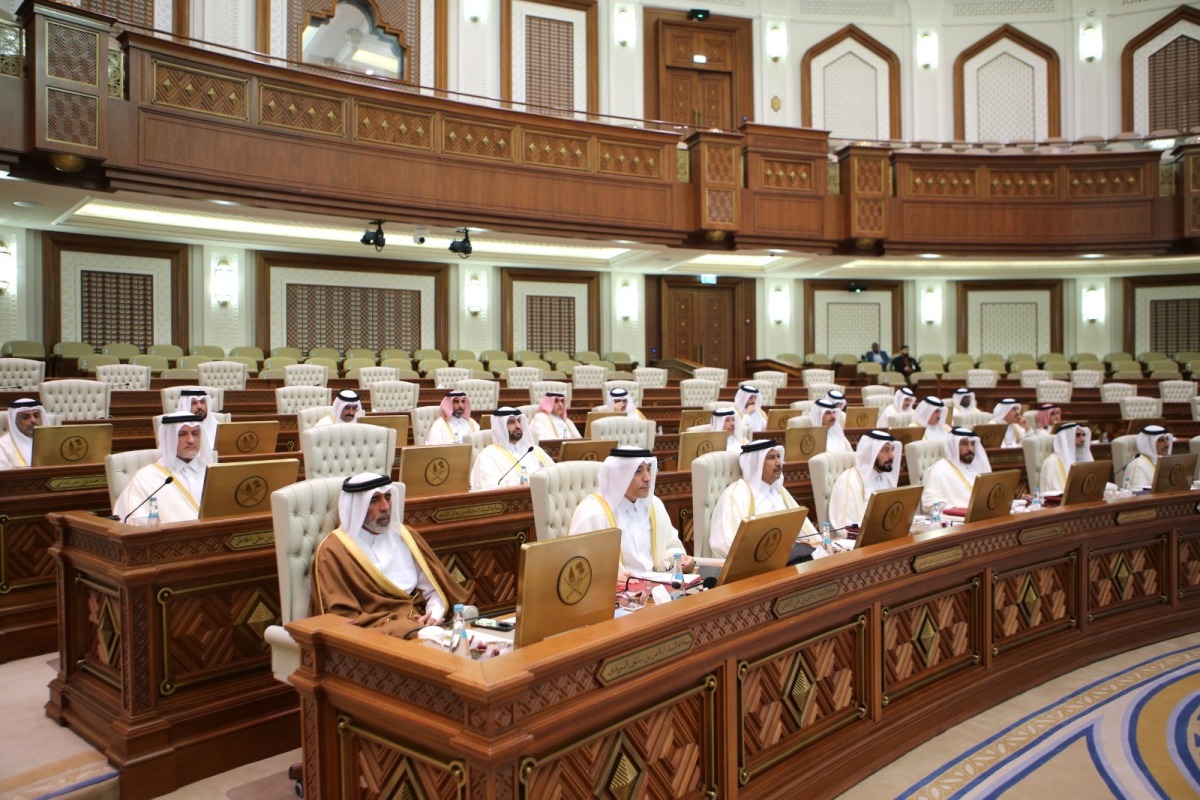
During this week's session, the Shura Council hosted Secretary-General of the National Planning HE Council Dr. Abdulaziz bin Nasser bin Mubarak Al Khalifa, to discuss a range of national strategic themes related to the Third National Development Strategy 2024-2030, including its developments and updates.
At the beginning of the session, HE Al Ghanim welcomed HE Dr. Abdulaziz bin Nasser Al Khalifa, praising the national planning methodology adopted by the State under the leadership of HH the Amir.
He highlighted the comprehensive framework provided by the Third National Development Strategy, which aligns with Qatar National Vision 2030, strengthens the paths of sustainable development, enhances government performance efficiency, and leads to the achievement of balanced economic and social development.
His Excellency affirmed the Council's commitment to continuously monitoring the implementation phases of the National Strategy and supporting efforts aimed at developing policies and enhancing the efficiency of programs to meet the aspirations of Qatari society.
At the beginning of his presentation, HE the Secretary-General of the National Planning Council delivered a detailed briefing on the pillars of the Third National Development Strategy 2024-2030, explaining that it was built on a comprehensive assessment of national challenges and an in-depth analysis of regional and global changes.
He noted that the strategy is based on seven main national outcomes, including sustainable economic growth, fiscal sustainability, a future-ready workforce, a cohesive society, quality of life, environmental sustainability, and high-performing government institutions.
His Excellency highlighted the importance of the the data ecosystem, stressing that the establishment of an integrated central database represents a national priority in implementation of the directives of HH the Amir.
He explained that work is underway to standardize definitions, classify terminology, and enhance data maturity. This will support decision-making, reduce duplication, save time and effort, and strengthen the reliability of national and international indicators.
He further noted that the strategy aims to promote sustainable economic growth by diversifying income sources, increasing productivity, developing an attractive investment environment, and enhancing the competitiveness of economic sectors, thereby contributing to economic stability and building a solid development foundation. He also underscored the importance of achieving fiscal sustainability through improving the efficiency of public spending, entrenching the principles of fiscal discipline, and developing innovative mechanisms to finance development programs.
On the human and social front, HE the Secretary-General of the National Planning Council emphasized enhancing the readiness of the workforce for the future through the development of national skills, empowerment of Qatari competencies, and modernization of education and training policies in line with the needs of the future labor market.
He also addressed efforts to strengthen social cohesion and improve quality of life through projects targeting health, services, and social welfare, while ensuring a safe and stable living environment for all members of society.
Within the sustainability pillar, His Excellency reviewed efforts related to environmental sustainability, including the protection of natural resources, development of energy and water policies, enhancement of climate change adaptation, and support for innovation in environmental solutions.
He explained that building distinguished government institutions depends on improving the governance and transparency system, developing government processes, and expanding the use of modern technology.
With regard to the integrated national data ecosystem, His Excellency explained that it constitutes a fundamental pillar for planning and decision-making by unifying data sources, enhancing data quality, and improving data-sharing mechanisms among various government entities, thereby enabling accurate monitoring of national performance indicators.
He also addressed developments related to population policy, including managing population growth, achieving a balanced demographic structure, and meeting the country's future development needs.
Dr. Abdulaziz bin Nasser Al Khalifa, further discussed the important role of innovation and digital transformation in accelerating the implementation of government programs, improving service efficiency, and enhancing the country's readiness for rapid global changes.
As for the future outlook, His Excellency explained that the strategy relies on future forecasting models to ensure the country's ability to address changes and guide policies toward the best possible outcomes.
His Excellency also pointed out that the monitoring and evaluation mechanisms adopted by the strategy rely on precise performance indicators and periodic reviews, allowing for flexibility in adjustment and improvement, and supporting transparency and accountability through the active participation of government entities and civil society.
He highlighted an e-platform launched in this context to monitor the project lifecycle, collect data, and prepare periodic reports, including quarterly and annual reports. Furthermore, the platform utilizes artificial intelligence applications in performance analysis and measuring the economic, social, and environmental impact of initiatives.
Members of the Council, in their interventions, expressed their appreciation for the detailed presentation delivered by HE the Secretary-General of the National Planning Council, underscoring the importance of aligning the strategy’s programs with the real needs of the community.
The Council members also stressed the importance of strengthening institutional integration among government entities, unifying the data system, accelerating digital transformation, ensuring that development policies are aligned with community needs, and measuring the actual impact of projects and initiatives. They emphasized the necessity of enhancing implementation efficiency, strengthening governance, and expanding community participation.
The discussions also focused on population policy issues, preserving national identity, developing government services, improving labor market efficiency, and ensuring a balance between economic and social development.
They further addressed the need to enhance the capacity of executive entities to implement initiatives within specified timelines and to achieve integration among government sectors to avoid overlapping roles and improve spending efficiency.
Council members emphasized the importance of ensuring that the strategy takes into account rapid future changes, particularly in the fields of artificial intelligence and modern technologies, and the resulting need to develop national skills and create new job opportunities.
The discussions further addressed the need to strengthen population policies to achieve the required balance between economic growth and the absorptive capacity of public services.
They highlighted the importance of integrated urban planning, developing public transportation, and improving the quality of life in residential areas, while emphasizing the importance of ensuring compatibility between environmental sustainability requirements and economic growth. This can be achieved through developing new solutions for rationalizing energy and water consumption, promoting the green economy, and reducing emissions.
Members of the Shura Council called for strengthening governance and transparency in project implementation, ensuring the publication of periodic progress reports, and emphasizing the need to involve the private sector and civil society in the design and implementation phases of initiatives, recognizing them as key partners in economic and social development, thus contributing to more effective and sustainable outcomes.
At the conclusion of the discussions, HE Dr. Abdulaziz bin Nasser Al Khalifa, expressed his appreciation for the observations raised by Their Excellencies the Council members, affirming that all views and proposals would be taken into consideration within the follow-up processes and updates related to the Third National Development Strategy.
He commended the important role played by the Shura Council and the added value of members’ discussions in enhancing the efficiency of national planning and strengthening coordination among relevant entities.
HE Speaker of the Shura Council Hassan bin Abdullah Al Ghanim and the esteemed members, in turn, expressed their sincere thanks to HE the Secretary-General of the National Planning Council for the comprehensive presentation and detailed responses, affirming their keenness to support national efforts aimed at implementing the strategy and achieving its objectives.
Under another item on the session’s agenda, HE Al Ghanim briefed the Council on the referral of a draft law amending certain provisions of Law No. (25) of 2018 on Excise Tax to the Economic and the Financial Affairs Committee for review, in accordance with Article (114) of the Council's Rules of Procedure.