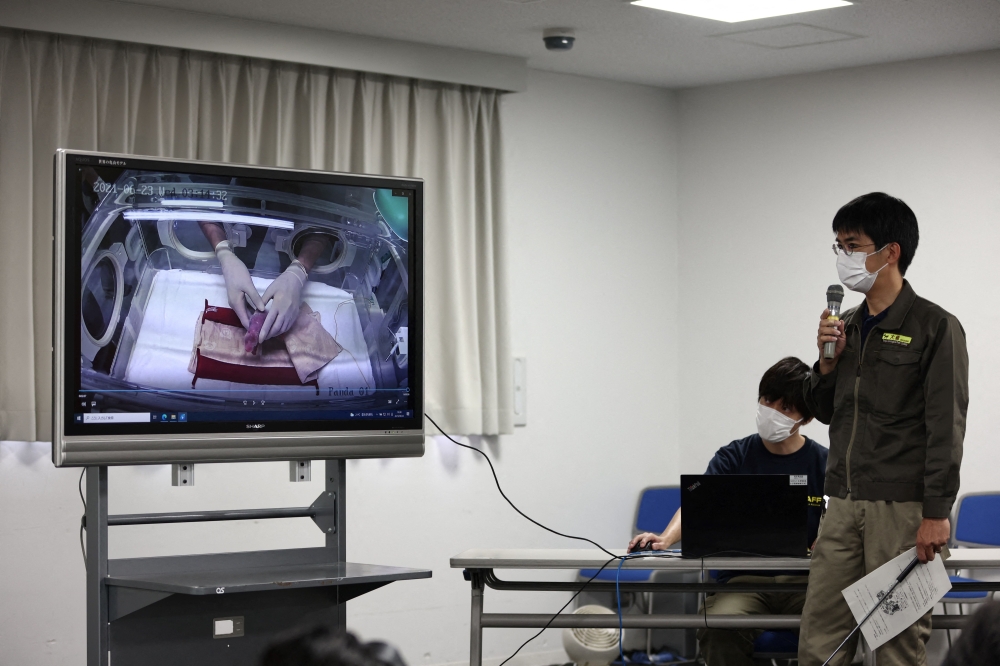
(File) Ueno Zoological Gardens staff Naoya Ohashi (R) shows an image of the first of two newly-born twin cubs delivered by giant panda Shin Shin at Tokyo's Ueno Zoo on June 23, 2021. (Photo by Behrouz Mehri / AFP)
Tokyo: Two pandas at a Tokyo zoo will be returned to China in January, Japanese media said on Monday, potentially leaving Japan without the beloved animals for the first time in half a century.
Loaned out as part of China's "panda diplomacy" programme, the distinctive black-and-white animals have symbolised friendship between Beijing and Tokyo since the normalisation of diplomatic ties in 1972.
Japan currently has only two pandas -- Lei Lei and Xiao Xiao -- at Tokyo's Zoological Gardens in the Ueno neighbourhood.
However, the twins are now set to be repatriated a month before their loan period expires in February, the Asahi Shimbun daily and other media outlets reported.
Tokyo's metropolitan government has been asking for the immensely popular mammals to remain at the zoo -- where they attract huge crowds -- but China didn't agree, according to the Nikkei business daily.
The Tokyo Metropolitan Government declined to comment when contacted by AFP.
Asahi also reported that Tokyo is separately seeking the loan of a new pair, although their arrival before the return of Lei Lei and Xiao Xiao is seen as unlikely.
Ties between Asia's two largest economies are fast deteriorating after Japan's conservative new premier Sanae Takaichi hinted that Tokyo could intervene militarily in the event of any attack on Taiwan.
Her comment provoked the ire of Beijing, which regards the island as its own territory.
Ueno Zoo has long been the beneficiary of panda diplomacy, having cooperated with facilities in China and the United States to successfully breed giant pandas.
Lei Lei and Xiao Xiao were delivered in 2021 by their mother Shin Shin, who arrived in 2011 and was returned to China last year.
Breeding pandas in a zoo environment is fiendishly tricky due to their difficulties mating, false pregnancies and high mortality rates of newborn cubs.