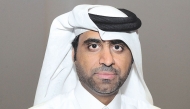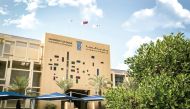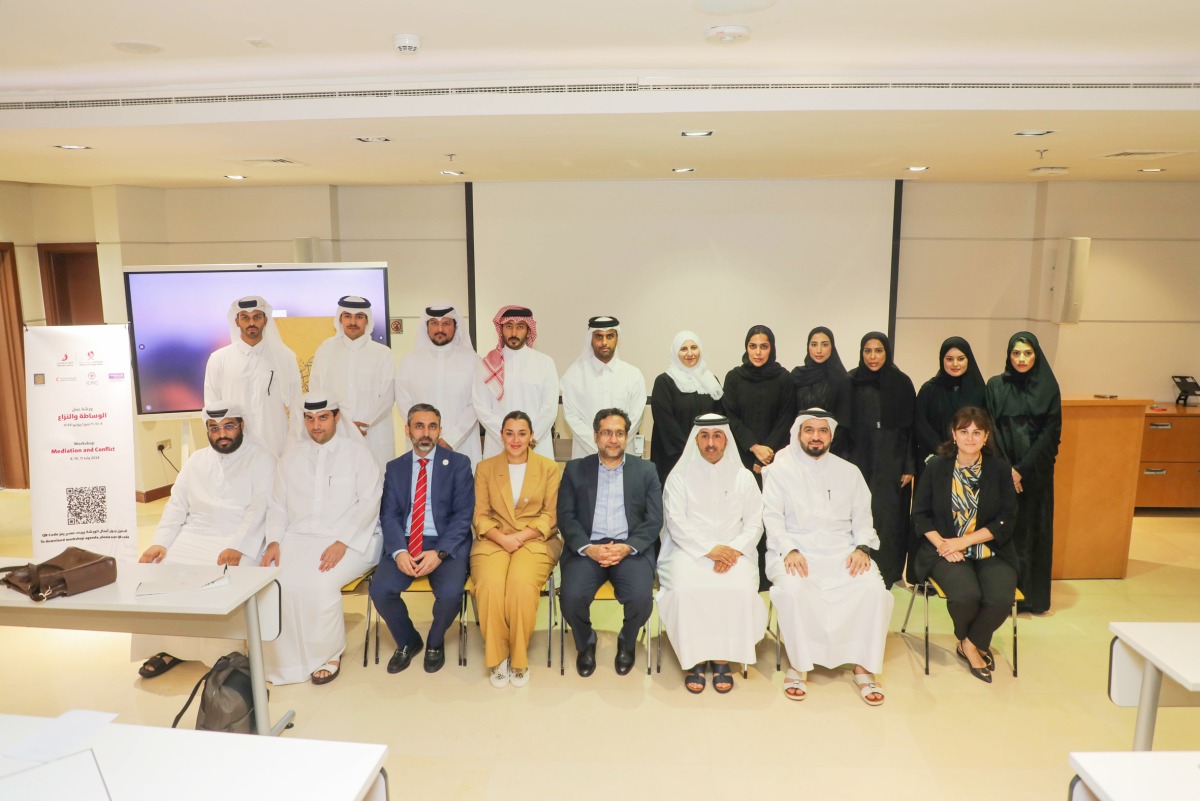
QRCS Secretary-General, Faisal Mohamed Al Emadi (second right, front) and other officials at the workshop.
Doha, Qatar: Qatar Red Crescent Society (QRCS) co-organised a three-day Mediation and Conflicts workshop, for the benefit of young diplomats, in cooperation with the Ministry of Foreign Affairs’ (MoFA) Diplomatic Institute, the Center for Conflict and Humanitarian Studies (CHS), the Geneva-based Center of Competence on Humanitarian Negotiation (CCHN), and the International Committee of the Red Cross (ICRC) – Qatar.
The purpose of the event was to equip diplomats with practical knowledge and skills necessary for effective mediation and conflict resolution in humanitarian contexts.
Through expert-led sessions and interactive discussions, participants gained insights into international humanitarian law (IHL), humanitarian diplomacy, negotiation techniques, and the best practices in peace deals and conflict resolution.
In a statement, Faisal Mohamed Al Emadi, Secretary-General of QRCS, said, “The world is facing massive challenges in terms of international conflicts, with their serious implications at all levels. Armed conflicts have catastrophic impacts on the lives of civilians and are detrimental to community stability. Stronger humanitarian and negotiation endeavours are badly needed for security and peace-building."
He emphasised Qatar’s international humanitarian and diplomatic role, which involves not only providing humanitarian aid for affected people at times of crises, but also practicing active mediation between parties to conflicts and reaching peaceful solutions.
“This demonstrates how national humanitarian negotiation capacity-building is critical to make a difference and deal successfully with the current and future complications,” added Al Emadi. “We believe that such challenges can be addressed only through coordination and collective action. This cooperation among humanitarian, academic, and specialized organizations would hopefully enhance the effectiveness of humanitarian and negotiation efforts”.