Spina Bifida Multidisciplinary Team
Doha, Qatar: Sidra Medicine, has successfully performed a sacral neuromodulation implantation procedure on an eight-year-old child with spina bfida.
The innovative procedure, a minimally invasive solution for children suffering from severe bladder dysfunction was done in collaboration with Dr. Tariq Al-Shaiji, a Consultant Urologist from the State of Kuwait.
Dr. Mansour Ali, Chair of Pediatric Surgery at Sidra Medicine said: "This marks the first time the neuromodulation procedure has been carried out in Qatar on a child. I am proud of our joint efforts with Dr. Tariq Al-Shaiji, in bringing this expertise to our patients. ”

Dr. Tariq Al-Shaiji, a Consultant Urologist from the State of Kuwait
The introduction of sacral neuromodulation is a new treatment option now available in Qatar, for children over the age of seven, who do not respond to first-line therapies. The procedure has shown success in helping children control bladder and bowel activity.
A complex medical condition
In April 2024, a young patient with a neurogenic bladder and related complications caused by spina bifida, was referred to Sidra Medicine’s Multidisciplinary (MDT) spina bifida clinic.
Prior to arriving at Sidra Medicine, she had undergone several medical procedures at other hospitals to control the condition. She was experiencing recurrent urinary tract infections and persistent incontinence. To prevent infections and maintain bladder function, her symptoms were being managed with a permanent catheter.
However, while the permanent catheter was placed to protect the child’s kidneys, she kept experiencing persistent urinary tract infections. It was also limiting her ability to lead a normal life, including playing. She was also mired in constant state of anxiety about not being able to control her bladder function when outdoors.
Introducing a minimally invasive alternative
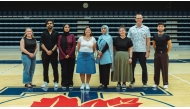
Sidra Medicine’s MDT spina bifida clinic includes specialists from urology, nephrology, rehabilitation, and neurosurgery. The team work together to evaluate complex cases and identify the most effective treatment options for each child.
The young patient’s initial medical treatment program at Sidra Medicine included a detethering of the spina by neurosurgery, followed by an endoscopic Botox treatment for her refractory neurogenic bladder. However, neither of these procedures were able to fully address the child’s bladder dysfunction.
Dr. Santiago Vallasciani, Division Chief of Urology at Sidra Medicine who is part of the MDT Spina Bfida clinic said: "After having reviewed all possible options and seeing that previous procedures did not address her bladder dysfunction properly, we decided upon performing a sacral neuromodulation. The minimally invasive treatment was the most suitable option and a longer-term solution. Introducing this approach allows us to expand the range of care we can provide to complex pediatric patients while avoiding more invasive reconstructive surgeries whenever possible."

Dr. Santiago Vallasciani, Division Chief of Urology at Sidra Medicine
The procedure involves implanting a small battery-operated device, called a neurostimulator, that stimulates the sacral nerves — the nerves responsible for bladder control. Acting similarly to a pacemaker, the neurostimulator regulates nerve signals and can be programmed to optimize bladder function while minimizing disruption to the patient’s daily life. The device is controlled by an external remote control.
A collaborative medical effort
While sacral neuromodulation has previously been performed on a small number of adult patients in Qatar, it had not previously been carried out in younger children in the country.
As there weren’t any pediatric experts based in Qatar who specialized in the procedure, the spina bfida clinic at Sidra Medicine collaborated with Dr. Tariq Faisal Al-Shaiji, Consultant Urologist from Kuwait. Dr. Al-Shaiji has extensive experience performing sacral neuromodulations and came to Qatar to support the introduction of the procedure at Sidra Medicine.
Dr. Tariq Al-Shaiji said: “I am pleased to collaborate with Sidra Medicine in bringing my expertise and techniques to offer this life-changing procedure for children in Qatar. As a second-line therapy, sacral neuromodulation will provide a non-invasive option for children with bladder dysfunction. We are confident that our joint efforts will change the course of pediatric urological services available in the country.”
The sacral neuromodulation that was performed on the patient involved two steps. The first temporary step was to place the neurostimulator outside of the patient’s body for nearly two months. This was done to test any improvements to her urinary function and her body’s acceptance of the implant.
Once the child showed progress during the trial period, the team took steps to permanently implant the neurostimulator under her skin. This would allow the device and the cables to remain inside her body. A thin wire (lead) from a neurostimulator device was connected to the child’s sacral nerve.
The procedure was successfully performed in February 2026 at Sidra Medicine. Involving a team of anesthesiologists, general surgeons, urologists and neurosurgeons, the minimally invasive procedure and set-up took less than two hours.
Post-procedural success
The patient was discharged the day after the procedure and continues to receive regular follow-up by the care team.
Dr. Santiago Vallasciani continued: “We are pleased to report that the patient has responded positively to the procedure and is healing well. We have seen a consistent reduction in incontinence issues as well on her capacity to hold larger amounts of urine. Because the device has a long battery life, we are expecting it to last for up to 10 years. This procedure will have a significant impact on the quality of her life by reducing the need for medications and catheterizations as well as protecting her kidney function.”
Following the success of its first sacral neuromodulation, Sidra Medicine has now added the procedure to its list of pediatric surgery options. Patients undergoing the procedure are advised to avoid heavy lifting or vigorous physical activity that could dislodge or damage the implant. They will continue to receive regular follow-ups to ensure continuity of care.
“Procedures like this are life changing. Children can go back to doing normal activities such as playing and going outdoors. It will allow them to feel more in control and relieve the anxiety they may experience when going to the bathroom. Being able to offer this procedure to our patients reflects our commitment to innovation, collaboration, and delivering world-class pediatric care in the region,” concluded Dr. Mansour Ali.