Doha, Qatar: The third edition of the Government Communications Forum concluded yesterday following two days of panel discussions and specialised workshops, reaffirming the forum’s role in knowledge exchange, institutional coordination, and examining the role of strategic communications in advancing national priorities.
Organised by the Government Communications Office (GCO), the forum brought together more than 800 ministers, undersecretaries, senior officials, and decision-makers, alongside communications and media experts and representatives of leading global digital and media companies. Sessions explored communications as a strategic tool for influence, trust, and national narrative-building in a rapidly evolving context.
Director of the GCO H E Sheikh Jassim bin Mansour bin Jabor Al-Thani said: “The third edition of the Government Communications Forum reflects an ongoing effort to strengthen Qatar’s government communications ecosystem and enhance coordination across government and semi-government entities and international partners.
“This supports the effective delivery of national messages aligned with the country’s vision and development priorities.”
He added also added that “Government communications now serve a strategic role in building awareness, strengthening trust, and engaging with society. Through the forum, we bring together expertise, share best practices, and engage local and international partners to enhance institutional performance and support Qatar National Vision 2030.”
The forum saw broad participation from international partners, including Dow Jones, Meta, Google, Snap, and Amazon Ads, alongside an exhibition featuring initiatives by government and semi-government entities, including the Ministry of Interior, the Ministry of Labour, the Ministry of Sports and Youth, the Communications Regulatory Authority, and Qatar Rail.
The forum also featured an exhibition by the Government Communications Office highlighting its ongoing efforts to strengthen the government communications ecosystem and showcase achievements over the past year.
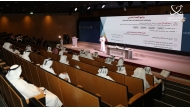
The third edition of the forum featured 11 panel discussions, bringing together government leaders, international experts, and representatives of global digital platforms. Discussions examined the role of government communications in strengthening the national narrative, supporting major initiatives, and enhancing cohesion across government entities. Sessions also highlighted best practices for public engagement, institutional readiness, and transparency as a cornerstone of public trust.
Sessions addressed developments in digital communications, strategic storytelling, and sport as a unifying narrative that reinforces national identity and encourages community engagement, as well as the growing role of women in leading the communications sector and shaping more inclusive, agile, and impactful narratives.
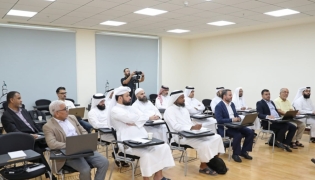
The forum program included more than 35 specialised workshops held over two days, covering artificial intelligence, digital strategies, creative content, media monitoring, production, creative writing, and crisis communications.
The forum also highlighted the role of strategic communications in supporting key sectors, particularly tourism, underscoring the importance of creative campaigns, effective use of digital platforms, and data-driven audience insights in delivering impactful messages.
Several entities and individuals were honoured for their role in advancing the government communications ecosystem in 2025. Awards included Media Excellence, Best Digital Campaign, and Innovation in Media Content, in addition to a Snap Award presented for the first time in the region to the most engaged entity on the platform, reflecting the forum’s commitment to support impactful initiatives and develop human capital in the communications sector.
The Government Communications Forum continues to advance Qatar’s communications sector and strengthen coordination across government entities. These efforts support capacity-building, strengthen communications outputs, and contribute to the nation’s regional and international standing, in line with the Third National Development Strategy.