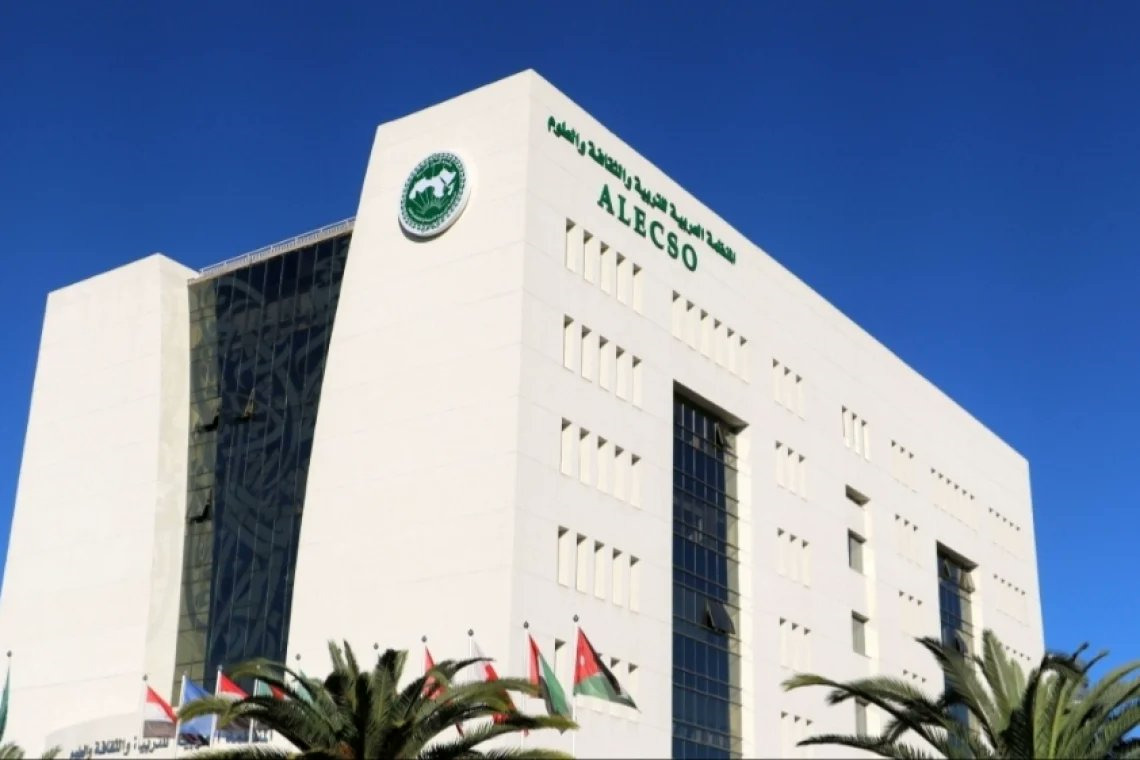
Tunisia: The Arab Organization for Education, Culture, and Science (ALECSO) held today a conference on Palestinian childhood titled: 'Palestinian Childhood under Israeli Occupation: Monitoring Educational and Cultural Violations and Strengthening Protection and Resilience Mechanisms,' with the participation of experts, academics, and ambassadors from Arab and foreign countries accredited in Tunisia.
Director General of ALECSO, Dr. Mohamed Ould Amar said in his opening speech: 'Talking about Palestinian childhood is not merely talking about numbers and statistics, but about children who have names, dreams, and ambitions, and about generations that have the right to grow up in a safe environment, away from fear, violence, and deprivation.'
Ould Amar added: "The events that have taken place in the Palestinian territories, particularly in the Gaza Strip, have caused severe damage to the educational and cultural system, affecting children, schools, and educational and cultural institutions. This situation places the Arab and international community before a significant ethical, humanitarian, and legal responsibility to protect children, ensure their right to education, and safeguard their identity and cultural memory."
The Director-General of ALECSO stressed that "the organization will continue, in cooperation with the State of Palestine, Arab countries, and its regional and international partners, to work towards supporting the continuity of education, contributing to the protection of educational and cultural institutions, and enhancing the resilience of Palestinian children, teachers, and families."
The two-day conference aims to shed light on the educational, cultural, legal, psychological, and media dimensions of the challenges and violations faced by the Palestinian child, and to enhance coordination among Palestinian, Arab, and international institutions concerned with education, culture, and children's rights.
The conference also seeks to provide an Arab platform for dialogue and exchange of experiences, as well as the presentation of specialized certificates and papers, contributing to the shift from monitoring and documenting violations to developing more effective mechanisms for protection and advocacy, and enhancing the continuity of education and addressing learning loss.