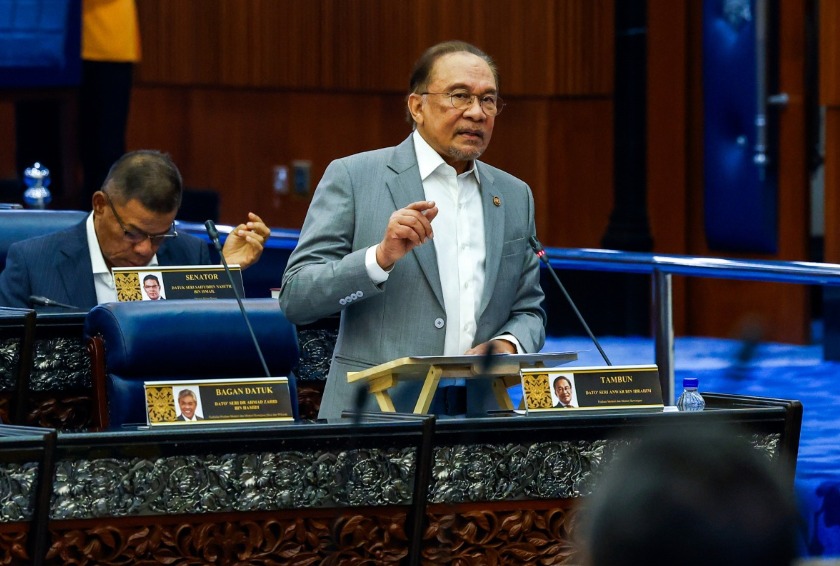
Kuala Lumpur: The Malaysian economy continued to defy expectations for the third consecutive quarter, growing strongly by 6.0 percent in the second quarter of 2026 despite shocks that have disrupted the global economy, Prime Minister Anwar Ibrahim said on Friday.
Anwar, who is also finance minister, said the figure, higher than the 5.4 percent in the preceding quarter, marked Malaysia's strongest second quarter showing outside the pandemic period since 2014.
He attributed this to the government's proactive response to the Middle Eastern conflict through financial support for small- and medium-sized enterprises and targeted fuel subsidies, according to a statement from the Finance Ministry.
"These measures helped sustain household spending, business activity, and the economy's strong growth momentum into Q2 2026... While disruptions to global supply chains have exerted upward pressure on prices worldwide, Malaysia's inflation remained contained at 1.9 percent in Q2 2026," he said.
The ministry also said the quarter's performance brought growth in the first half of 2026 to 5.7 percent, placing the economy on a firm footing relative to the government's full-year growth forecast of 4.0 percent to 5.0 percent.
Private consumption remained a key driver of growth, expanding by 4.8 percent, buoyed by higher spending on restaurants and hotels, transport, and food and beverages amid festive celebrations, the mid-year school holidays, and sustained tourism-related activities, it said.
Private and public investments continued to grow, underpinned by ongoing investments in the technology sector and the nationwide deployment of critical infrastructure.
It added that the government remains mindful that the benefits of economic growth are not felt evenly across households and businesses "Continued geopolitical uncertainty, disruptions to global supply chains, higher input and food prices, and employment pressures in certain sectors remain key risks to household well-being and business activity," it said.