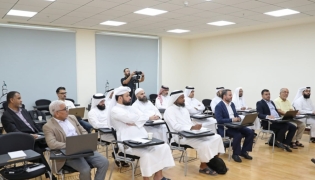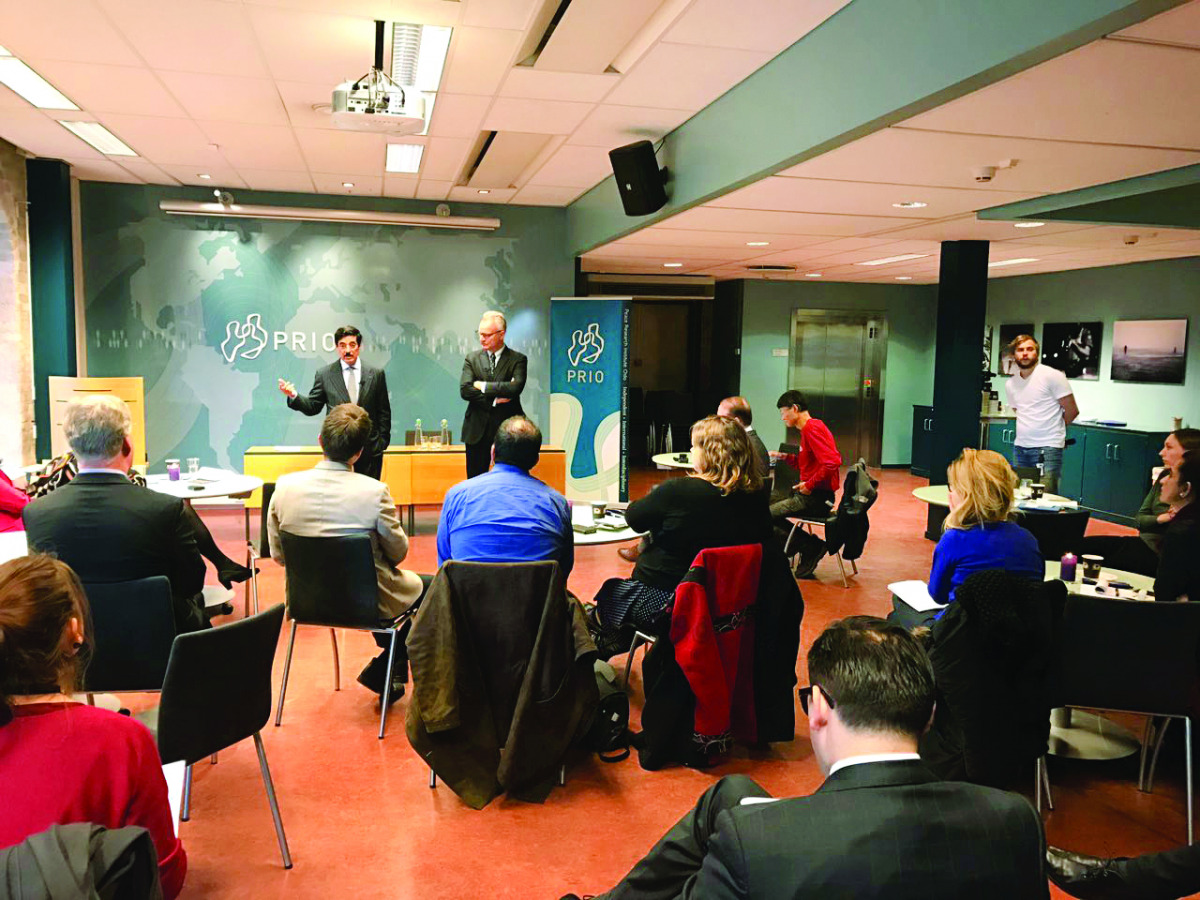
Dr Hamad bin Abdulaziz Al Kawari addressing the Oslo Urban Peace Week yesterday.
Dr Hamad bin Abdulaziz Al Kawari, Cultural Adviser at the Emiri Diwan and Qatar's candidate for the post of Unesco Director-General, has called for embracing the cultural and intellectual characteristics of "our society to combat extremism and violence".
Dr Al Kawari was addressing the Oslo Urban Peace Week event yesterday that brought together urban planners, peace researchers, and other stakeholders from all over the world aimed at rebuilding our cities for a better future.
“Existence of an organic relationship between peace, on the one hand, and infrastructure, on the other, is possible and within our grasp. However, this relationship also extends to the larger superstructure, by which I mean global educational programmes,” said Dr Al Kawari.
“The best response to extremism and violence in the world is the one that embraces the cultural and intellectual characteristics of our society and our institutions,” he added.
During the lecture he showcased Doha as a melting-pot of education, art and culture all the while making strides in urban development. “Doha is transforming into a state-of-the-art, world-class cosmopolitan city, and happily embraces diverse cultures, multiple languages and core human values while maintaining an inherent, peaceful co-existence.”
Addressing the gathering, he talked about how education can combat extremism.
“Quality education also works on creating the global superstructure that further prepares young people to fight against extremism and violent ideologies. By joining together and working for the one goal, the infrastructure and superstructure combine strength and efficiency in the fight against terrorism,” he said.
“Terrorist acts not only take lives of innocent people around the world, they also target the heritage of humanity in an attempt to erase the past and eliminate the shared collective consciousness and combined endeavors of human beings,” he added.
He stressed that a new exacerbation of different forms of brutality fueled by the advocates of extremism and terrorism is currently used.
“They were not content with just agitating wars and reviving hatred that we thought had been put to rest long ago. Instead, they have targeted our human collective memory by destroying internationally recognized landmarks of human heritage in Afghanistan, Timbuktu, Libya, Iraq and Syria. This was done in order to erase evidence of diversity of cultures and human experiences, to wipe out the common exchange between different aspiring civilizations,” he lamented.
He called for combined efforts to fight the terrorism that threatens the gains of humanity. “By doing so, we will not allow them to deprive us of our liberty, which gave us indomitable tolerance, human dignity and rights that enhance our shared human experience. This will only be achieved through raising the importance of the status of culture in the world,” he stressed.
He stressed on the need to engage globally on topics related to education, science, technology and culture.
“Literature unites us by removing the barriers of languages, customs and prejudices that have long kept us from communicating more openly. This personal experience provides us with all the depth of the civilized experience that transferred humans from dark caves to magnificent skyscrapers and from small quaint villages to inspiring global cities. This is all being conducted thanks to the exchange of cultures, the acceptance of diversity, and the respect for others. This learning experience and exchange also highlight the fact that education is the key to building these core common human values,” he said.