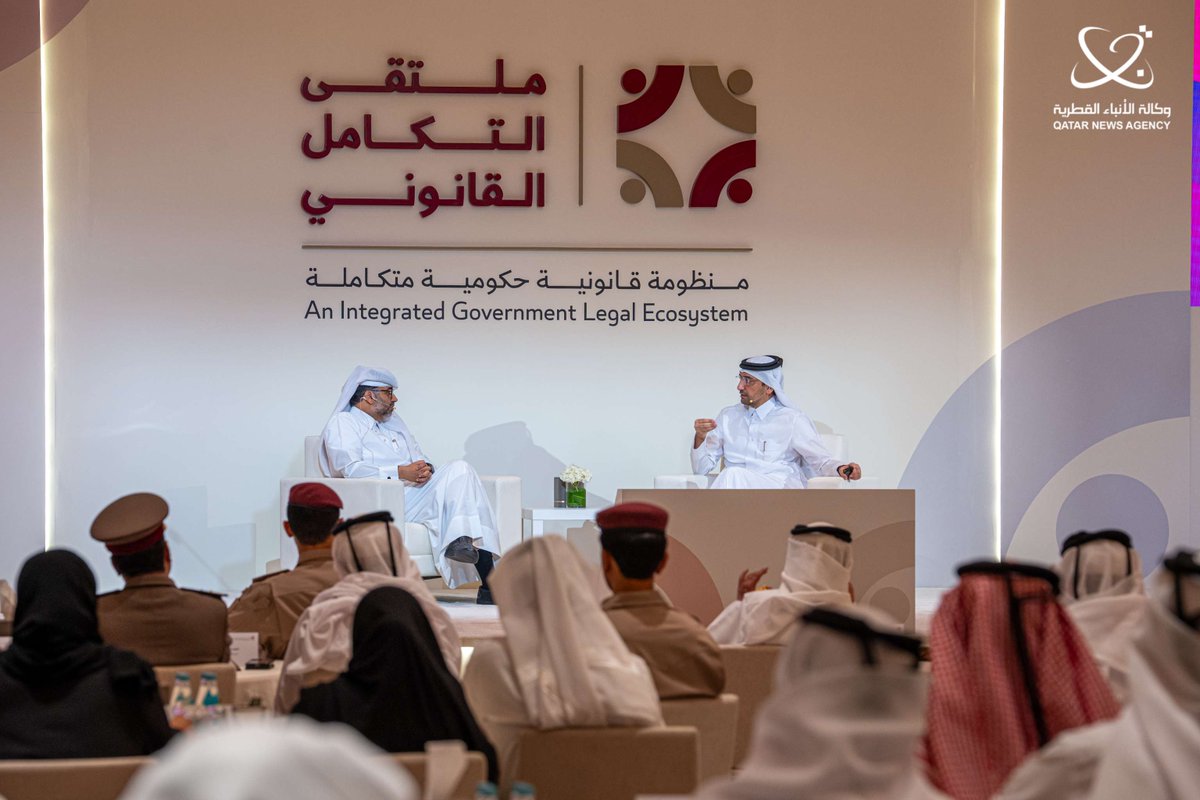
Doha: The General Secretariat of the Council of Ministers convened the Legal Integration Forum pursuing the mantra of an integrated government legal system, as part of efforts to strengthen communication, exchange expertise, and consolidate integration to create impact.
This convention marks World Law Day in recognition of the importance of advancing government legislative action and its role in supporting public policies and national priorities, in addition to building on the outcomes of the previous edition in terms of expertise sharing, capacity-building, and strengthening legal work in government entities.
The forum in question focused on the role of the Cabinet, ministries, and government entities in drafting bills, their preparation, review, and referral in accordance with constitutional procedures, alongside implementing legislation and measuring its impact after enactment.

It opened with a panel discussion on how legislation can be a tool for implementing national strategies, bringing together Minister of Justice and Minister of State for Cabinet Affairs HE Ibrahim bin Ali bin Issa Al Hassan Al Mohannadi and President of the Civil Service and Government Development Bureau and Secretary General of the National Planning Council HE Dr. Abdulaziz bin Nasser bin Mubarak Al Khalifa.
The panelists debated avenues for aligning government legislative projects with national priorities, starting from the preparation phase, and strengthening the connection between strategic planning, public policies, and legal frameworks in support of the objectives of the Third National Development Strategy (NDS3) and Qatar National Vision 2030 (QNV).
They focused on the importance of linking these projects to measurable outcomes, analyzing the impact of legislation after its enactment, and highlighting the role of integration and governance in improving performance efficiency and developing a flexible and effective legal environment that supports development, competitiveness, and the business environment.
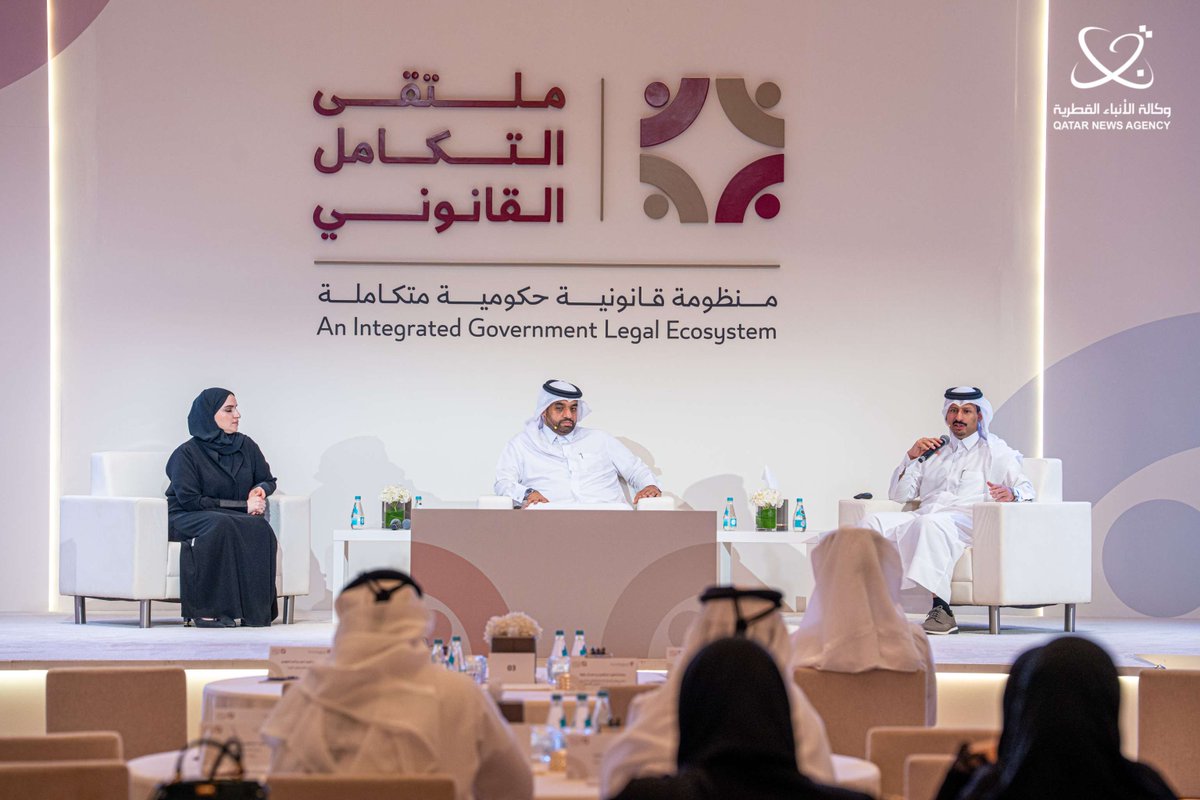
The discussions addressed the contribution of high-quality government legislative proposals and the effective implementation of legislation to enhancing Qatar's standing in international indicators covering governance, regulatory policy, and the rule of law.
They also examined ways to leverage data and the National Statistics Center in policymaking, the development of government legislative proposals, and decision-making.
The forum also featured a second panel discussion on legal and treaty frameworks and international agreements: integrating roles and enhancing impact, with the engagement of Assistant Secretary-General for Legislative Affairs at the General Secretariat of the Council of Ministers, Abdulaziz Mubarak Al Buainain, Assistant Undersecretary for Agreements and International Cooperation at the Ministry of Justice, Khalid Mohammed Al Khamis Al Obaidli and Director of the Shura Council Affairs Department at the General Secretariat of the Council of Ministers Fatma Abdullah Al Buainain.
The session went over the recent developments in advancing the government system for drafting bills and managing the various stages of the legislative process, from planning, drafting, and review through their referral in accordance with constitutional procedures, followed by monitoring the implementation of legislation after enactment and assessing its impact, thereby helping optimize the quality of legislative outputs and ensuring their consistency with the nation's public policies.

The deliberations also addressed ways to develop the system governing treaties and other international agreements, clarify roles, and standardize coordination mechanisms among the relevant entities in support of implementation monitoring and the measurement of results, while ensuring that international obligations remain consistent with national priorities and interests.
The forum's agenda included two presentations. The first was on legislative drafting: a methodological framework for effective legislation, delivered by Director of the Legislation Department at the Council of Ministers Secretariat General, Majed Hassan Al Ghanem.
Al Ghanem took stock of the methodologies and procedures supporting the preparation of government legislative proposals, standardizing practices, and improving the efficiency of work across the various stages of their preparation and review.
The second presentation addressed legislation after enactment, focusing on measurable impact and effective implementation, and was delivered by Acting Director of the Legislative Research and Follow-up Department at the General Secretariat of the Council of Ministers, Dr. Maryam Jassim Al Khater.
Al Khater highlighted the importance of monitoring the implementation of legislation after it enters into force, measuring its impact, and conclusively assessing the extent to which it achieves its intended objectives.
The forum wrapped up with an array of recommendations, foremost of which are strengthening mechanisms for linking the planning of government legislative proposals to national strategies; activating innovative approaches to early coordination among the relevant entities; standardizing practices in the preparation, review, and referral of these proposals.
This is alongside developing methodologies for assessing the impact of legislative proposals before referral and measuring the impact of legislation after it enters into force; and leveraging data and cutting-edge technologies to improve the quality of legislative proposals and the effectiveness of legislative implementation.
The key takeaway from the forum was the significance of a coordinated approach spanning the entire legislative cycle, from planning and drafting to implementation and impact assessment.
Overall, effective legislative policymaking invariably depends on coordination among the relevant entities, consistent practices, and the use of reliable data to support decision-making.
By far, one of the most consequential recommendations was to strengthen the link between government legislative planning and national strategies, ensuring that legislative proposals support national priorities and deliver measurable results.
This forum embodies the General Secretariat of the Council of Ministers' thrust toward building an institutional and proactive government system for preparing, drafting, and reviewing government legislative proposals, monitoring the implementation of legislation after enactment, and measuring its impact in ways that support the quality of government decision-making and the requirements of development, while contributing to achieving the objectives of NDS3 and QNV 2030.