Gaza: Sixteen-year-old Maram Ahmed gently cradled her oud as she rehearsed a traditional Palestinian melody inside a hall at Gaza College in war-ravaged Gaza City, where the strains of strings and guitars offered a rare break.
For Maram, music has become more than a hobby. After more than two years of displacement and deprivation, playing the oud had become her way to cope with the psychological toll of the conflict.
"We try to transform this difficult reality into a space that gives us hope and happiness," Maram told Xinhua. "We cannot stop the bombing and death, but we can play music for peace, life and love."
She is particularly keen to perform traditional Palestinian songs.
"The war destroyed archaeological sites and tried to erase part of our culture, but we can preserve our musical and folkloric heritage through music," she said.
Nearby, 12-year-old Hanan Ghazal carefully followed her instructor during a music lesson. She said she joined the conservatory's classes to find a sense of safety amid the conflict.
"I wanted to escape the atmosphere of fear and insecurity, so I turned to music as a refuge that gives me comfort," Hanan told Xinhua.
Maram and Hanan were among dozens of children participating in a music event organized by the Edward Said National Conservatory of Music, which blended performances and training to help children process trauma, keeping music education alive amid Gaza's harsh conditions.
Ahmed Abu Amsha, a guitar teacher at the conservatory, told Xinhua many children were deeply affected after seeing bombardment and destruction during the Gaza war, prompting the institute to use music as a way to help them express their emotions.
"Many children stopped speaking or interacting with others because of what they had experienced. After participating in music sessions, their psychological condition gradually began to improve," he said.
Music also helped teachers deal with the psychological pressures, Amsha said. "Music is a message of life under the current circumstances. It makes us feel that we are still alive, we are still playing and singing, and there is still hope."
The program has been undermined by repeated displacement and the conservatory's destruction, said Fouad Khader, activities coordinator at the institute.
"I was personally displaced more than 25 times, and this greatly affected the music program," he said. "All the instructors and students were displaced, making it difficult to keep contact with them and continue classes."
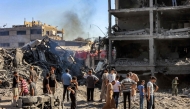
The conservatory's main headquarters was destroyed by the Israeli army in October 2023, along with a number of musical instruments.
Despite the damage, teachers resumed educational activities whenever circumstances permitted.
"All we thought about was making the children happy and putting smiles on their faces. We heal the children with music, and we heal ourselves as well," Amsha said.
Another participant, 12-year-old Zeina Saad El-Din, expressed hope that one day they would enjoy lives free from fear. "We hope to live in safety and be able to go and come back without fear," she told Xinhua.