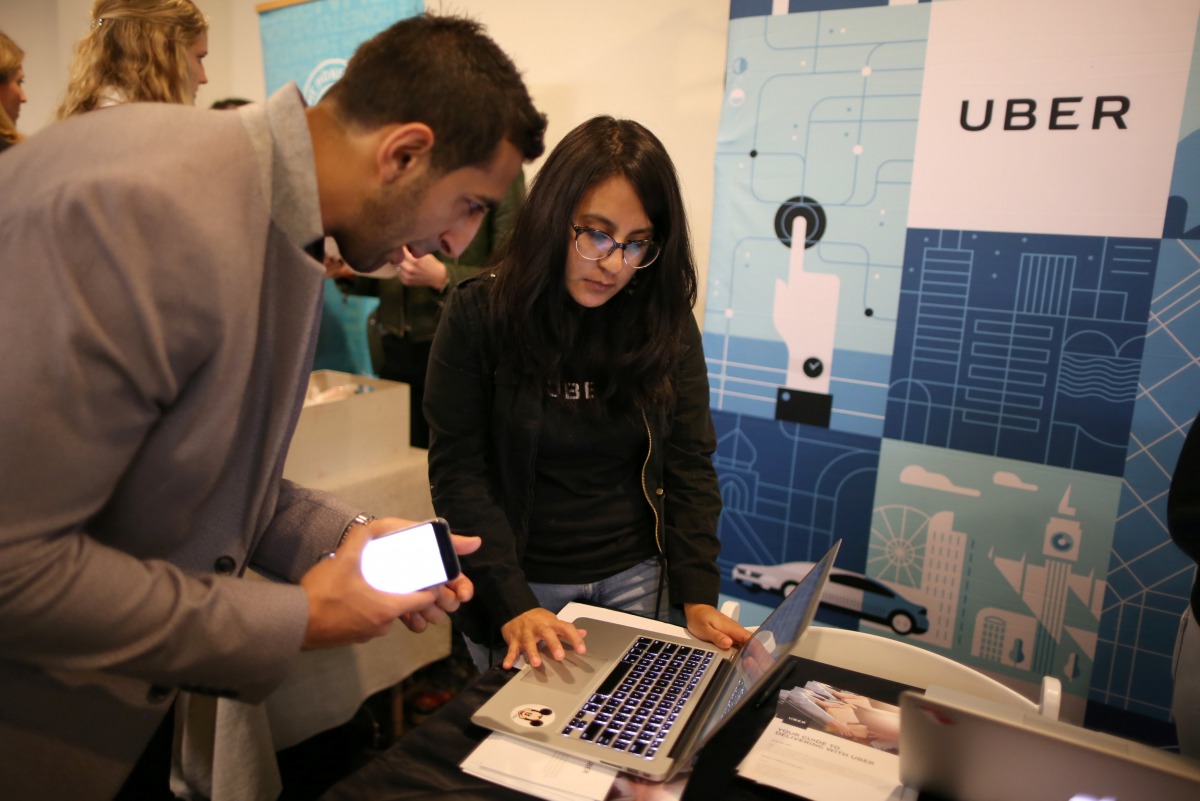
REPRESENTATIVE IMAGE: Uber recruiter Lorena Castellanos talks to job seeker Masood Noori at TechFair LA, a technology job fair in Los Angeles (REUTERS / Lucy Nicholson)
As part of its commitment to improve safety for both driver-partners and riders, Uber launched a “Driver Verification” service in Qatar. The innovative feature is designed to provide additional protection for both drivers and riders while on the road.
The technology works by prompting driver to share a selfie from time to time before going online, to ensure the driver using the app matches the account profile Uber has on file. Not only will the new app protects drivers’ accounts from being compromised and prevent fraud, it will also protect riders by building another layer of accountability into the app, ensuring the right person is behind the wheel.
Uber, the public transport service provider is developing and testing new solutions, to prevent and reduce risk, as well as enhancing the potential of its features to anticipate issues before they even happen. With the new verification service, from time to time, drivers are asked to take a selfie in the Uber app before they accept rides.
Using Microsoft’s Cognitive Services, the photo is instantly compared to the one corresponding with the account on file.
If the two photos don’t match, the account is temporarily blocked while the situation is handled accordingly.
Driver Verification is the latest safety feature to be rolled out by Uber, following a trial in the US last year, where the technology was successful in verifying more than 99% of drivers in the pilot programme.
Designed using Microsoft Cognitive Services, the new safety feature is currently being rolled out to international markets including the UAE, Saudi Arabia, Egypt and other countries.