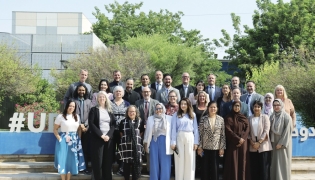
Doha, Qatar: Qatar recently hosted an advanced regional training course on the use of isotopic and confirmatory techniques for identifying residues and contaminants in food products.
This event, organised in collaboration with the International Atomic Energy Agency (IAEA) through its regional technical cooperation project for food safety, brought together 40 specialists from Qatar and 18 other countries.
The course marked the first training session since Qatar’s food safety laboratories were accredited as a collaborating centre for the IAEA in June 2024. This event is part of the Practical Arrangements (PA) signed between the Ministry and the Agency in the field of human health, including food safety.
The course aimed to strengthen the region’s scientific and technical capacities in food safety. Participants received both theoretical and practical training on the latest techniques for analysing food contaminants, including pesticide residues, veterinary drug residues, and mycotoxins, utilising isotopic techniques and confirmatory analysis through mass spectrometry.
Director of the Food Safety Department at the Ministry of Public Health Wasan Al Baker welcomed the participants and praised the IAEA’s role in building human resource capabilities in this vital field, stressing the importance of the course in achieving the targeted objectives.
National Liaison Assistant (NLA) to the IAEA in Qatar and Director of the Radiation Protection Department at the Ministry of Environment and Climate Change (MoECC) Abdulrahman Al Abduljabbar, emphasised the importance of technical cooperation in the field of food safety. Al Abduljabbar also highlighted the pivotal role this training course plays in enhancing the technical capabilities of food safety specialists in the region.
Head of the Food Safety Laboratories Section at the Ministry of Public Health Najat Al Abdulmalik was delighted that Qatar could host the course and wished participants would benefit from the vital topics covered.
Representatives from the IAEA, Lin Yang, the Project Management Officer (PMO), and James Sasanya, the Project Technical Officer (TO), joined the opening session via video conference from the IAEA headquarters in Vienna. They welcomed the participants and affirmed the course’s importance in advancing knowledge and skills in food safety using nuclear technologies.
At the end of the course, participants expressed their appreciation for the advanced laboratory services and facilities, as well as the expertise of the specialised staff at Qatar’s Food Safety Laboratories.