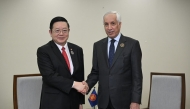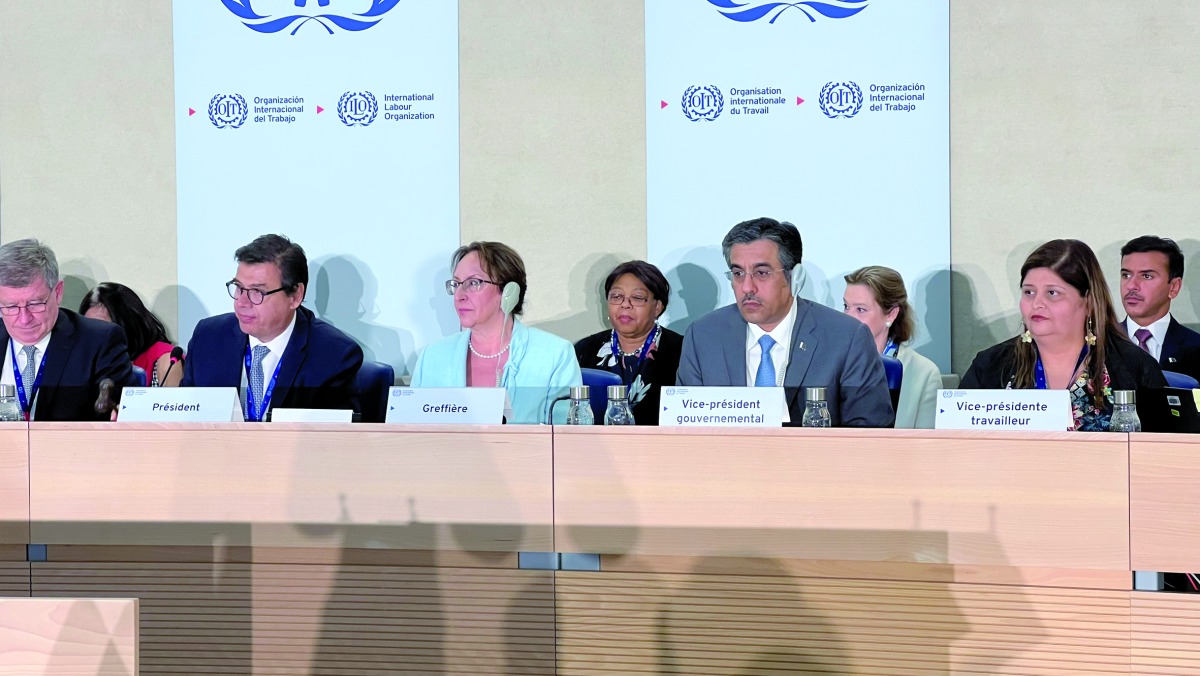
Minister of Labour H E Dr. Ali bin Smaikh Al Marri taking part in a session of 110th International Labour Conference in Geneva.
Doha: Minister of Labour H E Dr. Ali bin Smaikh Al Marri has said that Qatar welcomed the discussion on the strategic goal of employment as part of the follow-up to the ILO declaration on social justice for a fair globalization.
He expressed support for the organization’s activities and programmes in achieving these goals, in light of the remarkable success achieved by the organization’s technical cooperation programme with Qatar, which is considered a pioneering model that can be imitated by the rest of the countries in the region.
The Minister noted that Qatar will host the 5TH United Nations Conference of the Least Developed Countries during in March 2023, which reflects the belief of Qatar in the importance of strengthening international solidarity in order to bring about change that puts these countries on the desired track towards sustainable and comprehensive development.
The Minister of Labour participated yesterday in Geneva in the closing session of the 110th International Labour Conference (ILC), in the presence of heads of delegations, ministers of Labour and representatives of workers and employers in member states of the International Labour Organization.
The ministry participated in ILC with a high-level delegation as part of its efforts to communicate with international organizations and discuss the latest developments in the labour sector globally.
The conference discussed the report of the economies of the least developed countries and the Ukrainian crisis, the reports of the Committee of Legal Experts on ILO conventions and recommendations, and the plenary sessions of the conference discussed issues of decent work, social and solidarity economy, as well as the strategic goal of employment as part of the follow-up mechanism to the ILO Declaration on Social Justice for a Fair Globalization
The 110th session of the International Labour Conference for the year 2022 acquired a special attention, especially in light of the successive global crises, which rendered rippling negative impacts on the world of labour.
Nearly 5,000 delegates from 187 member states participated in the conference’s work, representing the three working parties: governments, employers, and workers.
The conference discussed the report of the economies of the least developed countries and the Ukrainian crisis, the reports of the Committee of Legal Experts on ILO conventions and recommendations, and the plenary sessions of the conference discussed issues of decent work, social and solidarity economy, and the strategic goal of employment as part of the follow-up mechanism to the ILO declaration on social justice for a fair globalization .
Dr. Ali bin Smaikh Al Marri, Vice-President of the 110th International Labour Conference, underlined that the outputs of the International Labour Conference, especially those that will address the challenges facing the international community in the labour world, are massively momentous during the current stage, noting that focusing on the least developed countries and the most vulnerable to setbacks than the rest of the member states will enhance the positive results of implementing those outputs and recommendations.
The Minister, during his speech at the closing session of the conference, made it clear during his speech at the closing session of the conference that choosing the topic of the report for this year was good, as it emphasised the need to support the structural transformation in these countries in accordance with Doha Programme of Action for LDCs (2022-2031) explaining that the Director General’s report provided an opportunity for delegations participating in the current session to discuss the ways to promote decent work and meet the future challenges of the labour world.
He welcomed the issuance of the decision approving the amendments to the Maritime Labour Agreement of 2006, which were approved by the ILO’s Special Tripartite Committee in the fourth session of the conference, noting that the amendments were approved most of them based on lessons and experiences gleaned from the COVID-19 pandemic period and its negative effects on work in the maritime sector and the conditions of work in the maritime sector especially those that have stricken the seafarers’ livelihood and work, and in particular regulations for food, medical care on board, health and safety measures, and accident prevention.