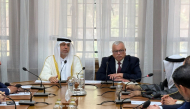
Stefano Baronci during the interview.
Doha, Qatar: Hamad International Airport (HIA) stands as a global exemplar of aviation excellence, embodying the strategic vision that has positioned the Middle East as the world’s leader in aviation recovery, according to Stefano Baronci, Director General of Airports Council International (ACI) Asia-Pacific and Middle East.
Speaking to The Peninsula during a recent visit to Qatar, Baronci offered effusive praise for HIA and Qatar’s comprehensive approach to aviation development, highlighting how the country’s state-level planning has created a model for the industry worldwide.
“Hamad is building for the future and is already top in terms of quality of service,” Baronci said. “What we see here is the perfect synergy between Qatar Airways and infrastructure development that follows a clear state-level plan to make the country attractive as a platform—not just as a tourist destination or for business conferences, but as a major hub for international transfer passengers.”
The airport’s success stems from Qatar’s integrated approach to aviation as a cornerstone of national development.
HIA is currently expanding to accommodate 70 million passengers annually, positioning Qatar to capitalise on the Middle East’s projected passenger surge from 470 million in 2024 to approximately 1.2 billion within 30 years.
Baronci emphasised that HIA’s technological sophistication sets it apart globally. “The airport is digitally savvy and innovative,” he noted. “They use smart data hubs and digital twin technology to regularly improve service efficiency, monitoring operations and optimising performance in real-time.”
This technological excellence is matched by environmental leadership. HIA has achieved Level 3 accreditation under ACI’s Airport Carbon Accreditation programme, demonstrating significant progress in CO2 reduction. “Aviation is engaged in probably the biggest challenge it has ever faced: decarbonising its system,” Baronci explained. “Hamad is showing leadership in this critical area.”
The ACI chief highlighted a crucial economic advantage of Qatar’s aviation strategy: the focus on international passengers.
“The beauty of Hamad Airport is that it can count on international passengers, who bring more wealth not just to the airport, but to the country and society as a whole,” he said.
Beyond Qatar specifically, Baronci noted that Middle East airports collectively are setting the global standard, with the region already surpassing pre-pandemic traffic levels by 17 percent and achieving passenger satisfaction scores of 4.7 out of 5—well above the world average.
30 capital city airports in Asia-Pacific & Middle East are investing more than $240bn over the next decade, with Qatar’s infrastructure development serving as a flagship example of strategic, timely investment. “It’s not just about building, but when you build,” Baronci stressed. “Timely infrastructure development is critical to addressing potential congestion and environmental challenges.”
The ACI chief also shared insights from the organisation’s latest travel retail study, highlighting how the Middle East’s passenger composition drives commercial success. With 85 percent of regional traffic being international—compared to just 15 percent domestic—the region benefits significantly, as international passengers spend more than three times what domestic passengers spend.
“We’ve moved from coverage to cultivation of consumers,” Baronci explained. “Understanding passenger profiles, their needs, nationalities, and generations is critical.”
The study found that millennials and Generation Z travellers are the highest spenders when they find value propositions emphasising experience, authenticity, and exclusivity. The Middle East’s strong performance is attributed to travellers having higher disposable income, being less price-sensitive, and viewing travel as an opportunity for gift purchasing.
Qatar’s aviation success is particularly noteworthy given its role in the region’s economic diversification. Baronci praised how Qatar, alongside the UAE and Saudi Arabia, is successfully reducing dependence on oil revenues, with aviation serving as a key pillar of this transformation.