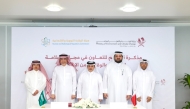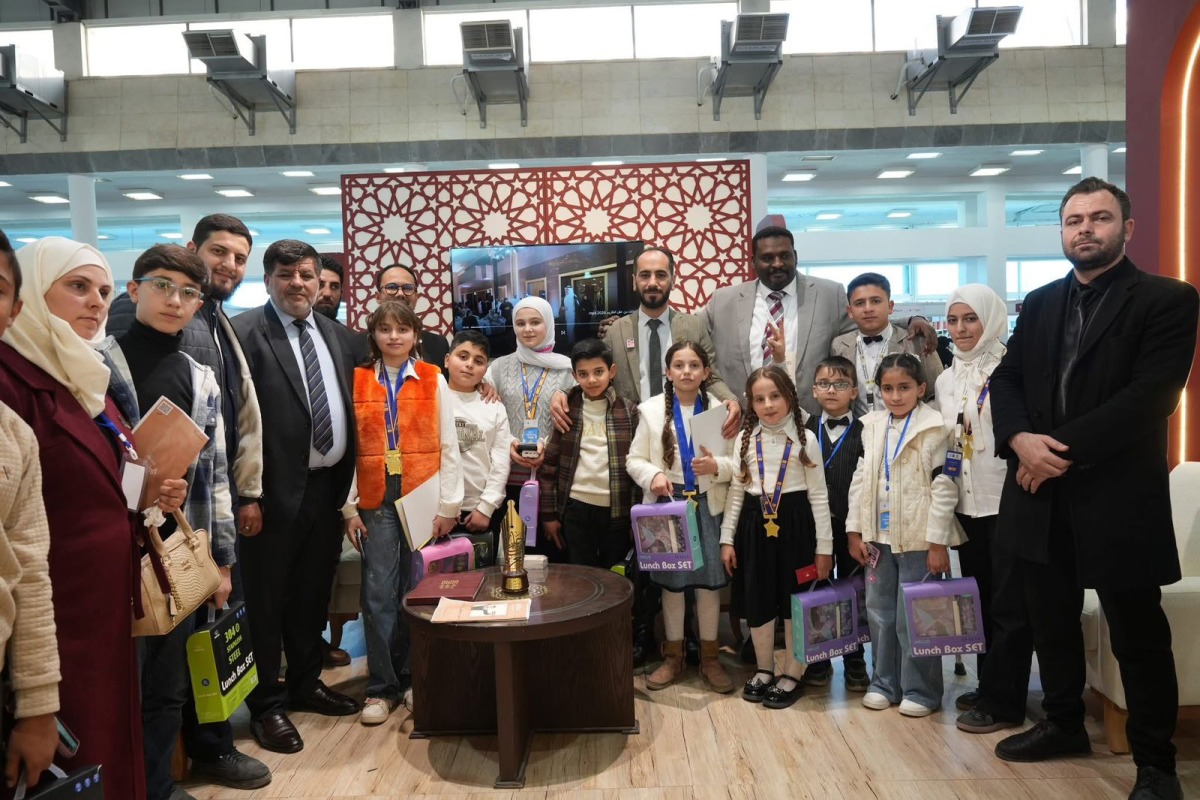
Doha, Qatar: The Arab Book Award is taking part in the 2026 Damascus International Book Fair, which runs through February 16, with a comprehensive cultural program and an active pavilion welcoming prominent Syrian and Arab intellectuals and cultural figures.
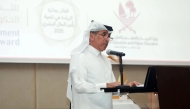
Scientific Director of the Arab Book Award, Dr. Abdelwahed El Alami underscored the Award's pivotal role in advancing Arabic scholarship.
He highlighted its distinctive focus on five core fields of knowledge-areas he described as underrepresented compared to creative writing, which has traditionally received broader recognition. These fields include linguistic and critical studies; social and philosophical studies; Islamic studies; historical studies; as well as encyclopedic works and critical editions of texts.
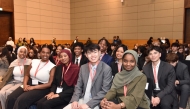
As part of its activities at the fair, the award's delegation organized a seminar to study a book on the diction of the Arabic books.
The seminar featured contributions from Dr. Abdelwahed El Alami and Dr. Sidina Sidatie, Advisor to the Award, who explored key academic issues of relevance to researchers in Arabic language and literature.
They stressed that language constitutes the cornerstone of the writing process-its foundation and essential framework.
The Award's participation aims to introduce Syrian and Arab thinkers, writers, scholars, and historians to its mission of enriching the Arab cultural landscape through high-quality scholarly works that serve as essential references for researchers and academics.
The award is also using the occasion to invite distinguished scholars and institutions to participate in its fourth edition.
The discussion shed light on several challenges affecting the status of the Arabic language in contemporary scholarship.
Among the most pressing concerns identified were insufficient awareness of the centrality of language, the normalization of linguistic weaknesses, and declining standards of expression-even among some higher education researchers.
The speakers explained that the book is structured around fundamental questions, including the role of language in the production of knowledge and scientific inquiry, and the extent to which it shapes and reflects various academic disciplines.
The symposium also examined the historical role of language in the flourishing of knowledge throughout Arab-Islamic civilization, alongside an assessment of linguistic expression in contemporary Arabic scholarship, with particular attention to grammar, morphology, and semantics. Participants emphasized that nurturing and preserving the Arabic language is both a means and an objective in itself, as linguistic vitality reflects the intellectual and civilizational advancement of nations.
Several Syrian scholars have previously won the Arab Book Award in past editions, though their submissions were made from outside Syria.
The award's presence at the Damascus International Book Fair therefore carries a meaningful message of renewed academic engagement and cultural solidarity with Syria.
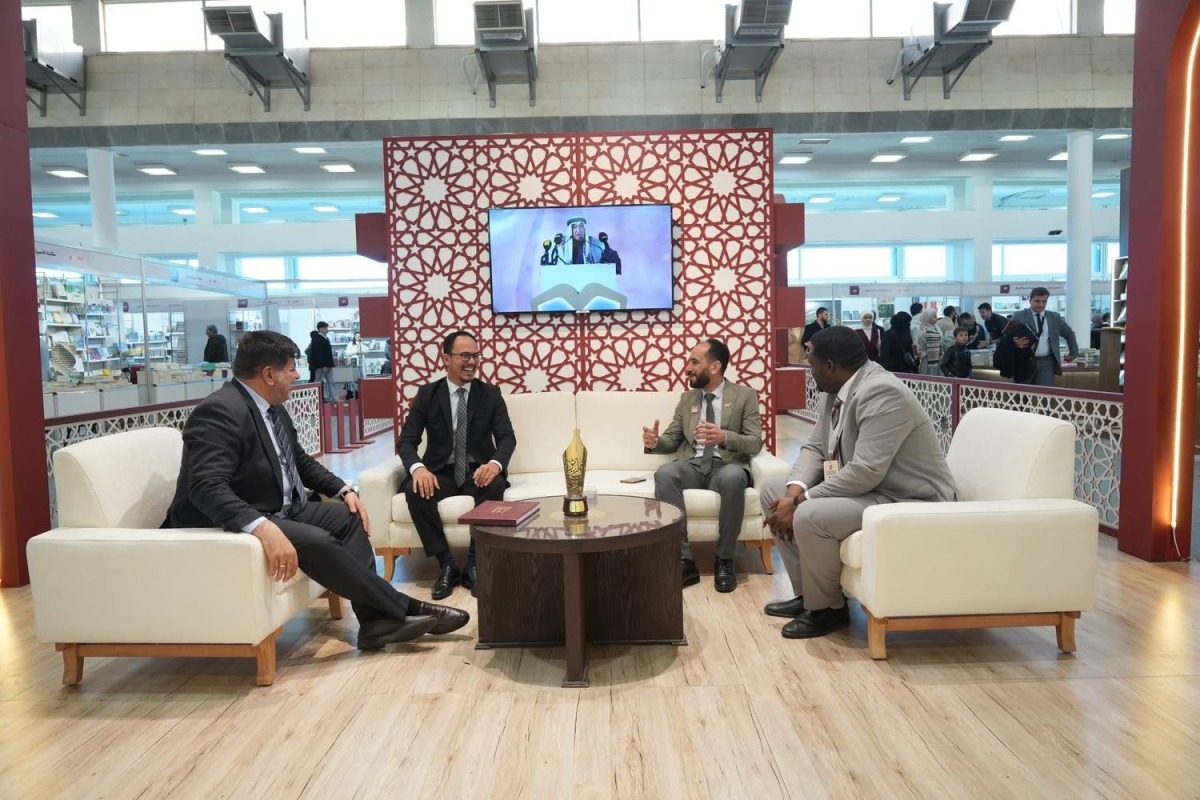
Based in Doha, the Arab Book Award is an annual prize recognizing outstanding works written in Arabic in the fields of social sciences and the humanities.
With a total value of one million US dollars, the award seeks to enrich the Arabic library by encouraging individuals and institutions to produce high-quality scholarship, honoring rigorous academic studies, and supporting leading publishing houses in enhancing both the intellectual substance and production quality of Arabic books.