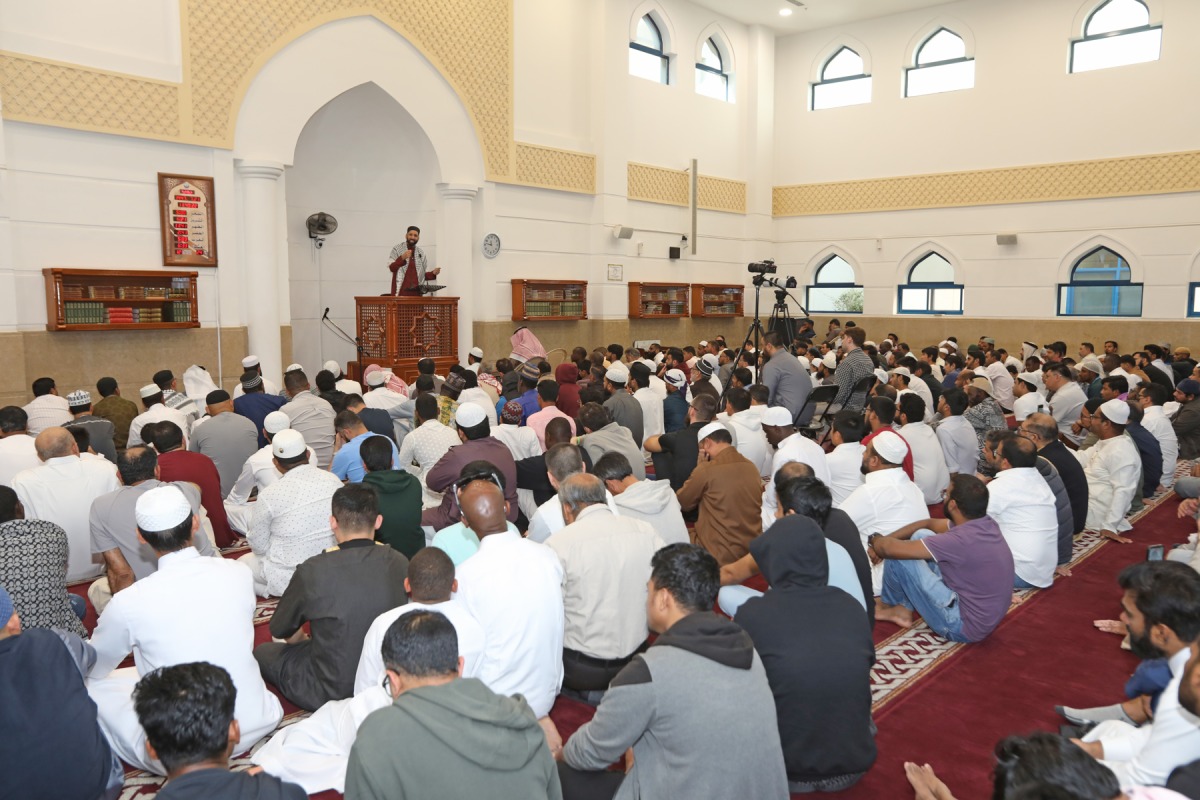
Doha: Preacher Omar Suleiman delivered the Friday sermon at the mosque of the Sheikh Abdulla Bin Zaid Al Mahmoud Islamic Cultural Center, where he addressed the differences between sins and the importance of repentance in the life of a Muslim.
This comes within the framework of the Center’s commitment to attracting distinguished lecturers and scholars to introduce the public to Islam, its culture, and its values.
In his sermon at the Center’s mosque, Preacher Omar Suleiman discussed the various types of sins and acts of disobedience, distinguishing between minor sins and major sins, as well as the concepts of fisq (transgression) and fujur (immorality).
He explained that sins and acts of disobedience include all kinds of mistakes committed by a person and are most commonly used to refer to sins that require repentance between the servant and his Lord.
Fisq, on the other hand, is a person’s persistence in committing sins without stopping, allowing them to dominate his life, while fujur refers to committing sins while boasting about them.
He explained that in such cases, a person follows in the footsteps of Satan, ultimately reaching the point of waging war against Allah by showing hostility toward the righteous and the pious.
At the same time, a person may fall into usury (riba), regarding which Allah Almighty has warned that the one who engages in usury will face war from Allah Himself.
This warning is unique and is mentioned only in relation to hostility toward the allies of Allah.
To understand this matter, he explained that when Allah loves a servant, He causes the angels to love him, and then all people and creation come to love him. Conversely, Allah’s war against the usurer means the removal of blessing, the complete loss of benefit and value from usurious wealth, and the encirclement of the usurer with hardship in all aspects of life. Therefore, it is important to avoid sins that lead to such punishment.