Doha: The number of building permits issued in November by municipalities in Qatar stood at 645, a decrease of 34 percent compared to previous month, data released by the Planning and Statistics Authority (PSA) showed.
The PSA in cooperation with the Ministry of Municipality released the 95th issue of the monthly Statistics of Building Permits and Building Completion certificates issued by all municipalities in the country.
Building permits and building completion certificates data is of particular importance as it is considered an indicator for the performance of the construction sector which in turn occupies a significant position in the national economy.
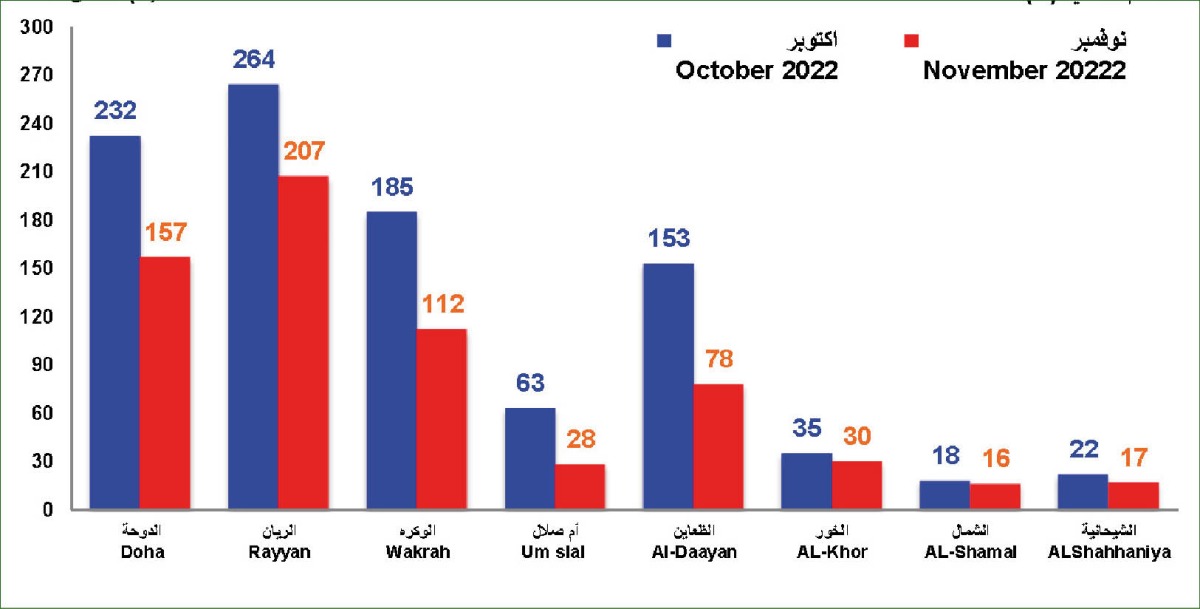
According to their geographical distribution, municipality of Al Rayyan comes at the top of the municipalities where the number of building permits issued were 207 permits, i.e. 32 percent of the total issued permits, while municipality of Al Doha came in second place with 157 permits, i.e. 24 percent, followed by Al Wakrah municipality with 112 permits, i.e.17 percent, then municipality of Al Da’ayen with 78 permits, i.e.12 percent.
The rest of the municipalities were as follows: Al Khor 30 permits (5 percent), Umm Slal 28 permits (4 percent), Al Sheehaniya 17 permits (3 percent), and finally Al Shammal 16 permits (2 percent).
In terms of type of permits issued, data indicates that the new building permits (residential and non-residential) constitutes 37 percent (236 permits) of the total building permits issued during the month of November 2022, while the percentage of additions permits constituted 60 percent (384 permits), and finally fencing permits with 4 percent (25 permits).
In November 2022 the decrease in building permits was noted in the municipalities: Um Slal (56 percent), Al Da’ayen (49 percent), Al Wakrah (39 percent), Al Doha (32 percent), Al Sheehaniya (23 percent), Al Rayyan (22 percent), Al Khor (14 percent) and finally Al Shammal (11 percent).
By analysing new residential buildings permits data, we find that villas’ top the list, accounting for 87 percent (138 permits) of all new residential buildings permits, followed by apartments buildings permits by 7 percent (11 permits) and dwellings of housing loans permits by 5 percent (8 permits).
On the other hand, commercial buildings were found to be in the forefront of non-residential buildings permits with 32 percent (25 permits), followed by governmental buildings with 31 percent (24 permits), then industrial buildings, for example, workshops/factories with 21 percent (16 permits).