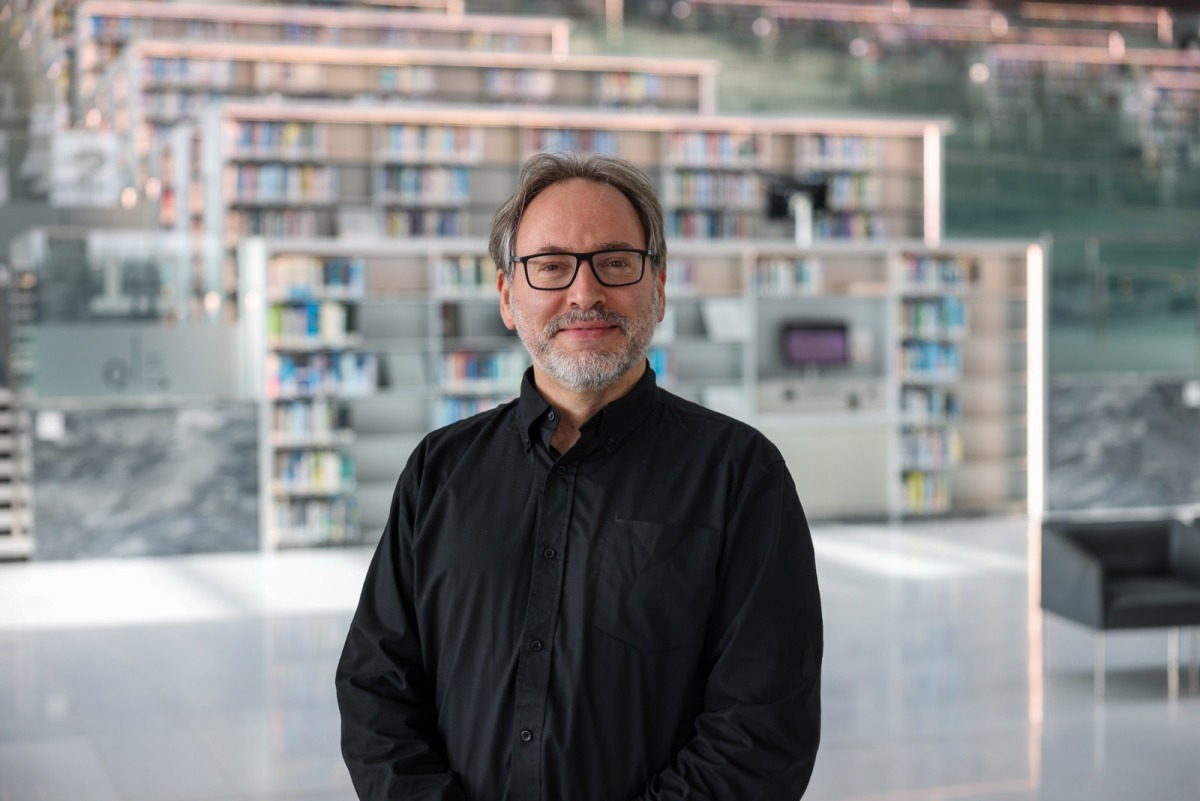
QNL Historical Map Specialist and historian of Arabic science Huseyin Sen
Doha, Qatar: Qatar National Library (QNL) is playing an increasingly important role in preserving and making accessible the scientific heritage of the Islamic world, while working to ensure that this wealth of knowledge reaches beyond researchers and specialist collections and into classrooms.
Speaking on an Afikra podcast episode produced in collaboration with Qatar Foundation, QNL Historical Map Specialist and historian of Arabic science Huseyin Sen highlighted Qatar’s efforts to digitise its own collections and support the digitisation of important Arabic scientific manuscripts held by institutions around the world.
He said QNL’s Qatar Digital Library, launched in partnership with the British Library, has made it possible for researchers to access valuable scientific manuscripts remotely, eliminating the need to travel to different countries simply to consult individual texts.
“Now a researcher does not need to step on an aeroplane, spend days of his leave or stay away from his office to go to check two or three manuscripts. Now he can do it in his lunchtime while eating his sandwich,” Sen said.
Qatar, he noted, has a particularly significant role to play in this effort. While QNL’s manuscript collection is relatively modest compared with some of the major collections in other Islamic countries, its holdings include an important and distinctive collection of Western printed works related to Arabic science, including Latin translations of Arabic scientific texts.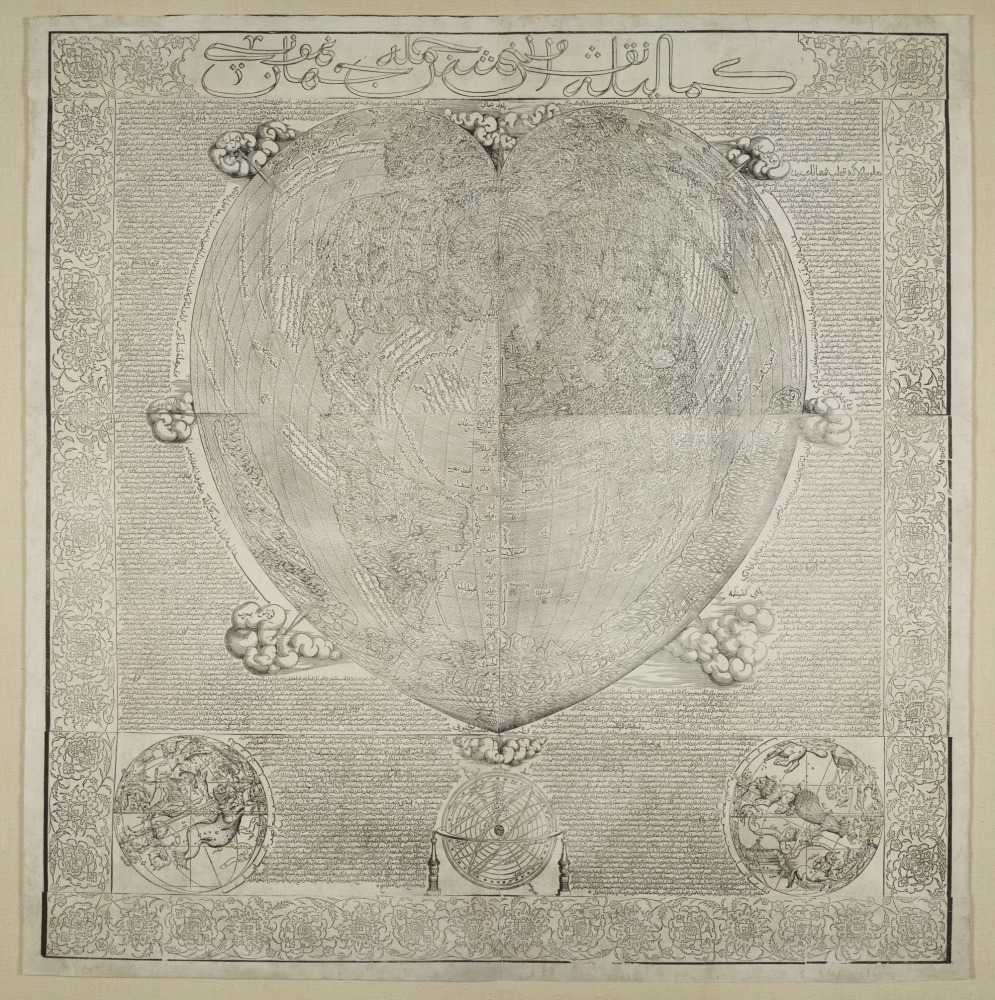 Heritage Collection map no 00480 / i24443451 at the Qatar National Library
These works, he said, provide evidence of the profound influence that scientific scholarship from the Middle East had on Europe, with the works of scholars such as Ibn Sina, Ibn Rushd and al-Zahrawi studied and translated at European universities.
Yet Sen believes preserving and digitising these materials is only part of the task. The greater challenge is bringing this intellectual heritage into the education system and helping a new generation understand the contributions made by scientists and scholars of the medieval Islamic world.
“There is still a lot of work to be done, especially making this heritage available to particularly schools, and that schools also engage in this heritage, that teachers come and that they incorporate elements of Arabic science in their science teaching,” he said. “That’s actually my life goal.”
Sen, an aerospace engineer by training who later became a historian of Arabic science, explained that the field requires expertise spanning both science and history. Researchers must understand the scientific principles contained in centuries-old texts while also placing those ideas within the intellectual context of their time.
He said the shortage of specialists has contributed to a major gap in knowledge, with many important scientific works still unpublished, untranslated or available only in manuscript form.
Among the scholars whose contributions Sen believes deserve greater recognition are al-Khwarizmi, whose work was fundamental to the development of algebra and whose name gave rise to the word “algorithm”, and Ibn al-Haytham, whose pioneering work on optics and visual perception relied heavily on experimentation.
Sen argued that teaching this history is not simply about celebrating the achievements of the past. It can help young people understand how scientific knowledge develops, provide them with historical role models and challenge misconceptions about the Islamic world’s contribution to science.
He also stressed that the scientific tradition of the Islamic world was a diverse and multi-faith intellectual tradition, involving Muslim, Christian, Jewish and Zoroastrian scholars. From mathematics and optics to medicine, chemistry, perfumes and cosmetics, Sen said much remains to be discovered in manuscripts that have yet to be properly studied and translated.
He pointed to the writings of al-Kindi on perfumes as one example. The texts contain practical descriptions of producing fragrances, distilling rose water and creating alternatives to expensive substances such as musk. Sen is currently working on an English translation of the work.
For Sen, Qatar’s role in preserving this heritage provides an opportunity to connect the country’s rich collections with contemporary education.
“If you have a whole generation of people, youth who know about their ancestors and what they contributed, where they come from,” he said, “I think it would contribute a lot.”
The discussion also highlighted some of the rare treasures held by QNL, including a four-metre-long map attributed to the renowned 17th-century Ottoman traveller Evliya Çelebi, the rare heart-shaped world map of Haji Ahmed of Tunis, and copies of the monumental Description de l’Égypte documenting Egypt following Napoleon’s expedition.
Together, these collections, Sen said, demonstrate not only the depth of the region’s intellectual history but also the importance of making that history visible, accessible and relevant to future generations.