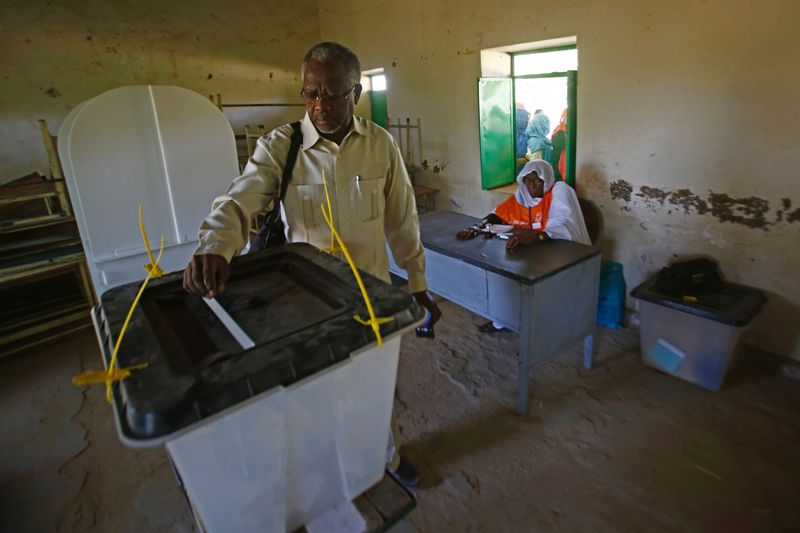
KHARTOUM, Sudan: Voters in Sudan’s western Darfur region on Monday began casting ballots in a referendum held to determine the region’s administrative status.
Voters will either choose to maintain the status quo, in which Darfur is divided into five distinct states, or to combine them all into a single region.
Some 3.5 million Sudanese in Darfur are registered to vote in the three-day poll, which kicked off at 8:30am local time Monday.
Security forces have been deployed in cities across Darfur, especially in al-Fasher, the region’s largest city.
The poll is being held within the framework of a 2011 Qatar-backed peace agreement signed between the Khartoum government and the Liberation and Justice Movement (LJM) rebel group.
The agreement was rejected, however, by three other Darfurian rebel movements, including the Justice and Equality Movement, the Sudan Liberation Army and the Sudan Liberation Movement.
Sudan’s ruling National Congress Party has urged voters to maintain the current five-state system, while the LJM has called on supporters to vote for the single-region arrangement.
The three rebel groups that rejected the peace deal for their part, which have continued to fight the government, have called on supporters -- most of whom are found in the region’s displaced persons camps -- to boycott the poll.
The government’s decision in 1994 to divide Darfur into five administrative units was a main factor behind the outbreak of armed rebellion in 2003 -- a conflict which has since led to the death of some 300,000 people and the displacement of another 2.5 million, according to the UN.
The Khartoum government, however, rejects these figures, saying the death toll since 2003 is closer to 10,000.
In 2009, the International Criminal Court issued an arrest warrant for Sudanese President Omar al-Bashir for allegedly committing "war crimes" and "crimes against humanity" in Darfur.
The following year, The Hague-based tribunal added the crime of "genocide" to the list of charges leveled against the Sudanese president.
Al-Bashir, for his part, has refused to recognize the court, describing it as "a colonial tool" used to undermine Sudan and other African countries.
Since 2008, a joint African Union/UN peacekeeping mission has been deployed in the region, which includes some 20,000 troops and police officers of various nationalities.
AA