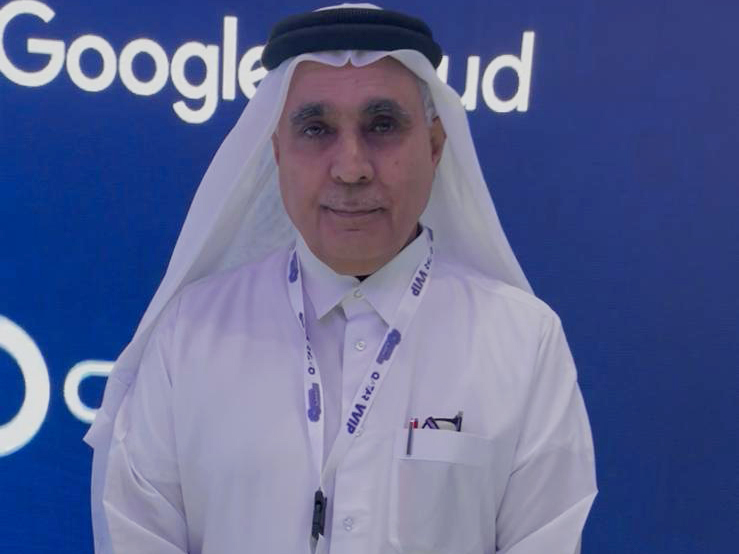
Dr. Ahmed Elmagarmid, Executive Director of Qatar Computing Research Institute at HBKU
Doha, Qatar: The launch of enhanced Fanar 2.0, a platform which represents the generative Arabic language AI, during the opening of the second edition of the World Summit AI – Qatar 2025, yesterday is a significant milestone and a major leap in the Arabic AI technology.
Speaking to The Peninsula on the sidelines of the summit, Dr. Ahmed Elmagarmid, Executive Director of Qatar Computing Research Institute (QCRI) at Hamad Bin Khalifa University (HBKU) highlighted the significance of advancing the Arabic-language AI research and innovation.
Elmagarmid said, “We are happy for the release of Fanar 2.0 today which is a qualitative move from Fanar 1.0. It includes multi-modalities that were not covered very well before”.
He noted that local and international organisations are showcasing cutting-edge AI technologies and the also Qatar Pavilion serves as a national platform presenting a range of AI-powered projects from government entities, alongside startups offering smart solutions.
Regarding the summit, he pointed out that this is a great event, “we have seen the announcement for Qai and all these companies that are here indicate that Qatar is becoming a hub for artificial intelligence companies and ideas.
Elmagarmid reiterated that the enhanced Fanar 2.0 Arabic AI model is larger and has multi-modalities. It is agentic, so definitely this is a big departure from Fanar 1.0. “We have already started to work on Fanar 3.0 which will be released in December 2026,” he added.
The first version of the Fanar platform was launched in December last year as a national achievement reflecting Qatar’s commitment to strengthening the presence of the Arabic and Islamic language and culture in the age of artificial intelligence.
Also talking to The Peninsula, Dr. Mohamed Ahmed Yassin Eltabakh, Principal Scientist at QCRI explained the features of the updated Fanar 2.0 platform, the Arabic AI Large Language Model.
He said ”The models are getting bigger from 9 billion parameter, it’s now 27 billion parameters, so it’s like three times bigger in size, which is boosting a lot of AI capabilities.”
Fanar 2.0 is available to everyone through APIs or chat interface. “We have in Fanar 2.0, a true full-fledged multi-modality. We have the text modality, image generation. We have a family of models for speech to text, text to speech, and audio understanding.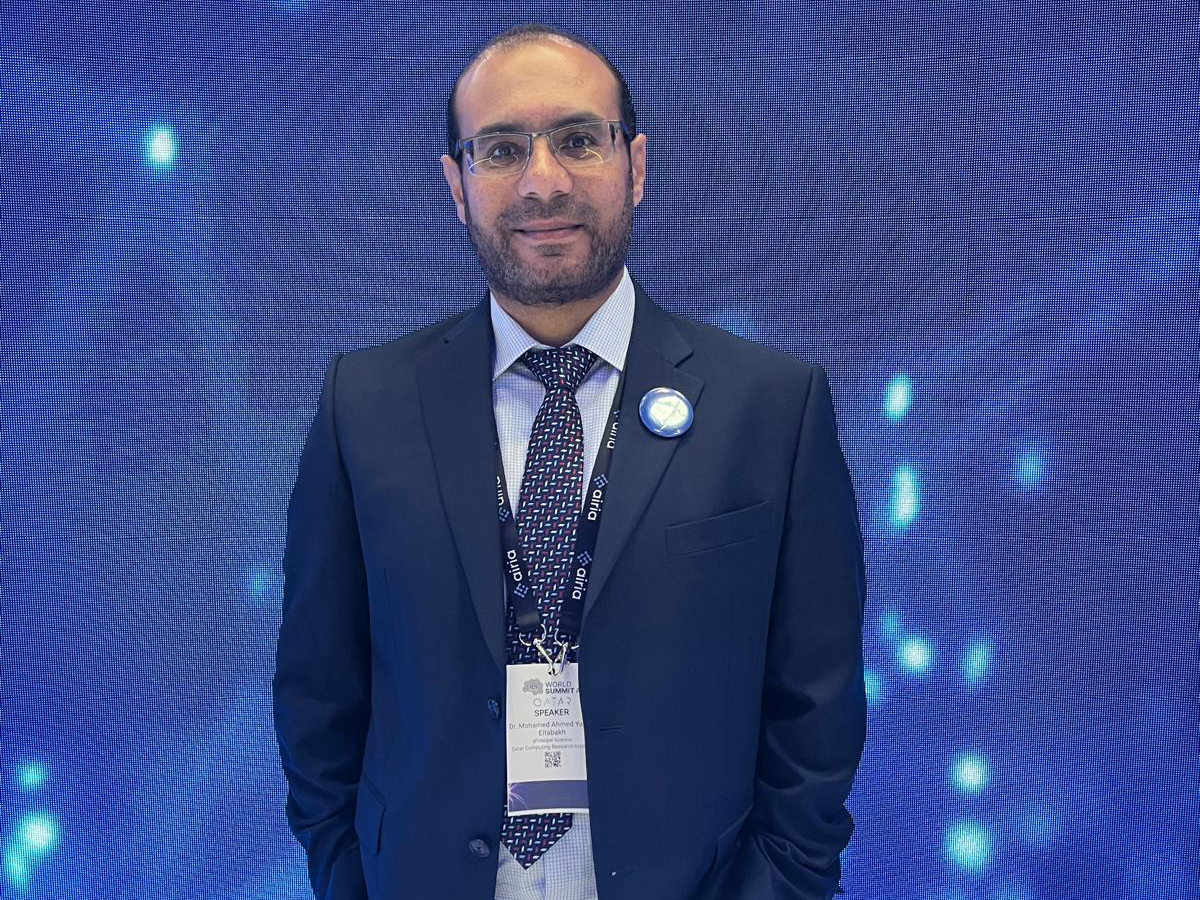 Mohamed Ahmed Yassin Eltabakh, Principal Scientist at QCRI
“We have a new model for poetry generation, which is a very challenging task in Arabic, but we have a very nice model for poetry generation. All of these are in one platform with the culture, the Arabic values and dialects across all of these models. So that’s what we are offering today,”
Eltabakh added. The platform is considered a one-of-a-kind model, developed to provide deep and comprehensive understanding of the Arabic language in all its dimensions, including diverse dialects and cultural terminology.
It is built on a massive dataset containing more than 300 billion words and over one trillion Arabic phonetic segments, giving it exceptional capability in natural-language processing with high precision.
It is also equipped with an advanced technical architecture containing seven billion parameters, enabling superior flexibility, speed, and performance in storing and processing information.
Qatar is investing a lot from the financial point of view, the infrastructure and the talent in AI. Eltabakh pointed out that it’s extremely important to showcase your technology and to connect with other partners and collaborators to move forward with their applications and use cases. Adoption is a key point for AI and such events help in establishing these connections.