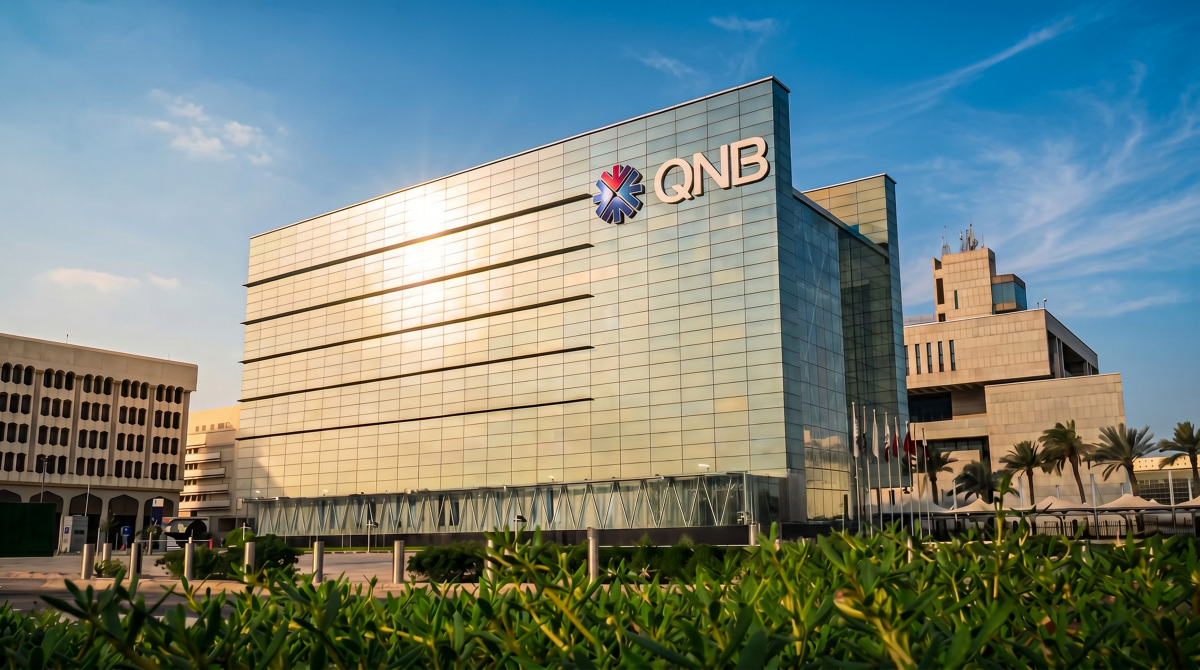
Doha, Qatar: Republic of Korea has demonstrated a strong ability to adapt to shifts in global trade, supported by record exports, semiconductor leadership and expanding security and commercial partnerships, Qatar National Bank (QNB) said in its weekly report.
The bank said Seoul was diversifying its trade relations beyond China, particularly in Southeast Asia, while its growing defense industry was creating new revenue streams and strengthening its position in global markets.
Republic of Korea’s exports exceeded $100 billion in June for the first time, rising 70.9% year on year, driven largely by semiconductor shipments and solid-state drives used for computer data storage.
Information and communications technology exports also accounted for more than half of the country's total exports for the first time, the report said. Republic of Korea's overall exports reached a record $709.7 billion last year.
QNB attributed much of the growth to rising demand for memory chips used in artificial intelligence applications, an area in which Republic of Korea is a major global supplier.
However, the bank warned that changing trade relationships with China, efforts to reduce economic interdependence and intensifying competition in the memory-chip market posed challenges.
Republic of Korea faces a strategic choice between remaining an export-driven chip supplier and becoming a more influential player in shaping global supply chains for critical industries, particularly artificial intelligence and technology.
QNB said Seoul was seeking to pursue both paths.
The report added that Samsung Electronics and SK Hynix together account for about 73% of the global market for high-bandwidth memory chips used in computers, smartphones and data centers supporting artificial intelligence.
However, QNB warned that reliance on a narrow range of exports leaves Republic of Korea vulnerable to global trade disruptions and intensifying competition. Its trade surplus with China fell from nearly $100 billion in 2018 to $20 billion last year, as Beijing expanded domestic alternatives in electronics, electric vehicles and batteries.
The bank said Seoul had strengthened its strategic partnership with Washington under a landmark trade and security agreement in early 2026. Under the deal, US tariffs on Republic of Korean goods were reduced from 25% to 15%, while Republic of Korea pledged $350 billion in US investment, including $150 billion for the American shipbuilding industry.
The agreement also supports Republic of Korea's ambitions to develop nuclear-powered submarines, which Seoul views as important for its long-term security.
Meanwhile, Republic of Korea is expanding its defense exports and seeking new markets in Southeast Asia, where Korean companies have established extensive manufacturing operations and become integrated into regional supply chains.
QNB noted that trade tensions remain, with the United States launching an investigation into Republic of Korean manufacturing practices in March, highlighting continuing challenges in the bilateral relationship.