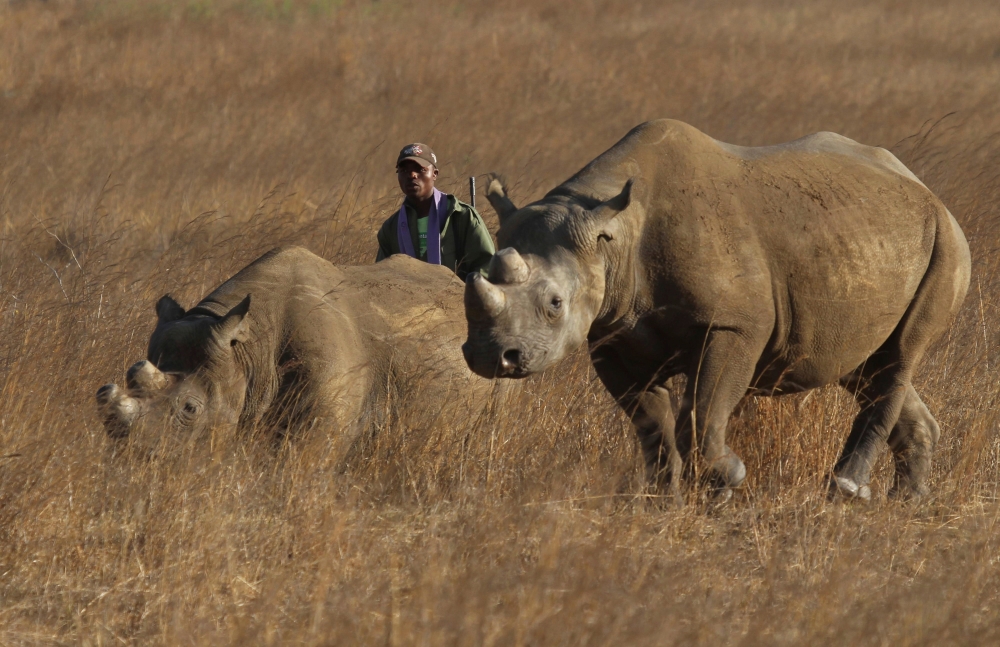
File photo for representational purposes only.
Cape Town: South Africa recorded a 16 percent decline in rhino poaching in 2025 compared with the previous year, the Department of Forestry, Fisheries and the Environment said on Tuesday, pointing to the continued impact of anti-poaching and anti-trafficking measures.
According to a statement issued by the department, a total of 352 rhinos were poached nationwide during the year, down from 420 in 2024. Of these, 266 were killed on state-owned properties and 86 on privately owned parks, reserves or farms.
Minister of Forestry, Fisheries and the Environment Willie Aucamp said in the statement that the year-on-year decrease of 68 reflected improved coordination and enforcement efforts.
However, trends varied significantly across provinces. Mpumalanga was the hardest hit province, with 178 rhinos poached in 2025, up from 92 the previous year. Most incidents occurred in Kruger National Park, where poaching rose to 175 animals, compared with 88 in 2024.
In contrast, rhino poaching in KwaZulu-Natal fell markedly, from 232 cases in 2024 to 97 in 2025.
The provincial conservation authority attributed the decrease to closer collaboration with private rhino owners through the Integrated Wildlife Zones program, sustained support from conservation partners, and a combination of interventions.
These included a strategic dehorning program launched in 2024, expanded use of camera and sensor technologies, and integrity measures for law-enforcement staff.
The department said progress was also recorded in prosecutions linked to the National Integrated Strategy to Combat Wildlife Trafficking, citing longer prison sentences and the centralization of cases to address organized crime and money laundering.
"South Africa continues to strengthen its international collaboration to curb rhino poaching and wildlife trafficking," said Aucamp.
"Working together with the South African anti-poaching and anti-trafficking organizations, we remain committed to a balanced, intelligence-driven, and partnership-based approach to rhino protection, recognizing that sustained success requires constant adaptation, integrity, and cooperation across all sectors," he added.