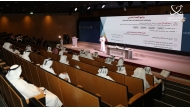
Doha, Qatar: The Ministry of Environment and Climate Change (MoECC) yesterday launched a 3-day-long workshop, on the implementation of national plans for the Trans-boundary Movements of Hazardous Wastes and their Disposal, in the framework of the Basel Convention.
A lineup of officials from MoECC, the Ministry of Municipality, Qatar Foundation, QatarEnergy, the General Authority of Customs, as well as a delegation from Kingdom of Saudi Arabia’s National Center for Waste Management are participating in the workshop.
Organised by the MoECC’s Chemicals and Hazardous Waste Department, in cooperation with the National Center for Waste Management of the Kingdom of Saudi Arabia, the workshop aims to discuss the provisions, obligations, implementation, and challenges regarding the Basel Convention on the Control of Trans-boundary Movements of Hazardous Wastes and their Disposal, as well as the methodology in preparing national reports in light of amendments to the convention.
The workshop will also coordinate waste transporting efforts together with the National Center for Waste Management in the Kingdom of Saudi Arabia.
In this regard, Eng. Samira Muhammad Al Dosari the Basel Convention acting director at MoECC’s Chemicals and Hazardous Waste Department explained that the workshop comes in light of many developments that brought about new challenges obstructing the optimal implementation of the Convention, thus, the need for this worship, in order to engage in the exchange of ideas, enhance cooperation among signatory states, and develop a common vision of best practices.
Al Dosari pointed out that this workshop stems from MoECC’s vision on the importance of joint action and the exchange of ideas and expertise between Qatar and the National Centre for Waste Management in the Kingdom of Saudi Arabia, in order to arrive at the workshop’s objectives and set informed recommendations for updating the mechanisms and methods for the safe disposal of waste.
The first day of the workshop introduced the Basel Convention’s provisions, its objectives, and the obligations signatory states must meet, in addition to the work of the Basel Convention’s regional centres, and the efforts made in during the negotiation process to arrive at the convention.