Doha, Qatar: The Arab Investment & Trade Credit Guarantee Corporation (Dhaman) revealed that the average Arab ranking remained stable at 102nd place globally in its composite index of investment climate components for 2025. This reflects the continued gap from the global average ranking of about 23 places, despite 13 Arab countries recording an improvement in their rankings within the index.
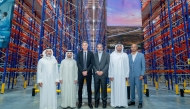
In its 41st Annual Investment Climate Report 2026, launched yesterday from its headquarters in the State of Kuwait, the Corporation recommended adopting integrated and flexible programs to enhance the Arab investment environment. These recommendations focus on four key areas: political and security; institutional, legislative, and procedural; economic; and the production elements; this comes particularly after the Capex of foreign direct investment FDI projects in the Arab world declined by 9%, falling to $112bn in 2025 due to geopolitical developments.
As for the inward foreign direct investment (FDI) flows to the Arab countries, they declined by 10.1% to reach approximately $119. 3bn in 2025, according to UNCTAD estimates.
With its continued concentration at more than 80% in 3 Arab countries, namely the UAE, which attracted $48.2bn, representing 40.4% of the total; Saudi Arabia, with $32.6bn, accounting for 27%; and Egypt, with $15.4bn, representing 13%.
As for the institutional, legislative, and procedural environment, the report recommended updating and simplifying investment and business laws to keep pace with developments transparently, with digitising and automating procedures and reducing their duration, with the need to strengthen governance, quality control systems, and develop the justice and law enforcement system to protect investors and their rights through local legislation, international agreements, and advanced arbitration services, in addition to providing insurance against political and commercial risks.
With respect to the economic environment, the institution stressed the adoption of policies to curb inflation to enhance currency stability, reform the tax and customs systems, and develop infrastructure and logistics.
Concerning the production elements, the report emphasized the importance of developing human capital and bridging the skills gap through education and training and increasing labor market flexibility, making industrial and service land available and accessible, and diversifying and facilitating direct financing channels while activating the role of banks and financial institutions.
The report also highlighted the ranking of Arab countries in the 2025 Composite Investment Climate Index, revealing that the Gulf Cooperation Council (GCC) countries, Jordan, and Morocco led the Arab world. The UAE ranked first regionally and 17th globally, followed by Qatar in second place regionally and 38th globally, then Saudi Arabia in third place regionally and 40th globally. Oman came in fourth regionally and 51st globally, followed by Kuwait in fifth place regionally and 52nd globally. Bahrain ranked sixth regionally and 57th globally, then Jordan in seventh place regionally and 74th globally, and finally Morocco in eighth place regionally and 75th globally.