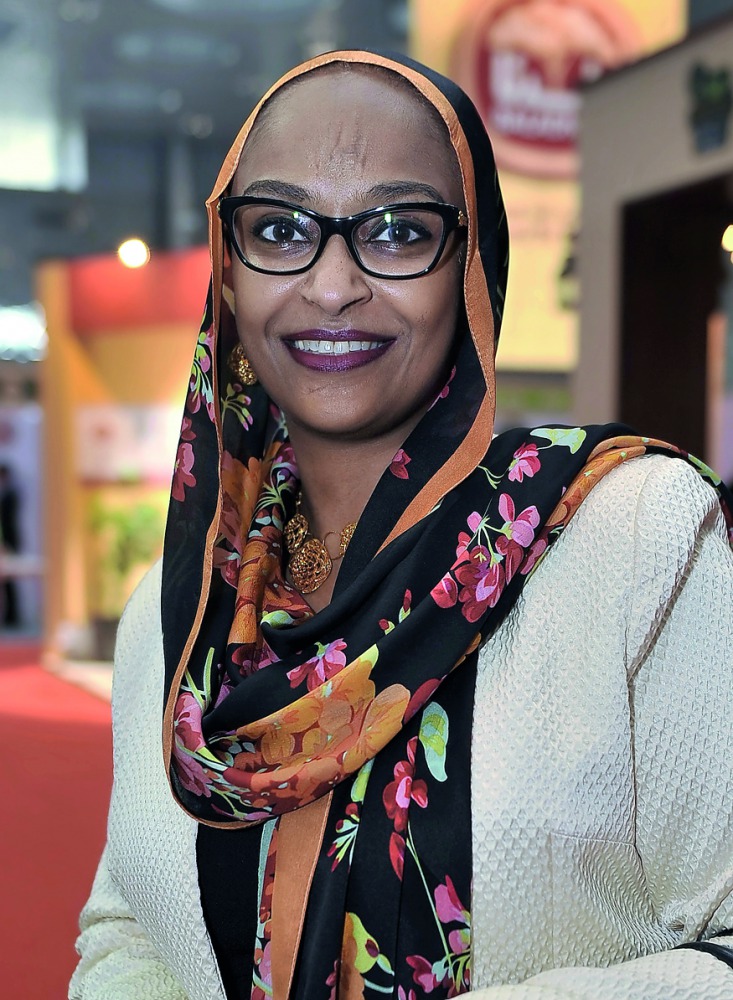
Dr Tahra El Obeid
The food and food processing industries in the GCC countries need to be designed in accordance with requirements and consumption habits of the people living in the region, said an expert at Qatar’s leading university.
Agro-based industries in GCC countries, which are getting significant focus of their respective governments as part of efforts to achieve food security, need to be developed keeping in view the local factors and variable.
Dr Tahra El Obeid, Asst Professor of Food Technology and Human Nutrition, at Qatar University, said: “To boost the local agro-industries, GCC countries, including Qatar, need to focus on producing commodities that are competitive, sustainable, and without depleting the natural resources.”
“Importing some food can be cheaper than growing them domestically, but there are a lot of food items which can be grown and processed locally in the cost effective manner, which can leave a different impact”, Dr Tahra told The Peninsula on the sidelines of a food security event organised by GOIC here recently.
Citing examples of agro-industries related to marine life, camel, date and truffle (Fagh’aa) farming, which are rich in nutrition value, can be developed not only to meet the local demand, but also for export.”
She noted that food habits of people have changed significantly over the last 50 years. People now are not eating same kinds of food that our ancestors used to eat some 100 years ago. There is more consciousness about different components available in the food. Consumers are increasingly preferring healthier and leaner foods, which need to be taken into consideration while developing agro-industries.
Tahra said: “In the past 10 years, people have been eating unhealthily. They consumed more meat and meat products which contain more fat. However, over the last few years, people have realised that rate of lifestyle diseases, such as diabetes, hypertension, cancer and number of cardiovascular patients, are rising. To counter that people have now moved towards more healthier foods.”
This is evident from the fact that more and more number of retail outlets and hypermarkets are keeping option of healthier food such as organic food, gluten and sugar-free food besides regular food inventories. “If there wasn’t a market, it (healthier food options) would have been not available in shops”, she said.
Commenting on the current status of Qatar’s food security situation, Tahra highlighted that the country has already started executing its National Food Security Programme which is in line with Qatar National Vision 2030.
“The Ministry of Public Health, the Ministry of Municipality and Environment, Qatar General Organisation for Standards and Metrology (QS), and several academic institutions, which are supporting the system to make sure food items available in the country are within set standards and specifications,” she noted.
On food safety norms, Tahra said Qatar also has adopted specific guidelines for different growth hormones in animals, and the use of antibiotics found in chickens and poultry products. “All the products are tested at food control laboratory at the Food Safety & Environmental Department.”