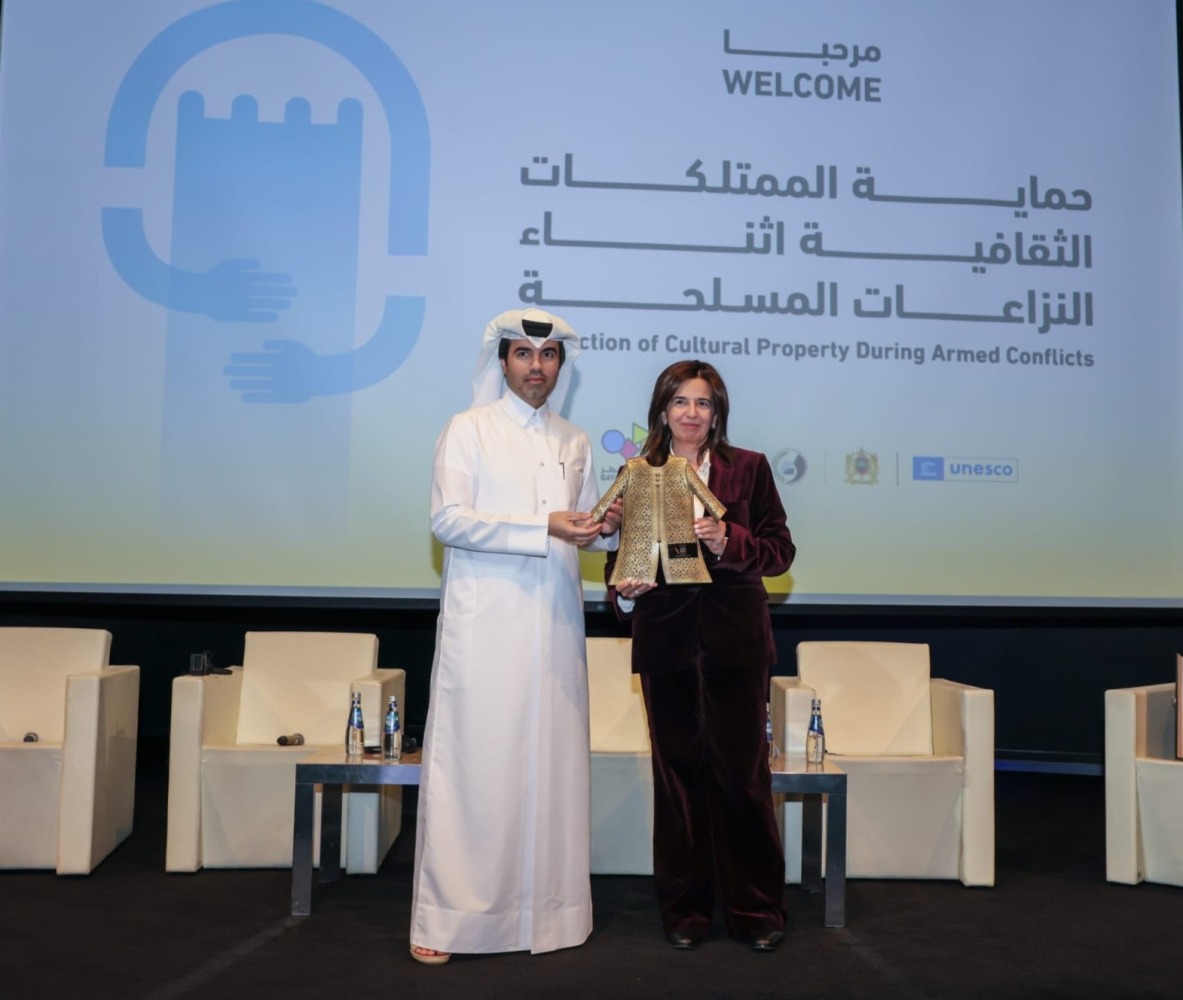
Doha, Qatar: The Qatar National Committee for International Humanitarian Law (NCIHL), in collaboration with its Moroccan counterpart and the Qatar Museums Authority (QMA), organised a joint panel discussion on the protection of cultural property during armed conflicts.
The move was part of efforts to reinforce regional and international cooperation to safeguard cultural heritage and consolidate the relevant international humanitarian rules-based order.
The panelists weighed in on the shared responsibility in protecting cultural property, the role undertaken by national committees of international humanitarian law, as well as public institutions and civil society in incorporating this action into national policies to ensure effective and enduring legal protection in times of armed conflict.
Attending the panel were the Undersecretary of the Ministry of Justice and Chairman of the Committee of the State of Qatar, HE Saeed bin Abdullah Al Suwaidi; President of the Moroccan National Committee on International Humanitarian Law, HE Dr. Farida El Khamlichi; and Chief Executive Officer of Qatar Museums (QM), Mohammed Saad Al Rumaihi, alongside a variety of high-ranking officials and other stakeholders interested in this matter.
HE Al Suwaidi affirmed that this panel is a first-of-its-kind event that addresses a topic that not only touches the past but also forms the essence of the present and represents a responsibility toward the future. He stressed that cultural property represents a core pillar of human identity and national development, as well as a viable witness to the interaction of civilisations throughout the eras.
He explained that archaeological sites, historical landmarks, places of worship, museums, manuscripts, and tangible and intangible heritage represent the collective memory of peoples and a bridge between generations, and that any attack on them constitutes a loss to humanity.
Al Suwaidi further noted that the divine religions, foremost among them Islam, emphasise the protection of built heritage, the safeguarding of places of worship, and respect for the legacies of previous generations.
He noted the methodical targeting of cultural property in several conflict-battered areas, whether driven by impulses of cultural obliteration, vengeance, or illicit trafficking in artifacts.
Al Suwaidi further stressed that protecting cultural property is a shared responsibility among nations, cultural enterprises, the armed forces, security agencies, as well as the education sector and civil society, suggesting the significance of national legislation and professional training, in addition to spreading awareness and incorporating protection rules into the military creed.
The State of Qatar highly prioritises the protection of cultural property, which is exemplified by its joining the relevant international agreements and its unwavering support for the efforts of international organisations, foremost among them the United Nations Educational, Scientific and Cultural Organization (UNESCO), along with national initiatives to protect heritage in times of peace and conflict, with NCIHL operating within this year's plan of action to accomplish the bill on protecting cultural property, Al Suwaidi pointed out.
Al Rumaihi, for his part, asserted that the protection of cultural property during armed conflicts is a moral and humanitarian responsibility that manifests a profound belief in the fact that cultural heritage forms the peoples’ memory, a pillar of their identity, and a bridge for dialogue and understanding between civilisations.
Targeting all historic and archaeological sites threatens the present and gnaws at the right of future generations to be aware of their history and its humanitarian diversity. This protection is genuinely a protection of identity and the collective memory of peoples, Al Rumaihi highlighted.
Al Rumaihi noted that QM believes in the significance of collective action among national enterprises and international humanitarian law committees, as well as international organisations, foremost among them UNESCO, to deepen the culture of this protection whether in times of peace or armed conflict.
These partnerships help convert principles into sustainable practices, strengthen awareness, and leverage knowledge and modern technologies to ensure the ideal protection of cultural heritage as a shared human legacy and an investment in a more peaceful future and understanding among peoples, Al Rumaihi noted.
For her part, Dr. El Khamlichi underscored the substantial significance of cultural heritage for all humankind, applauding the existing partnership between the Qatari and Moroccan committees, which has helped spotlight this protection matter.
The panel discussion is an opportunity to emphasise that awareness of this protection is incorporated into the very core of identifying and spreading international humanitarian law, in addition to strengthening social and corporate awareness of protection rules, El Khamlichi underlined.
She praised the exchange of successful Qatari and Moroccan experiences in this field, as well as the sharing of best practices in enforcing the Hague Convention along with its two protocols.
Dr. El Khamlichi further elaborated that Moroccan participation in this panel underscores the depth of bilateral cooperation and partnership between the two committees, which have become a role model in the field of partnership among national committees for international humanitarian law.
UNESCO Representative to the Gulf States and Yemen and Director of its Doha Office, Salah Eddine Zaki Khaled, recalled UNESCO's gargantuan role in supporting conflict-stricken nations. He pointed out that over the past years, UNESCO has expanded the scope of its efforts through multiple initiatives, most significantly the "Heritage for Peace" Programme, aimed at strengthening prevention, emergency preparedness, and the protection of cultural property during armed conflicts.
The panel featured two keynote sessions. The first session was chaired by the Director of the International Cooperation Department at the Ministry of Justice and Legal Expert within the NCIHL, Alaa Ismail Al Musleh who drilled down on UNESCO's role and the legal framework for the protection of cultural property.
The second session was chaired by the Director of the Office of the Undersecretary at the Ministry of Justice and Rapporteur of NCIHL, Khalid Mohammed Al Khamis Al Obaidli, and discussed the role of the armed forces and the experiences of the State of Qatar and the Kingdom of Morocco in the protection of cultural property.