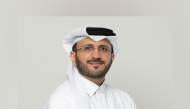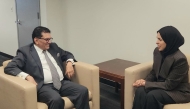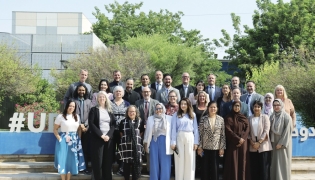
Maha El Akoum (left) and Dr. Sharifa Al Emadi
Doha, Qatar: Besides the destruction of infrastructure, degradation of education and healthcare systems and many others, wars have a massive and direct impact on families.
In the upcoming WISH 2024 edition, taking place from November 13 to 14 in Doha, the main theme of the conference will be “Humanizing Health: Conflict, Equity, and Resilience”.
WISH, a member of Qatar Foundation, in collaboration with the WHO are developing a report on protecting health in armed conflict.
The report will present the most recent trends in attacks against healthcare facilities and workers with a focus on the scale, nature, and distribution of these attacks.
It will also propose mechanisms for the protection of healthcare in armed conflict, looking at existing legal frameworks such as International Human Rights Law, and accountability measures including the criminal prosecution of atrocity crimes, and UN accountability mechanisms.
The report will also provide policy recommendations for the prevention, mitigation and accountability of these crimes from a global, regional, and national perspective.
Acting Director of Research and Content at WISH Maha El Akoum, said: “This year’s alarming rise in attacks against healthcare workers and facilities underscores the pressing need for a transformative response to safeguard health in conflict zones. Health workers, who are at the center of our health systems, are disproportionately affected by violence, often working under perilous conditions with overwhelming workloads and scarce resources, all while worrying about the safety of their own families.
“The unprecedented number of abductions, detentions, and arrests of health workers and patients severely disrupts healthcare access and delivery, with many health workers even migrating out of the area under the imminent threat of attack. In addition, this violence has a profound impact on the mental health of healthcare professionals, impacting their ability to serve in the long term.
“As families bear the brunt of these crises, psychologically and socially, it is imperative that we mobilize governments, UN agencies, and civil society to protect not only medical services but also the very fabric of family life.
"Together, we can forge a future where health and safety are recognized as fundamental rights for every individual and family, even in the most challenging environments,” said El Akoum.
While a study by Qatar Foundation’s Doha International Family Institute titled “Wars, Conflicts, and Their Impacts on Arab Families” highlights that despite the current situation in Palestine, Yemen, Syria, Lebanon, and other Arab countries, the Arab family continues to exemplify values of compassion and solidarity, and provides care for children and the elderly.
“During peaceful times, every individual in the family has their role and responsibilities clearly defined,” Dr. Sharifa Al-Emadi, Executive Director of Doha International Family Institute (DIFI), says.
“However, in times of war, when educational and healthcare facilities are attacked and families are directly targeted, the weight of the responsibilities of parents in providing protection and care for their children or the elderly becomes enormous and extremely difficult.
“Consequently, the percentage of children deprived of education and the sick who can no longer access treatment rises, which impacts the extended family that becomes fragmented and dispersed in different locations as its members seek protection.”