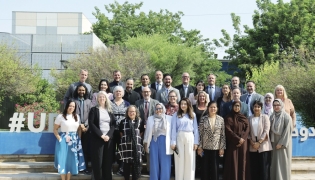
Cairo, Egypt: The State of Qatar has won the presidency of the Permanent Arab Committee on International Humanitarian Law, becoming the first country to hold the position since the committee’s establishment in 2025.
The Ministry of Justice said in a statement yesterday that Undersecretary of the Ministry of Justice and Chairman of the National Committee for International Humanitarian Law
H E Saeed bin Abdullah Al Suwaidi was elected Chairperson of the Permanent Arab Committee on International Humanitarian Law during the 166th regular session of the Arab League Council at the ministerial level, currently underway at the League’s headquarters in Cairo.
The Ministry noted that the Chairperson of the Permanent Arab Committee on International Humanitarian Law is elected through direct voting from among the candidates nominated by the heads of the national committees concerned with international humanitarian law in the member states of the League of Arab States, or their representatives with relevant experience and expertise.
It noted that the establishment of the committee was based on a proposal submitted by the State of Qatar and approved by the Council of the League of Arab States at the ministerial level during its 163rd regular session.
The committee thus constitutes a permanent Arab framework dedicated to strengthening cooperation and coordination among Arab national committees in the field of international humanitarian law, exchanging expertise and best practices, and promoting a culture of respect for its rules and principles.
On this occasion, Minister of Justice and Minister of State for Cabinet Affairs H E Ibrahim bin Ali bin Issa Al Hassan Al Mohannadi affirmed that the State of Qatar’s election to the presidency of the Permanent Arab Committee on International Humanitarian Law reflects that Arab recognition of the country’s efforts in supporting justice, the rule of law, and humanitarian work. It also reflects the growing confidence in its legal and judicial institutions and the progress they have made in building a robust legislative and institutional framework.